ClevelandPeople.Com is sponsored in part by Cleveland American Middle Eastern Organization (CAMEO)
C.A.M.E.O. is designed to articulate the political interest of more than 100,000 Northeastern Ohio residents of Middle Eastern Heritage, Arab Americans. C.A.M.E.O. has one central purpose, to appraise candidates running for Public Office, that will offer political support to those who are best prepared to respond to our concerns.
C.A.M.E.O. accepts the diversity of religious and political philosophies and beliefs of its membership. C.A.M.E.O. membership means a commitment to local political action that will enhance the voting strength and amplify the profile of the Arab American community in Northeastern Ohio.
Over the past 44 years the Cleveland American Middle Eastern Organization (CAMEO) has worked to make sure that our elected leaders work to properly represent our community. Last year, over 70 candidates sought the C.A.M.E.O. endorsement with the endorsed candidate being elected in 76% of the races.
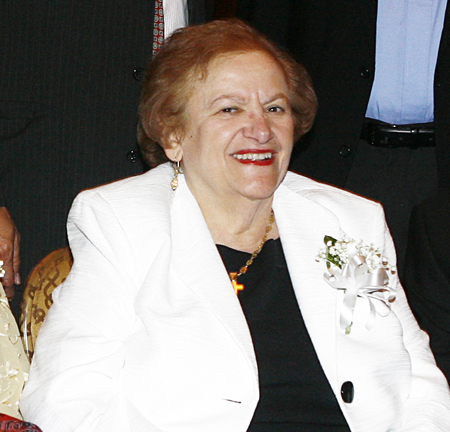
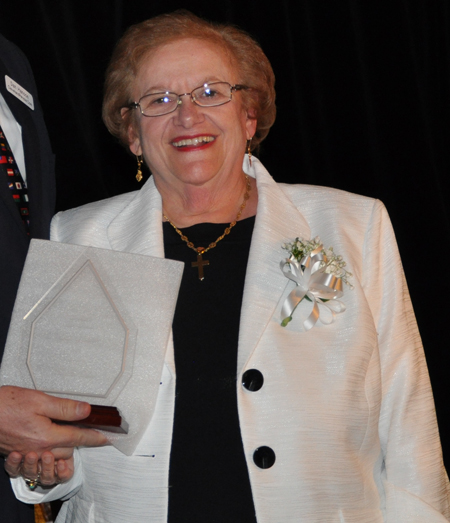
Hon. Mary Rose Oakar at Cleveland International Hall of Fame induction
It's very sad that we lost Mary Rose Oakar on September 13. She was a pioneer. She was the first Arab American woman, first Syrian American, and first Lebanese American woman to serve in Congress. She was also the first Democratic woman elected to the United States Congress from Ohio.
She was deservedly inducted into the Cleveland International Hall of Fame in 2012.
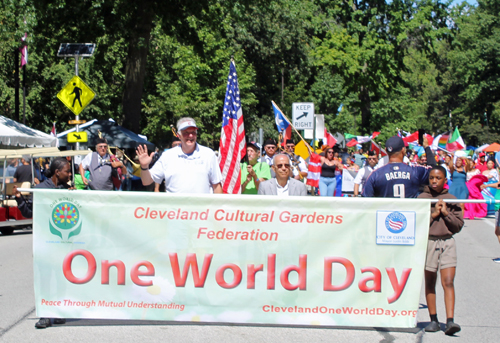
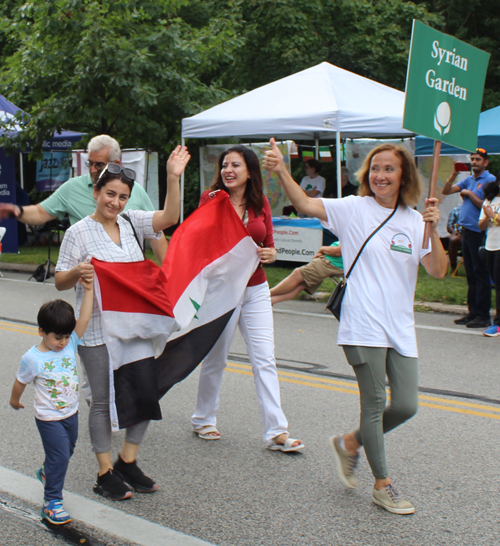
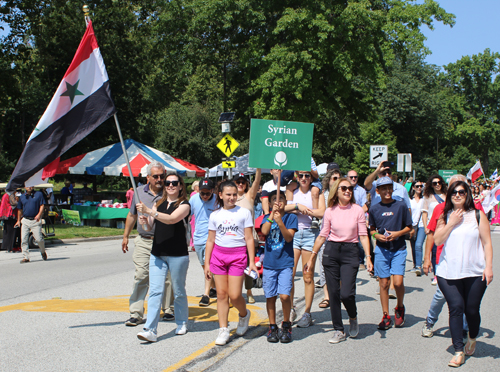
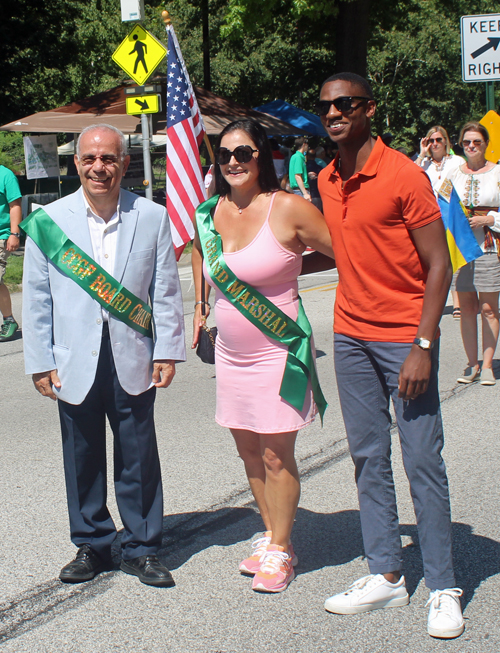
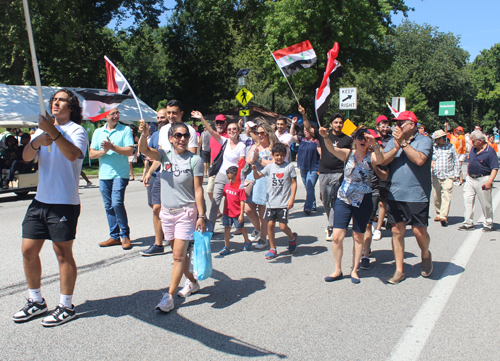
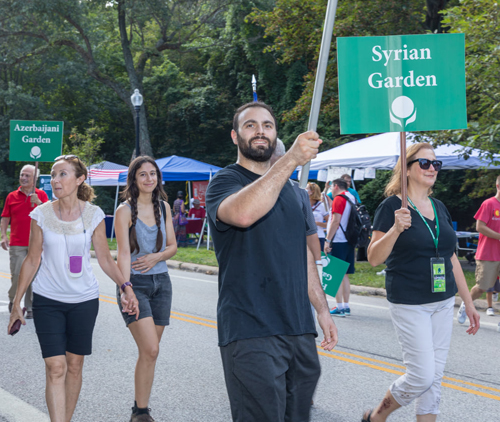
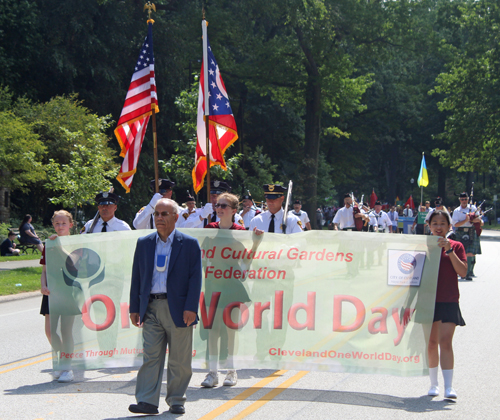
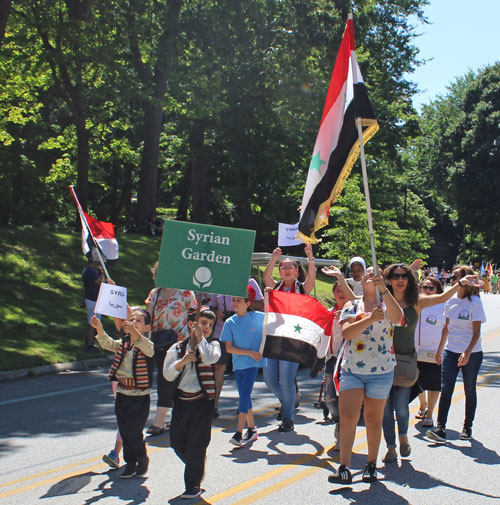
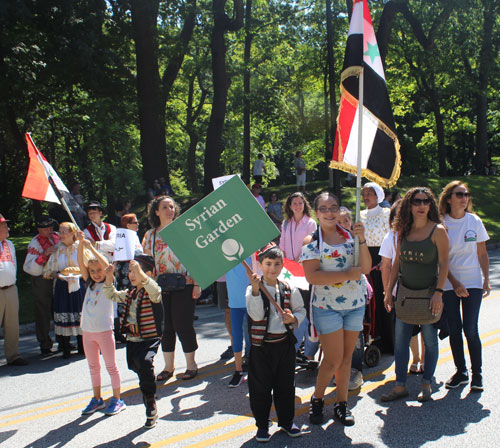
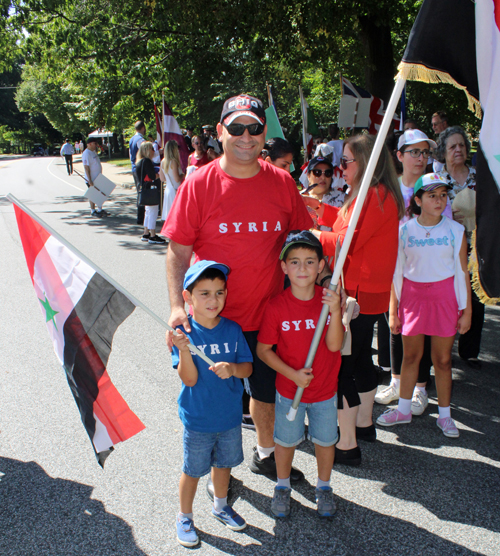
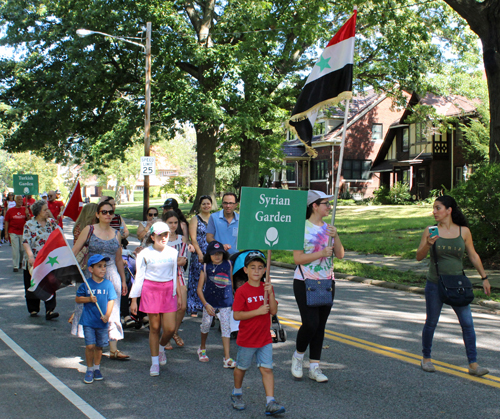
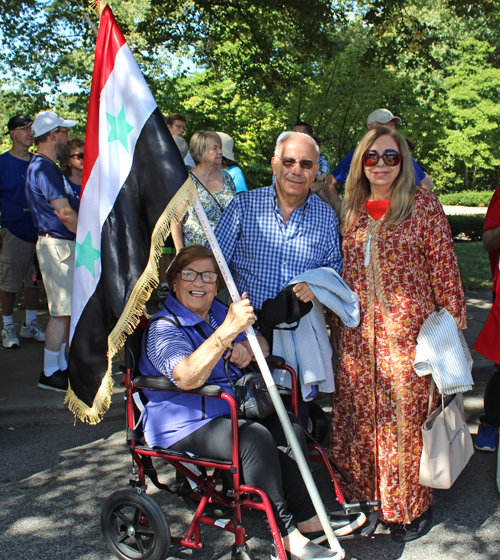
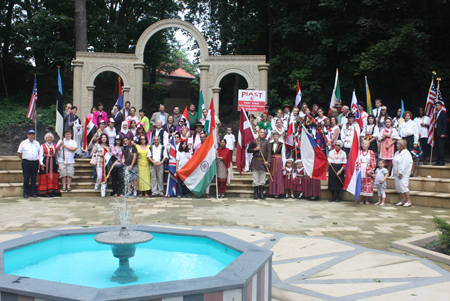
The Cleveland Syrian community demonstrated their heritage at One World Day in the Cleveland Cultural Gardens. One World Day has been the official event of the Cleveland Cultural Gardens Federation since 1946. The Syrian community participated in the Parade of Flags which had 1500 people from over 53 countries. Dr. Wael Khoury, president of the Cleveland Cultural Gardens Federation, led off the Parade walking with County Executive Chris Ronayne and Grand Marshall Carlos Baerga.
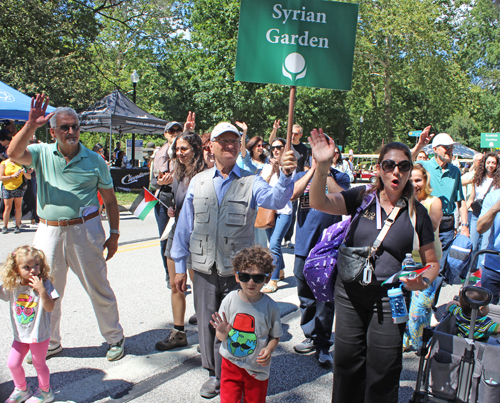
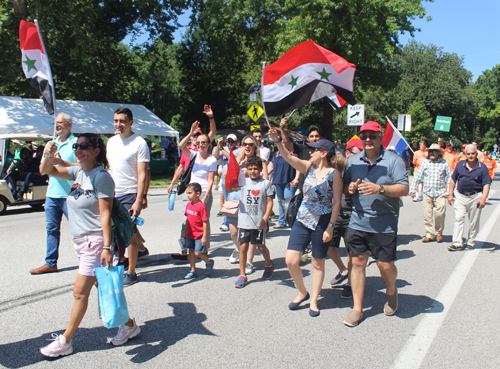
Syrian Cultural Garden in the Parade of Flags on One World Day 2025
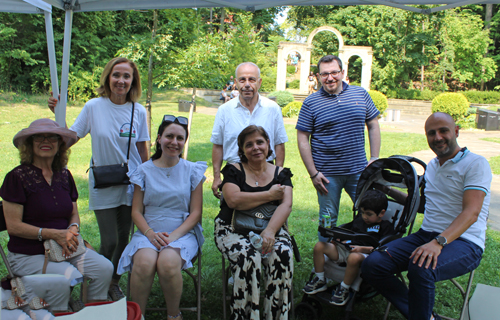
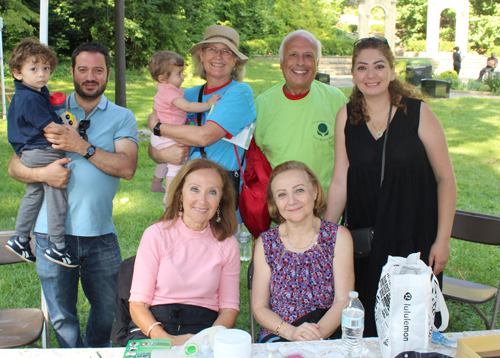
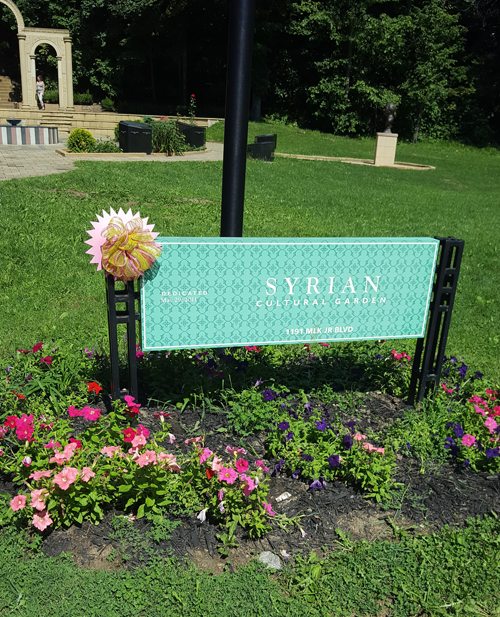
After the Parade they hosted visitors in the Syrian Cultural Garden.
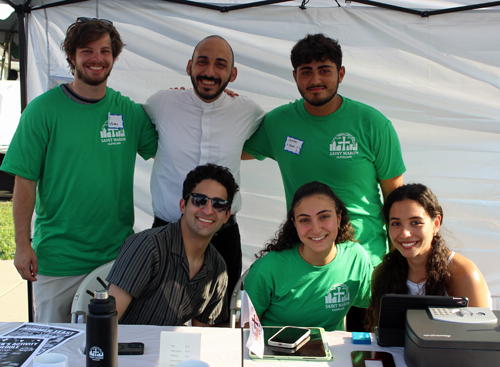
Each year, Saint Maron Church hosts a festival with great Lebanese and Syrian food and more. For more than one hundred years, Saint Maron's has been serving the Maronites of the greater Cleveland area.
The Cleveland American Middle Eastern Organization (CAMEO) has been in existence for over 50 years. C.A.M.E.O. is designed to articulate the political interest of more than 275,000 Northeastern Ohio residents of Middle Eastern Heritage, Arab Americans.
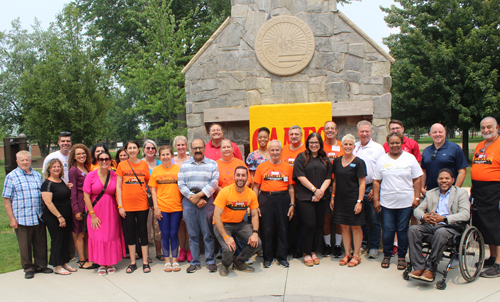
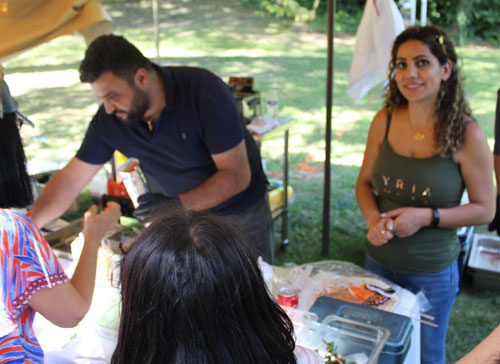
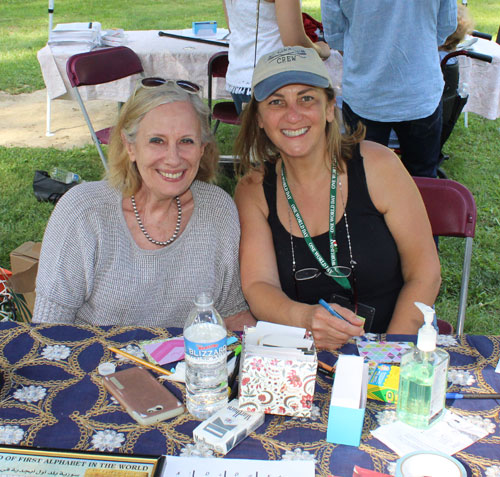
At their annual picnic on Sunday July 14, 2024 CAMEO welcomed friends and dozens of politicians running for office and/or there to show support for the Arab American community.
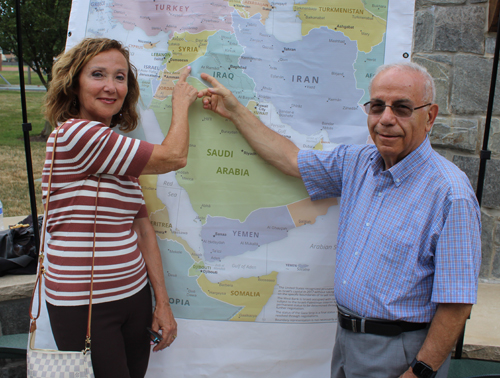
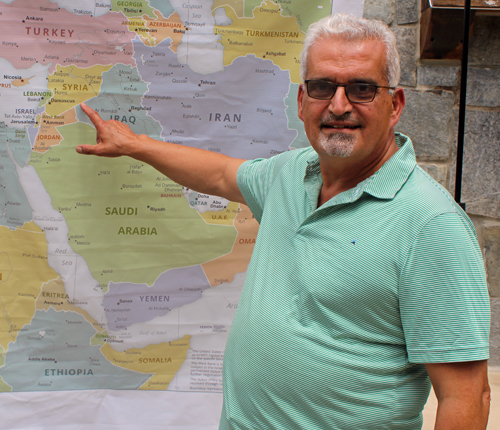
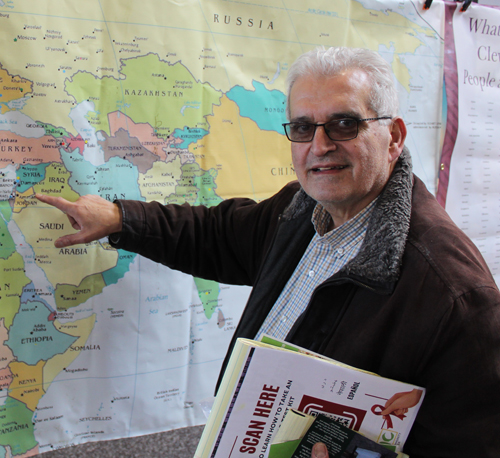
One new addition at the CAMEO picnic was the ClevelandPeople.com map of the Middle East where people showed where their heritage began.
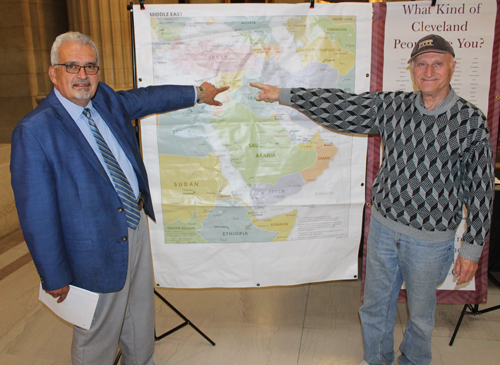
Syrian Community at Asia Heritage Day at Cleveland City Hall
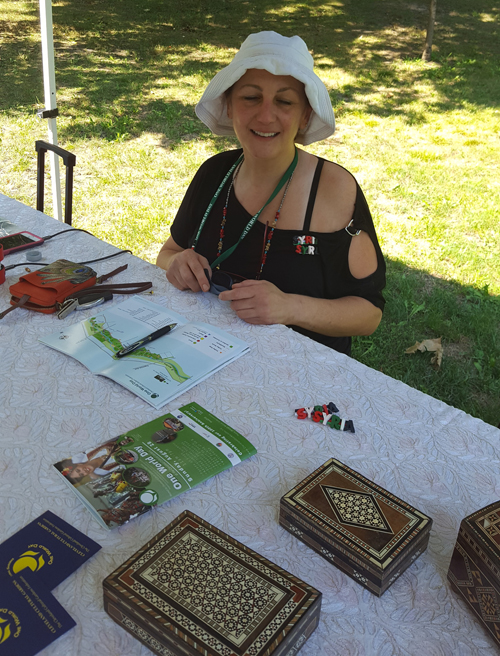
The City of Cleveland, under the leadership of Asian Community Liaison Chia-Min Chen, hosted the first Asian Heritage Day in the Rotunda of Cleveland City Hall on May 30, 2025. About 15 Asian heritages were represented with tables showcasing the flags, clothing and other items of their heritage - including Syria represented by George Koussa.
Cleveland American Middle Eastern Organization 55th Anniversary
The Cleveland American Middle Eastern Organization (CAMEO) has been in existence for 55 years. C.A.M.E.O. is designed to articulate the political interest of more than 275,000 Northeastern Ohio residents of Middle Eastern Heritage, Arab Americans.
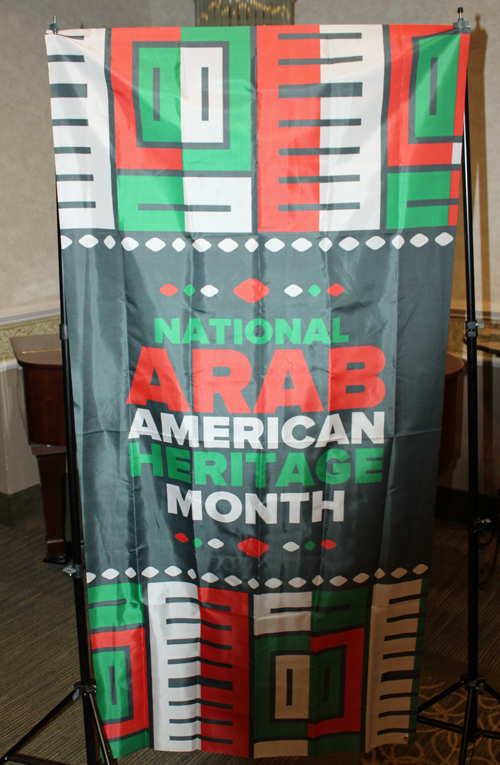
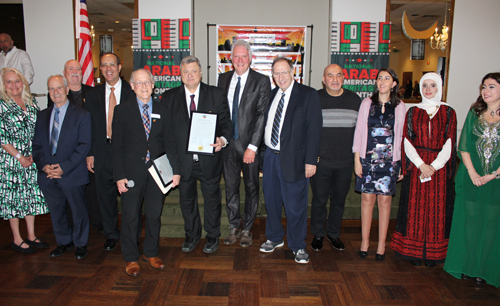
CAMEO celebrated their 55th anniversary as well as Arab American Heritage Month at a gala event on April 5, 2025.
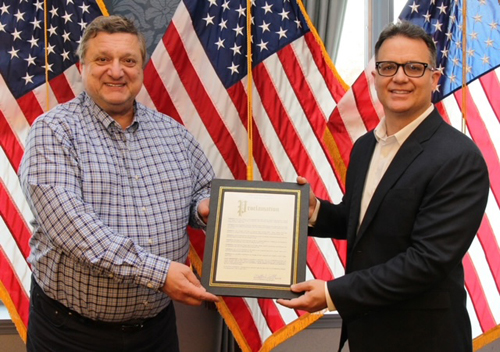
CAMEO Board members with proclamations from Dale Miller, Patrick Kelly and Chris Ronayne
There was a two-day celebration of Lunar New Year 2025 for the Year of the Wood Snake at Asia Plaza. There were performances,information booths, vendors, community resources, photo opps and, of course, food!
ClevelandPeople.com was honored to be a Media Sponsor and have a table at the event. We brought our large map of Asia and it was very busy with people studying it and posing in front of it. As we like to do, we asked people to pose while pointing to the land of their heritage on the map. We were very happy at the diversity of people and made many friends.
The heritages included China, Burma (Myanmar), Malaysia, Korea, Japan, Philippines, Thailand, Laos, India, Indonesia, Taiwan and more. But Syria is part of Asia too!
The Cleveland Syrian community demonstrated their heritage at One World Day in the Cleveland Cultural Gardens. One World Day has been the official event of the Cleveland Cultural Gardens Federation since 1946. The Syrian community participated in the Parade of Flags which had 1500 people from over 53 countries. Dr. Wael Khoury, president of the Cleveland Cultural Gardens Federation, led off the Parade walking with Cleveland Mayor Justin Bibb.
Syrian Cultural Garden in the Parade of Flags on One World Day 2024
After the Parade they hosted visitors in the Syrian Cultural Garden.
Africa & Byzantium Exhibition at the Cleveland Museum of Art
The new exhibition at the Cleveland Museum of Art, Africa & Byzantium, considers the complex artistic relationships between northern and eastern African Christian kingdoms and the Byzantine Empire from the fourth century CE and beyond. The first international loan exhibition to treat this subject, the show includes more than 160 works of secular and sacred art from across geographies and faiths, including large-scale frescoes, mosaics, and luxury goods such as metalwork, jewelry, panel paintings, architectural elements, textiles, and illuminated manuscripts.
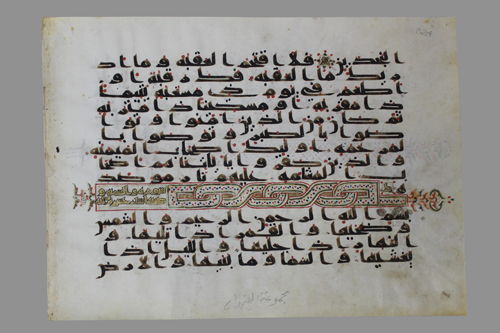
Folio from a Qur'an, early 800s. Aghlabid dynasty, Kairouan (Kairouan, Tunisia)
You will see pieces representing Christian, Jewish and Muslim faiths. One of our favorite parts of the exhibition is a Cleveland religious connection. The CMA's presentation is bolstered by loans from two local religious communities, reflecting years of community collaboration that powerfully demonstrates the contemporary relevance of the exhibition's topic today.
"Our work with local religious communities has been very meaningful," said Curator Windmuller-Luna. "We are grateful for their willingness to tell their stories and loan their precious artworks to us. To share these Greater Clevelanders' vivid perspectives, we have placed Community Voice labels throughout the exhibition, offering a firsthand glimpse of artworks' personal significance. We have also included Community Voice videos in this exhibition, a first for the CMA."
I liked seeing people I recognize and know, like our friend Imam Ramez Islambouli, as Community Voices.
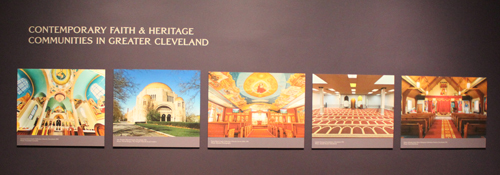
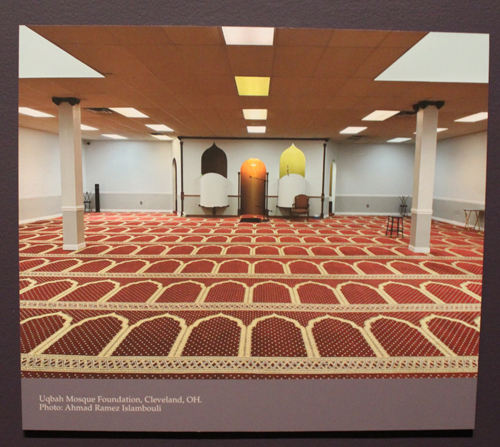
Another nice touch is the display of "Contemporary Faith and Heritage Communities in Greater Cleveland."
Contemporary Faith and Heritage Communities in Greater Cleveland
Uqbah Mosque Foundation
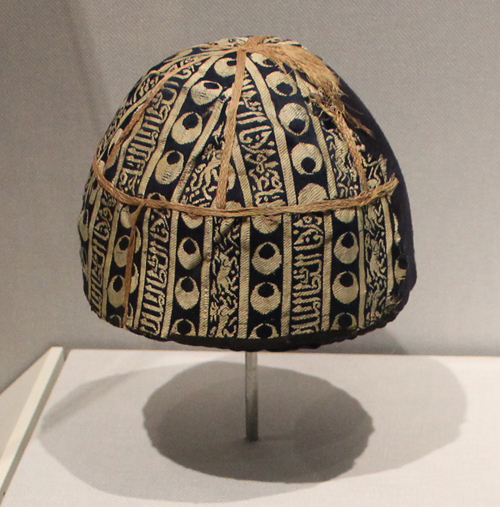
Cap with striped inscribed silk, 1300s Egypt or Syria, Mamluk period probably Sultanate of Nasir al-Din Muhammad
The Cleveland Syrian community demonstrated their proud heritage at One World Day in the Cleveland Cultural Gardens. One World Day has been the official event of the Cleveland Cultural Gardens Federation since 1946. Over 50,000 people visited the gardens on One World Day 2023.
The Syrian community participated in the Parade of Flags which had 1500 people from over 53 countries.
Watch the video of the Parade of Flags.
Syrian Cultural Garden in Parade of Flags
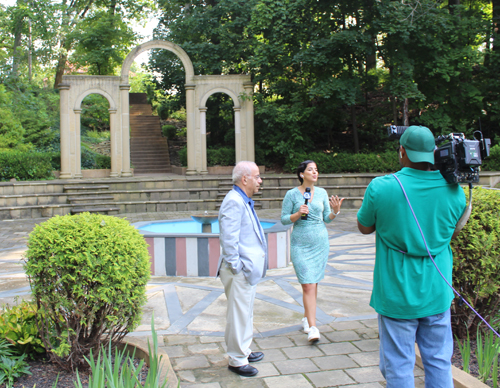
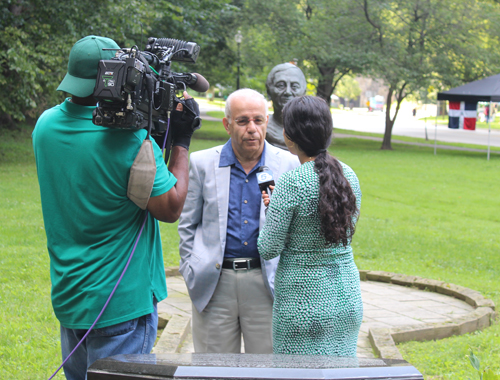
After the Parade they hosted visitors in their Garden and Dr. Wael Khoury gave a TV interview with WEWS reporter Nadeen Abusada.
Cleveland's Syrian community was well-represented at the 76th One World Day in the Cleveland Cultural Gardens on August 28, 2022. They marched in the Parade of Flags and hosted visitors and performances in their beautiful Syrian Cultural Garden. And, of course, Cleveland Cultural Gardens Federation (CCGF) President Dr. Wael Khoury is Syrian and he led the Parade of Flags walking with Grand Marshal Dominique Moceanu and Cleveland Mayor Justin Bibb.
Dr. Wael Khoury, Dominique Moceanu and Cleveland Mayor Justin Bibb
Middle Eastern Heritage - World on Stage in the Cleveland Cultural Gardens
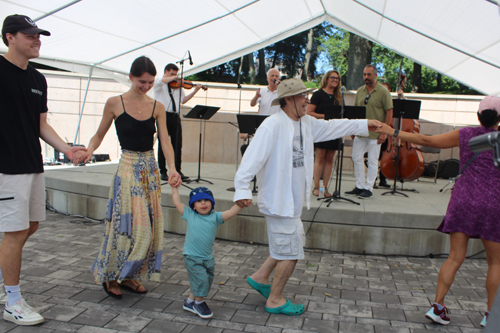
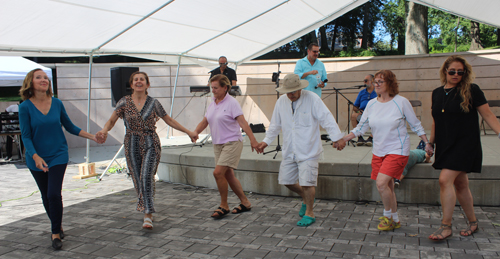
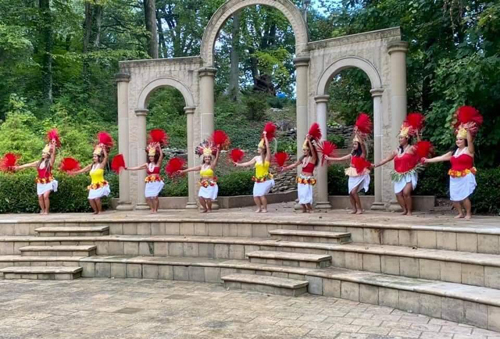
The Cleveland Cultural Gardens Federation presented a World on Stage event to showcase Middle Eastern Heritage on July 22, 2023 at the Centennial Peace Plaza in the Cultural Gardens. The plaza was full and the crowd enjoyed musical performances from Turkey, Azerbaijan, Iran, Lebanon and Syria.
Dancing in the Plaza at the Middle East Heritage event
Cleveland American Middle Eastern Organization Annual Picnic
The Cleveland American Middle Eastern Organization (CAMEO) has been in existence for 53 years. C.A.M.E.O. is designed to articulate the political interest of more than 275,000 Northeastern Ohio residents of Middle Eastern Heritage, Arab Americans.
At their annual picnic on Sunday July 16, 2023 CAMEO welcomed friends and dozens of politicians running for office and/or there to show support for the Arab American community.
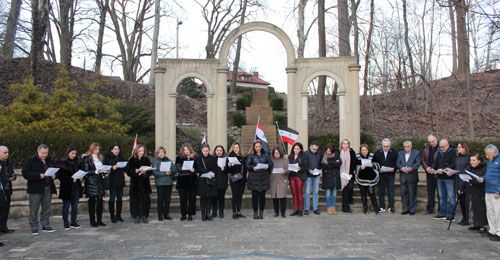
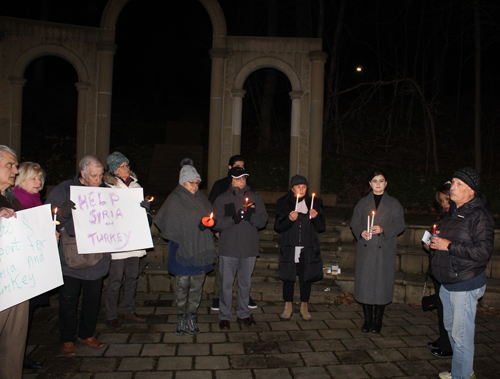
As of February 21, more than 50,000 deaths had been reported and hundreds of thousands displaced and injured. It is a tragedy of immense proportion. As a gesture of support and reflection, the Board of the Syrian Cultural Garden endorsed holding a vigil event at the Garden on February 19, 2023. A list of active civic organizations that are involved in humanitarian relief efforts were provided to the attendees.
Members of the Turkish and Syrian communities in Cleveland Ohio gathered with family, friends and supporters in the Syrian Cultural Garden on MLK Blvd. on the evening of Friday February 10, 2023. Leena Zahra from the Syrian community and Mehmet Gencer from the Turkish community spoke at a prayer vigil lit by candles.
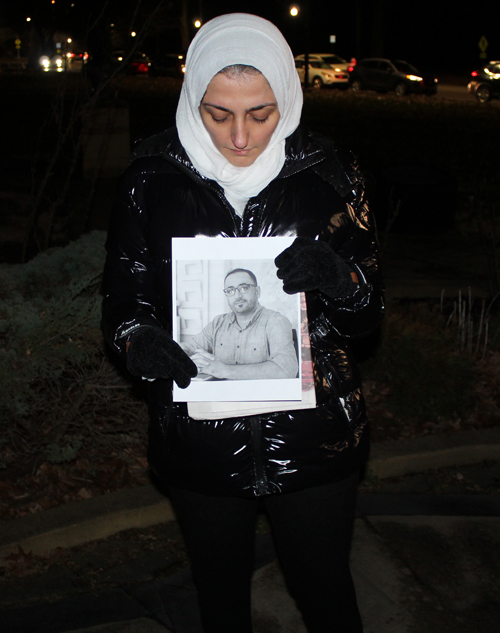
One young lady holding a picture of her best friend who was killed in the earthquake told how her friends and family back in Syria were reporting that dozens of family members had been killed. The crowd learned of suggested places to donate funds and foods and prayed for the victims.
Syrian Artist Diana Al-Hadid in the Syrian Cultural Garden
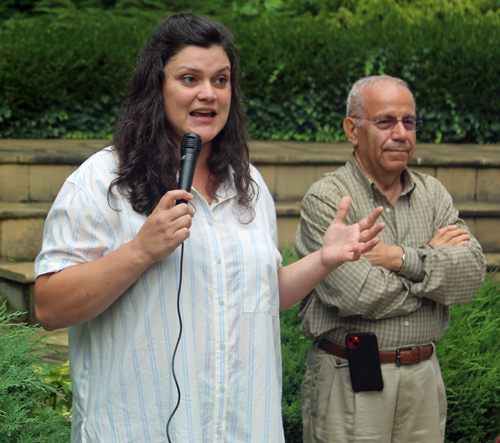
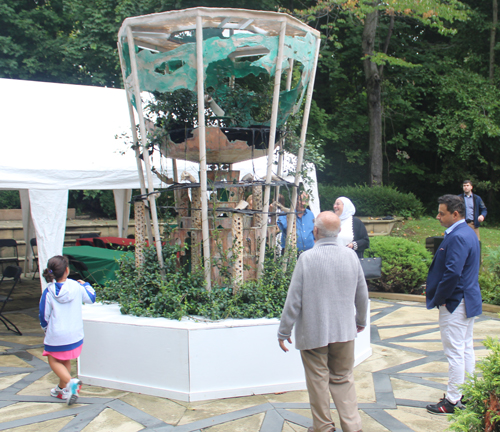
The Syrian Cultural Garden hosted a special event to showcase the art of Diana Al-Hadid in the Garden. About 150 attended despite the rainy weather. They socialized, viewed the art, ate Syrian food and listened to Dr. Wael Khoury and the artist talk about the Garden and the art.
Diana Al-Hadid and Dr. Wael Khoury
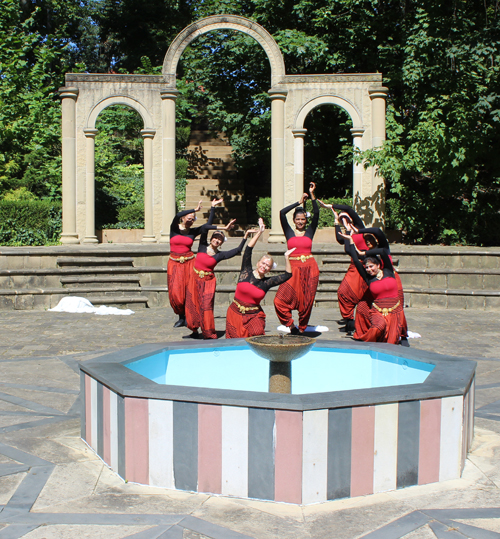
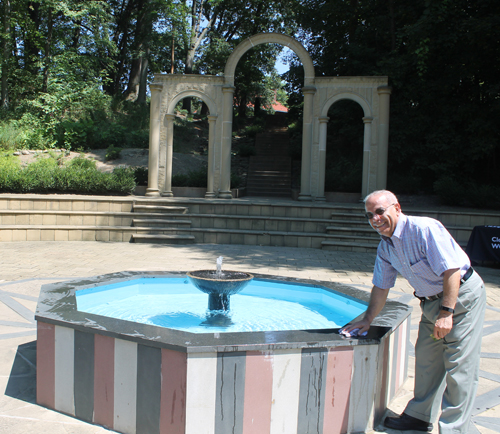
Diana Al-Hadid, who was raised in Ohio and is a Kent State University graduate, converted the fountain into a symbolic ancient water-clock whose design is based on several instructions left behind by the twelfth-century Islamic polymath Ismail Al-Jazari.
Cleveland's Syrian community was well-represented at the 76th One World Day in the Cleveland Cultural Gardens on August 28, 2022. They marched in the Parade of Flags and hosted visitors and performances in their beautiful Syrian Cultural Garden. And, of course, Cleveland Cultural Gardens Federation (CCGF) President Dr. Wael Khoury is Syrian and he led the Parade of Flags walking with Grand Marshal Dominique Moceanu and Cleveland Mayor Justin Bibb.
Dr. Wael Khoury, Dominique Moceanu and Cleveland Mayor Justin Bibb
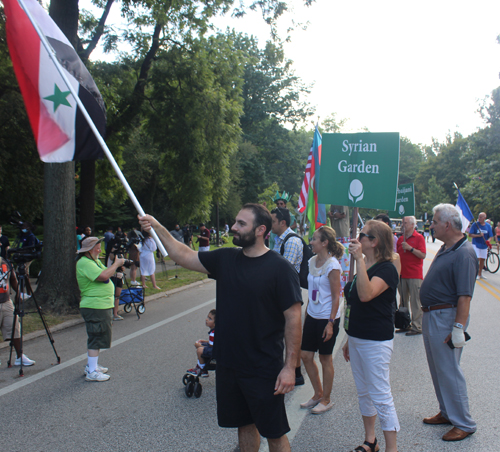
Cleveland's Syrian community was well-represented at the 75th One World Day in the Cleveland Cultural Gardens on August 29, 2021. They marched in the Parade of Flags and hosted visitors and performances in their beautiful Syrian Cultural Garden. And, of course, Cleveland Cultural Gardens Federation (CCGF) President Dr. Wael Khoury is Syrian and he led the Parade of Flags and spoke at the main program in the new Centennial Plaza.
Syrian Cultural Garden in the Parade of Flags
CCGF President Dr. Wael Khoury led the Parade of Flags
During the month of April, Arab America formally recognizes the achievements of Arab Americans through the celebration of National Arab American Heritage Month (NAAHM). Across the country, cultural institutions, school districts, municipalities, state legislatures, public servants, and Arab Americans will engage in special events that celebrate the community's rich heritage and numerous contributions to society.
Arab Americans have roots in 22 countries located in the Middle East and North African regions: Algeria, Bahrain, the Comoros Islands, Djibouti, Egypt, Iraq, Jordan, Kuwait, Lebanon, Libya, Morocco, Mauritania, Oman, Palestine, Qatar, Saudi Arabia, Somalia, Sudan, Syria, Tunisia, the United Arab Emirates, and Yemen. And within all those countries, there are various languages, religions, traditions that are now part of our American story. There are nearly 3.5 million Arab Americans in the United States, according to the Arab American Institute. Establishing Arab American Heritage Month was critical in combatting post-9/11 anti-Arab sentiments, and while Arab Americans still face prejudice regularly, acknowledging their fight for recognition and equality - and becoming better allies - is something we can all contribute toward.
CAMEO president Pierre Bejjani receiving Arab American Heritage Month Proclamation
The Cleveland Cultural Gardens Federation hosted the 74th annual One World Day on August 25, 2019. Police estimates say that over 30,000 people visited the Gardens and attended One World Day. There was a lot of activity in the beautiful and historic Syrian Cultural Garden.
Syrian Cultural Garden on One World Day
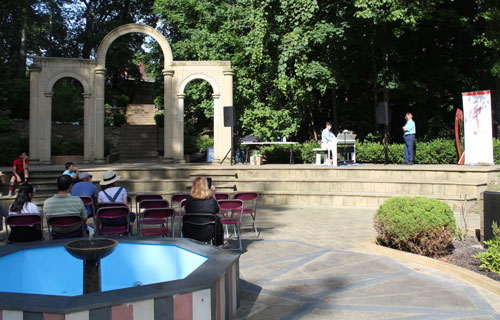
The Syrian Cultural Garden was the host garden for the One World Day Music Studio international talent competition.
A highlight of One World Day is the Parade of Flags where people in costumes of their heritage carry the flags. This year was undoubtedly the largest and most colorful in memory.
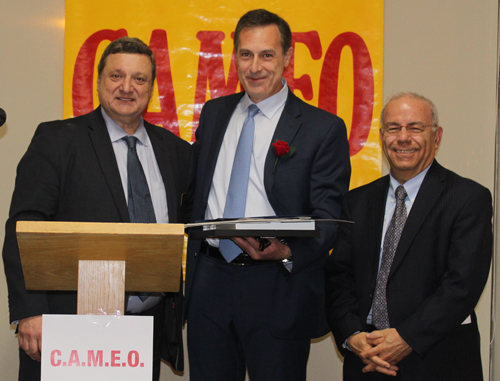
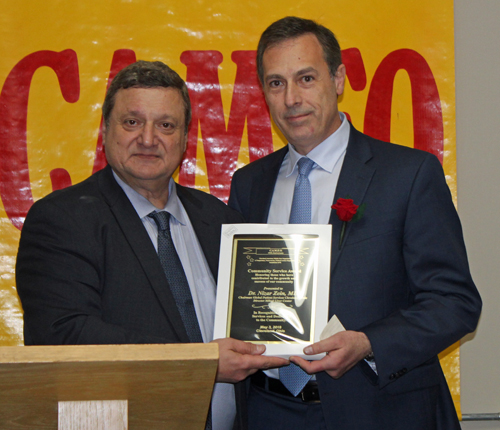
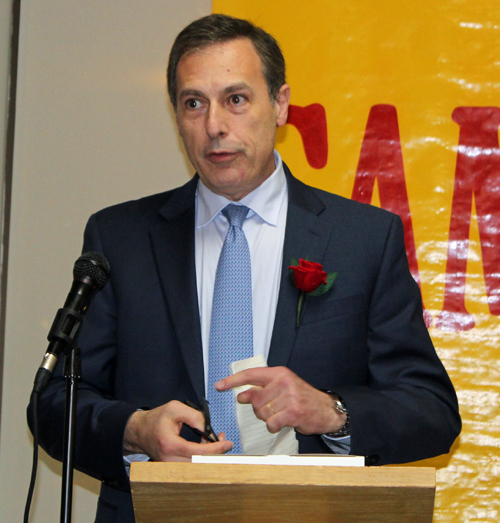
Dr. Nizar Zein honored by Cleveland American Middle East Organization
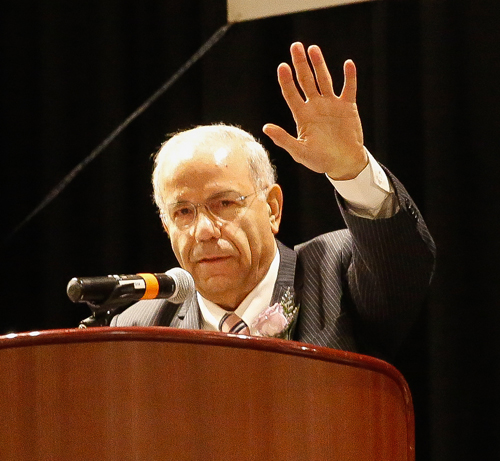
Dr. Nizar Zein was honored with the Cleveland American Middle East Organization (CAMEO) community service award. He was introduced by his Cleveland Clinic colleague and fellow Syrian American Dr. Wael Khoury.
The Cleveland Syrian community took part in the 73rd annual One World Day. In fact, the Syrian Cultural Garden was the host garden for the Naturalization Ceremony and the rest of the official programs.
Members of the community also marched in the annual Parade of Flags and later there was music, dancing, entertainment, food and fun as members of the Syrian community shared their culture with thousands of visitors on One World Day.
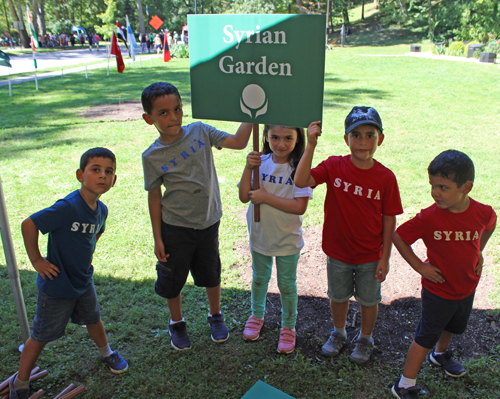
Kids in the Syrian Garden on One World Day
One World Day ceremony in the Syrian Garden
Syrian Garden in the Parade of Flags
Cleveland American Middle East Organization 48th anniversary
The Cleveland American Middle East Organization (CAMEO) is a nonpartisan, nonsectarian political action organization established in 1970. They celebrated their 48th anniversary at a dinner event at St. Elias Cultural Center.
CAMEO honored Dr. Mansoor Ahmed, Mr. Ali Faraj and Kan Zaman Middle Eastern Restaurant at the event.
Cleveland American Middle East Organization (CAMEO)
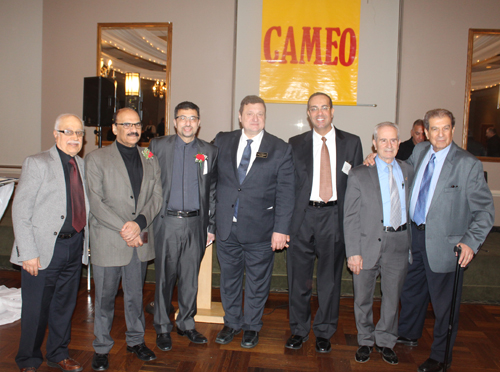
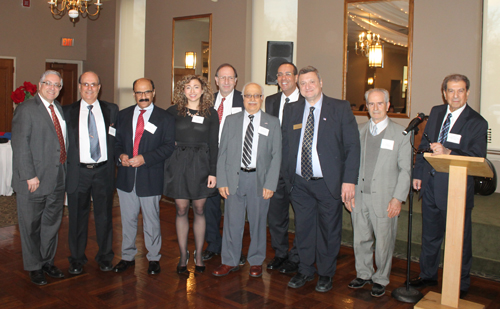
board members Faris Alameh, Pierre Bejjani, Sam Tanious, Tony Abdulkarim and Abby Mina with honorees Dr. Mansoor Ahmed and Mr. Ali Faraj
The Cleveland Foundation coordinated Common Ground on Sunday, July 30, 2017. That day, our community came together during mealtime conversations- breakfast, lunch, dinner and in-between. It was a region-wide initiative to explore our community's power to communicate and connect in order to build a stronger, safer and more dynamic home.
ClevelandPeople.com attended the event in the Syrian Cultural Garden hosted by the Cleveland Council on World Affairs (CCWA) which had an international focus.
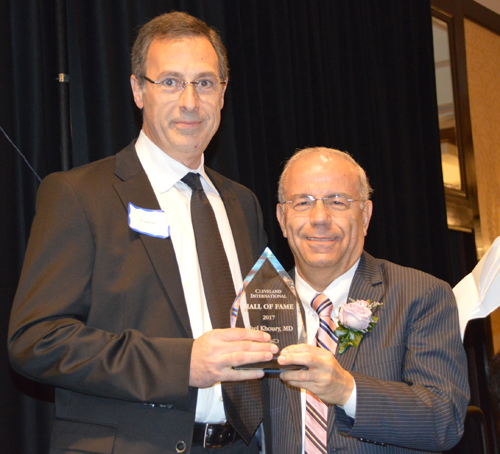
Dr. Nizar Zein and Dr. Wael Khoury with Hall of Fame award
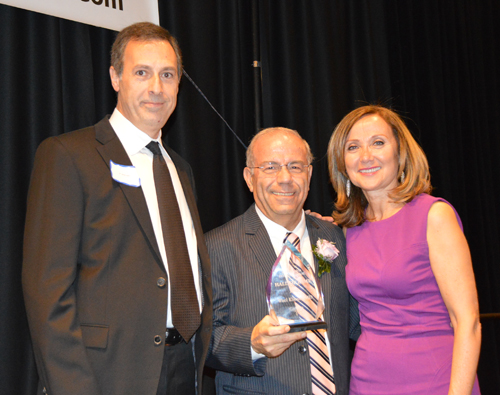
Dr. Nizar Zein and Dr. Wael Khoury with Sawssan Khoury
Click on the white arrow in the image below to watch the video of Jim's speech. Make sure your speakers are on and you can make the video full screen once it begins by clicking the icon in the lower right corner.
Cleveland American Middle East Organization 47th anniversary
The Cleveland American Middle East Organization (CAMEO) is a nonpartisan, nonsectarian political action organization established in 1970. They celebrated their 47th anniversary and induction of new officers at a dinner event at St. Elias Cultural Center.
Cuyahoga County Executive Armond Budish and CAMEO Board
Former President of Lebanon Amine Gemayel in Cleveland
Amine Gemayel, President of Lebanon from 1982-1988, was the guest speaker at Case Western Reserve University on Friday October 7, 2016. The event was sponsored by the CWRU Center for International Affairs, The Office of Diversity, Inclusion and Equal Opportunity, Cleveland Council for World Affairs and the Kataeb Chapter of Cleveland.
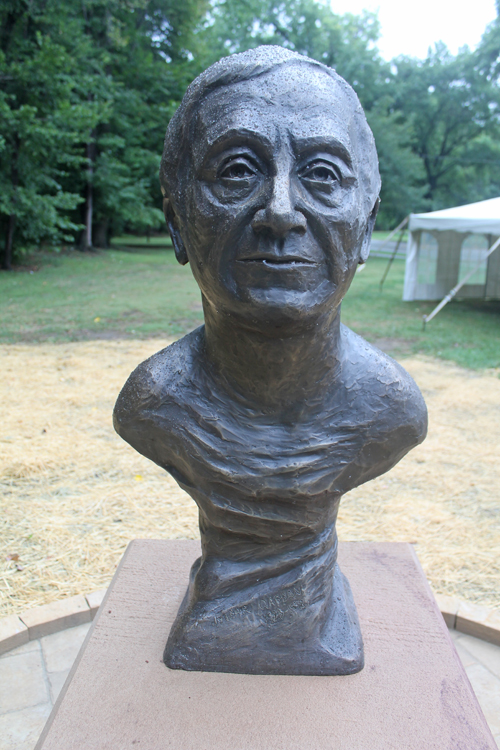
Syrian poet Nizar Qabbani bust dedicated in Syrian Cultural Garden
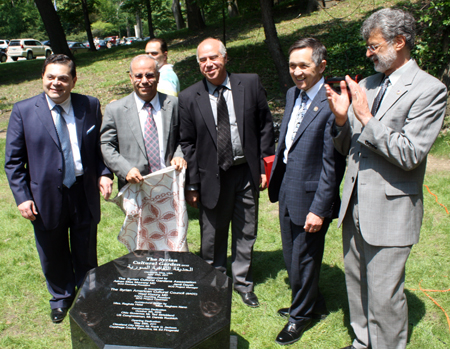
Several hundred members of Cleveland's Syrian community along with friends and supporters gathered at the Syrian Cultural Garden for a ceremony dedicating the new bust of Syrian poet Nizar Qabbani.
Bust of Nizar Qabbani in Syrian Cultural Garden
Dignitaries spoke and Qabbani's son Omar told of his father's life and works.
Poem recitations were done in both English and Arabic and the program ended with children wearing jasmine crowns singing.
Omar Salka demonstrates the oud, (Middle Eastern Lute)
Omar Salka explained the oud, (a Middle Eastern Lute), at the dedication of a statue of the Syrian poet Nizar Qabbani in the Syrian Cultural Garden in Cleveland. The oud has 11 strings.
2014
Syrian Cultural Garden Virtual Tour
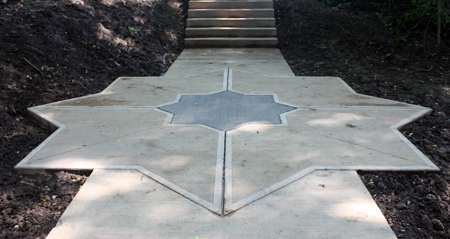
Dan Hanson of ClevelandPeople.Com walks through the Syrian Cultural Garden in Cleveland Ohio. The monuments describe why Syria is called the Cradle of Civilization. The Syria Garden is one of over 25 gardens in the Cleveland Cultural Garden Federation.
Dr. Naser Danan was born in Syria. He spoke about freedom at the 2014 11th annual Global Leadership Seder hosted by the American Jewish Committee (AJC) Cleveland Chapter at Anshe Chesed Fairmount Temple in Beachwood, Ohio.
He said, "We are hardwired to seek a dignified life free of coercion."
2013
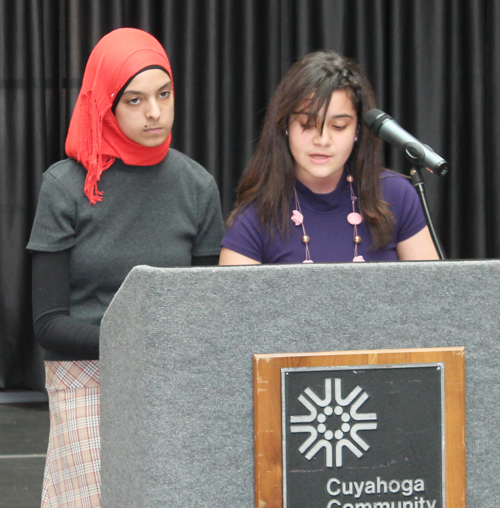
Cuyahoga Community College West and the Parma City School District presented the annual Culture Shock on April 18, 2013.
The Essay Contest was won by an 8th grade student for her story of moving from Syria.
Hon. Mary Rose Oakar
was inducted into the Cleveland International Hall of Fame on Wednesday May 9, 2012. Rep. Oakar was introduced by Dr. Wael Khoury. .
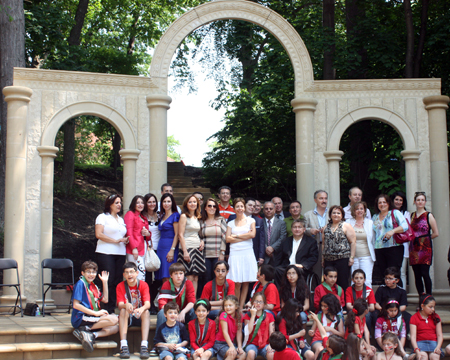
The 64th One World Day Parade of Flags began in the Syrian Cultural Garden. Marchers posed for photos in their ethnic costumes and flags and then an impromptu dance broke out to some lively Syrian music.
St. Elias Melkite Catholic Church 8023 Memphis Ave. For over 100 years, St. Elias Melkite Catholic church has served as the home of Eastern "Melkite" Catholics in and around Cleveland, Ohio.
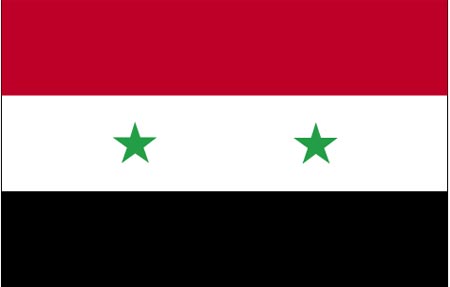
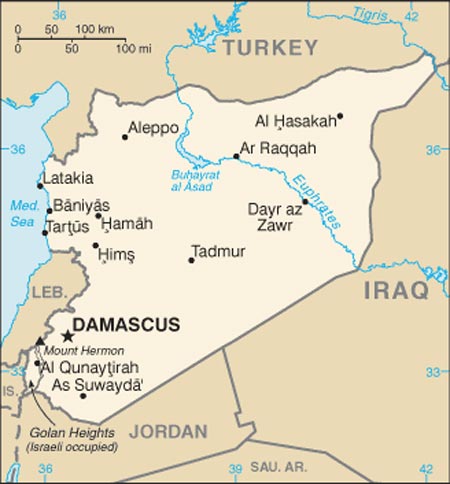
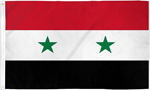
The Syrian Arab Republic is an Arabian country in Southwest Asia, bordering Lebanon and the Mediterranean Sea to the west, Israel to the southwest, Jordan to the south, Iraq to the east, and Turkey to the north.
Its capital city, Damascus, was the seat of the Umayyad Empire and a provincial capital of the Mamluk Empire. Damascus is widely regarded as the oldest continuously inhabited city in the world.
Syria
Following the breakup of the Ottoman Empire during World War I, France administered Syria until its independence in 1946. The country lacked political stability, however, and experienced a series of military coups during its first decades.
Syria united with Egypt in February 1958 to form the United Arab Republic. In September 1961, the two entities separated, and the Syrian Arab Republic was reestablished. In November 1970, Hafiz al-Asad, a member of the Socialist Ba'th Party and the minority Alawite sect, seized power in a bloodless coup and brought political stability to the country.
In the 1967 Arab-Israeli War, Syria lost the Golan Heights to Israel. During the 1990s, Syria and Israel held occasional peace talks over its return. Following the death of President al-Asad, his son, Bashar al-Asad, was approved as president by popular referendum in July 2000.
Syrian troops - stationed in Lebanon since 1976 in an ostensible peacekeeping role - were withdrawn in April 2005. During the July-August 2006 conflict between Israel and Hizballah, Syria placed its military forces on alert but did not intervene directly on behalf of its ally Hizballah.