Sts Constantine and Helen Greek Orthodox Church Festival
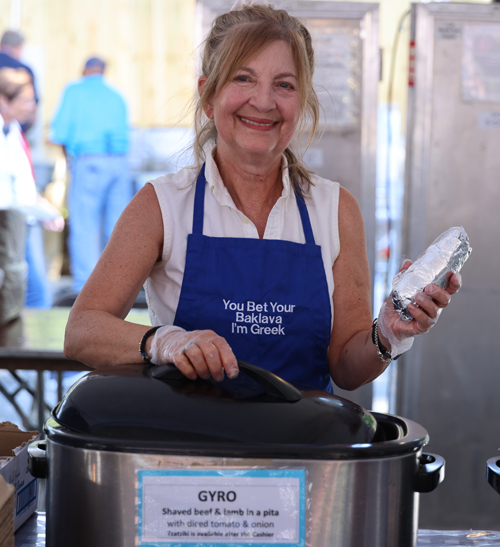
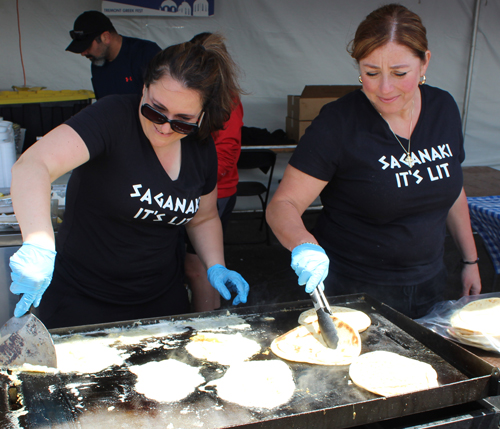
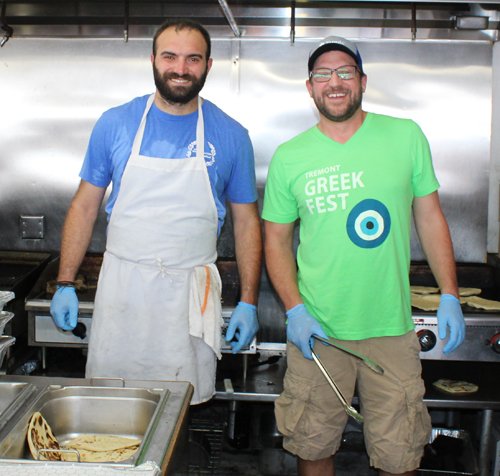
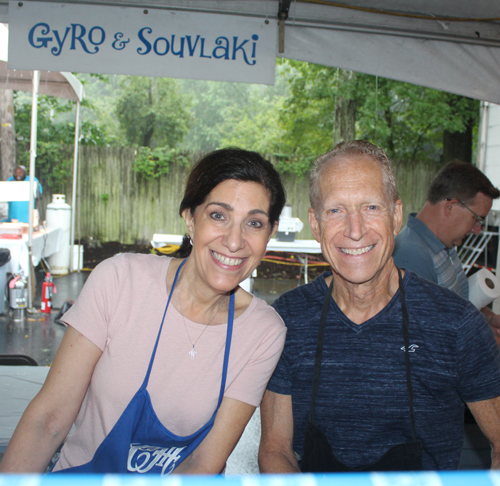
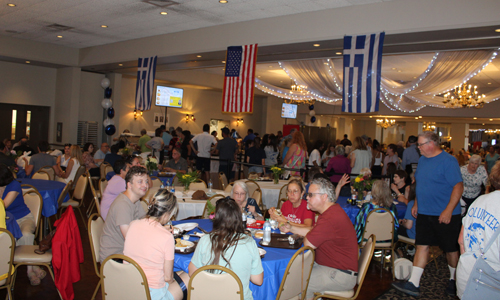
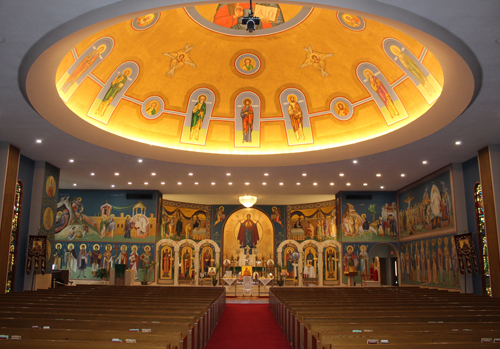
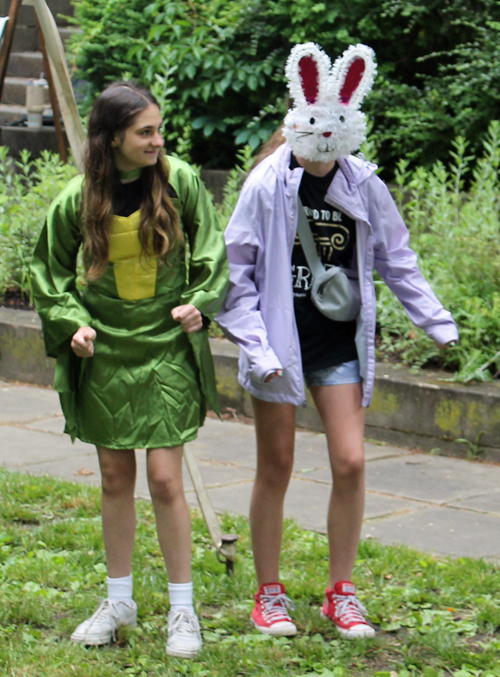
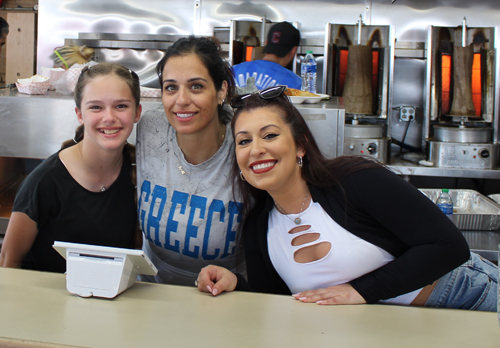
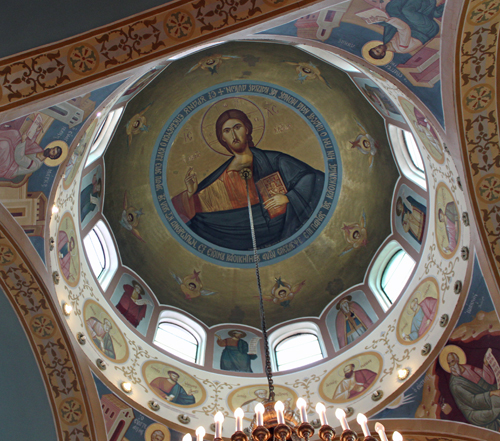
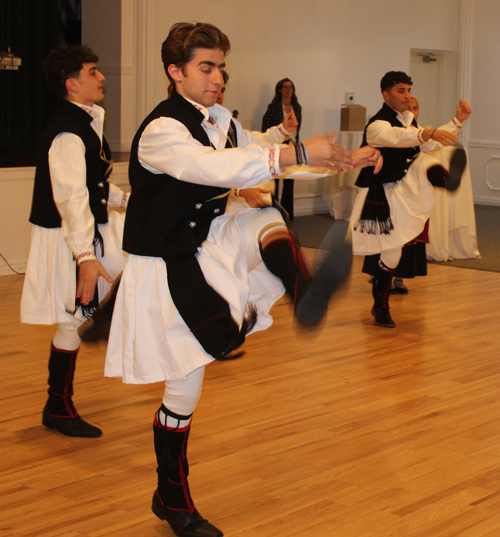
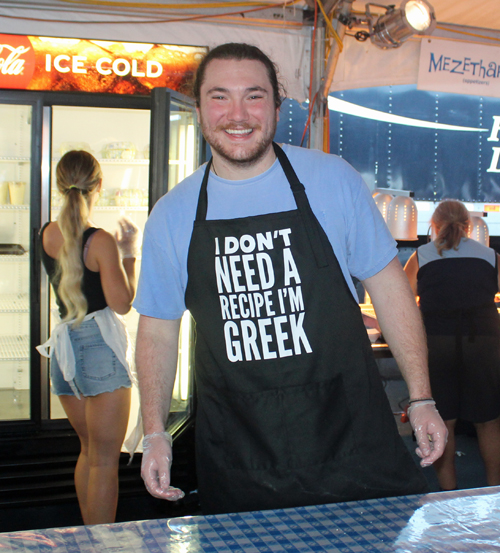
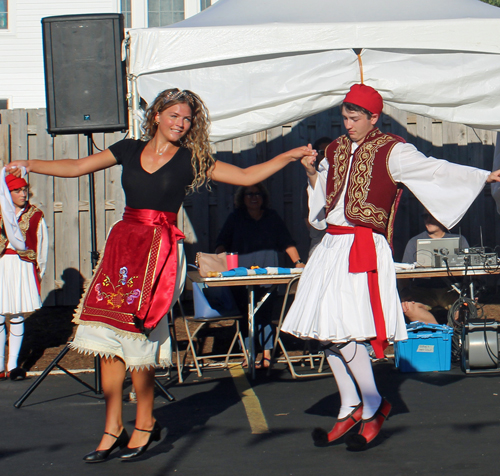
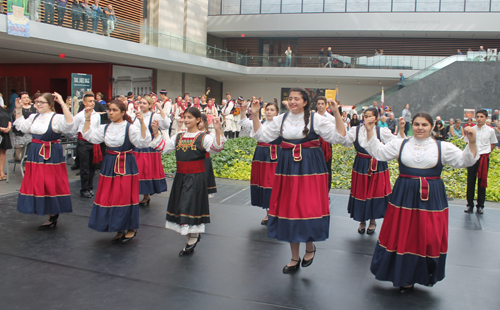
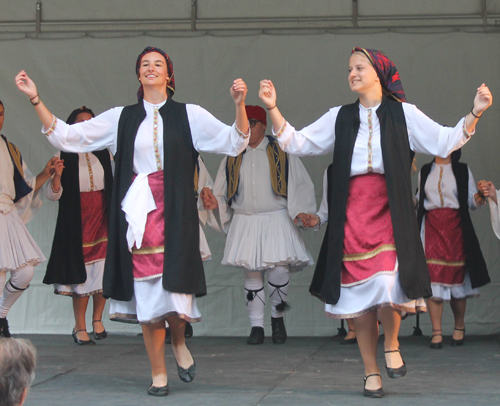
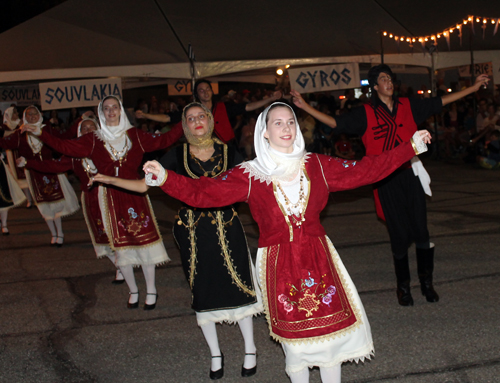
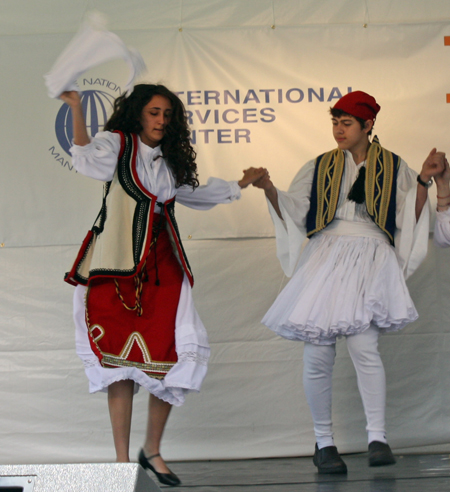
The Cleveland area is fortunate to have four large annual Greek summer festivals. On July 23-26, 2026 Sts Constantine and Helen Greek Orthodox Church hosted theirs. As always there were performances from the Senior and Junior Dancers, tours of the beautiful Church, storytime for kids, Cooking demos, bands, shopping and more. Of course the authentic and traditional Greek food is a huge draw.
Hierarchical Blessing Ceremony in the Greek Cultural Garden
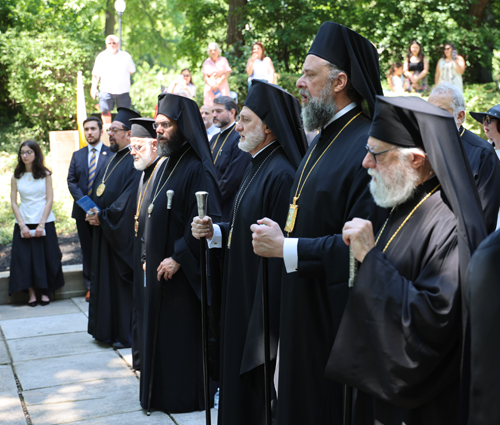
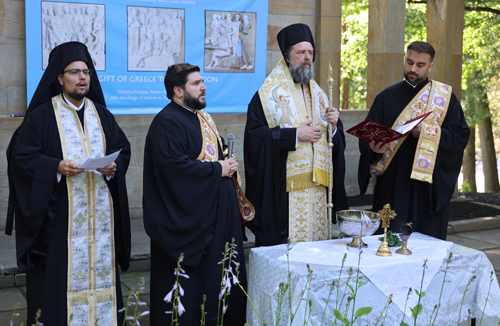
In celebration of the 250th anniversary of the Independence of the United States of America. the Greek Orthodox Archdiocese of America and the Greek Garden Association of Cleveland hosted an historical Hierarchical Blessing of the Greek Cultural Garden led by His Eminence Elpidophoros, Archbishop of America, and the Metropolitans of the Holy Synod.
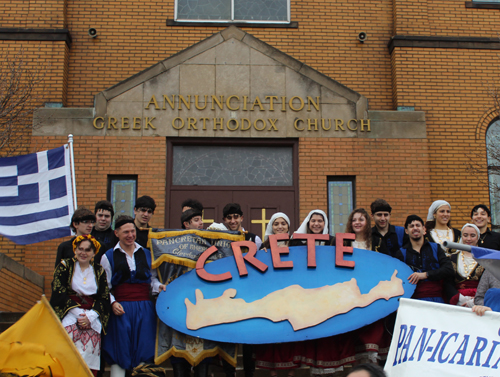
Greek Independence Day at Annunciation Greek Orthodox Church
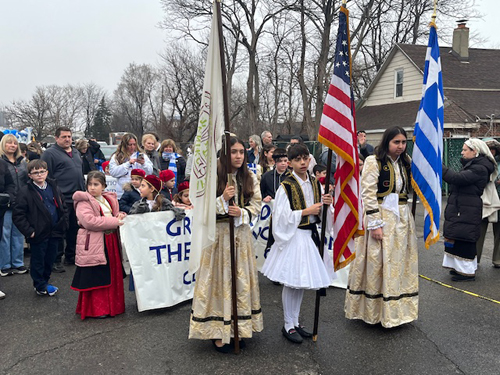
Greek Independence Day falls on March 25 and has been celebrated annually since the end of the Greek Revolution in 1821. It is also known as the Celebration of the Greek Revolution, and honors the Greeks’ fight for freedom after being occupied by the Ottoman Empire for over 400 years. This day is also when the Feast of the Annunciation is commemorated so it is fitting that the Annunciation Church held their annual event.
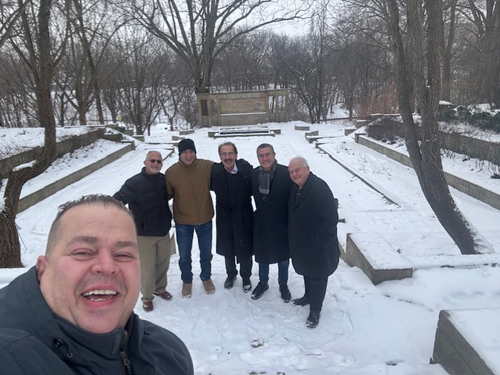
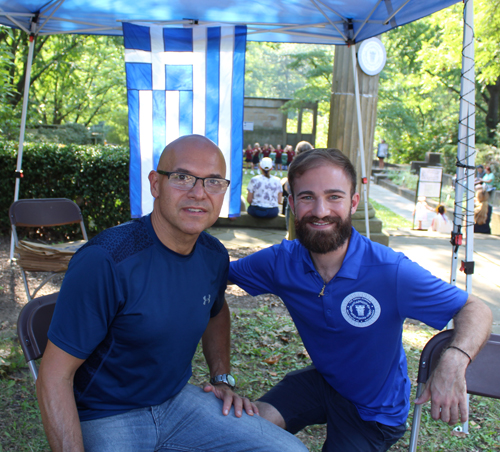
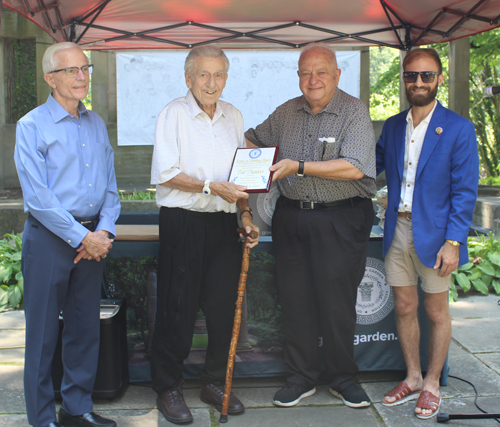
On Monday January 19, 2026 local leaders from the Greek community gave a tour of the Greek Cultural Garden to the American Hellenic Educational Progressive Association (AHEPA) Supreme President from Washington DC and the AHEPA Supreme Governor from Michigan. It was their first visit to the Greek Garden and they were very impressed with the progress.
Taking the picture is Dimitrios G. Kalafatis, Supreme President CSAC, Chios Societies Of the Americas and Canada. The five pictured from left to right are: Supreme Governor, Craig Theros, Honorable James Trakas, AHEPA Supreme President E. Chris Kaitlin, Pascalis Papouras director of the Greek Garden and Lou Frangos President of the Greek Garden.
2025
Tri-C Food Pantry recognizes donors Ann and Lou Frangos
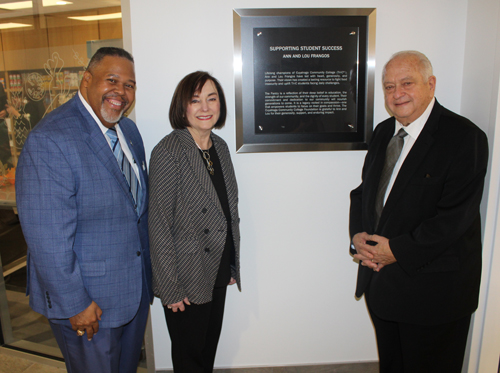
The Westshore Campus of Cuyahoga Community College (Tri-C) dedicated its newly renovated Westshore Campus Food Pantry on Friday, Nov. 7, 2025 with a ceremony honoring the "transformative philanthropy" of Ann and Lou Frangos.
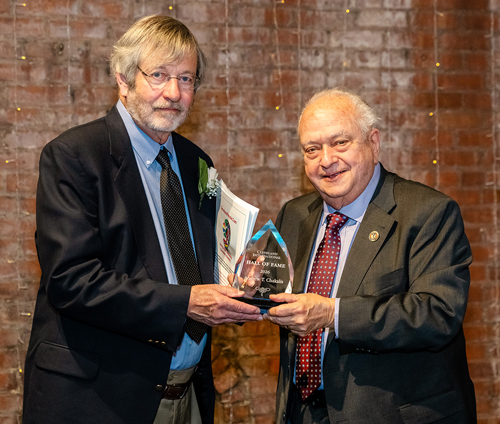
Dr. Michael Baston with Ann and Lou Frangos
The Pantry ensures students in need have access to food, essential resources and financial support in an open, welcoming space. The Frangos' gift supports the Tri-C Foundation's efforts to ensure that each campus has adequate, accessible resources to address student food insecurity.
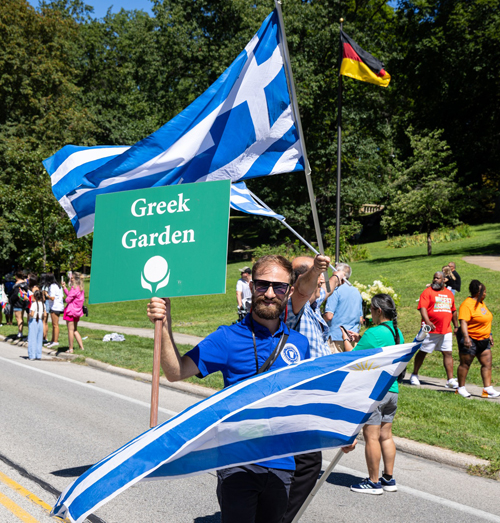
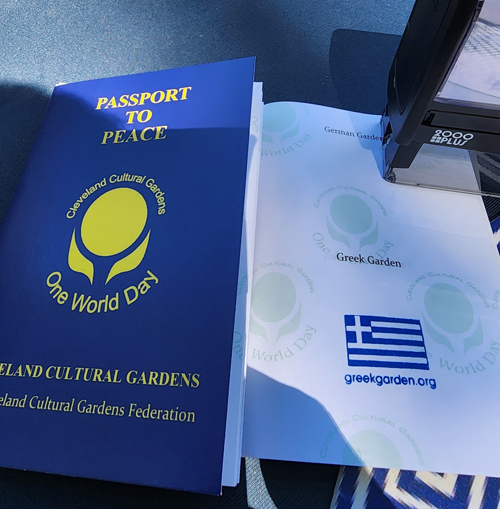
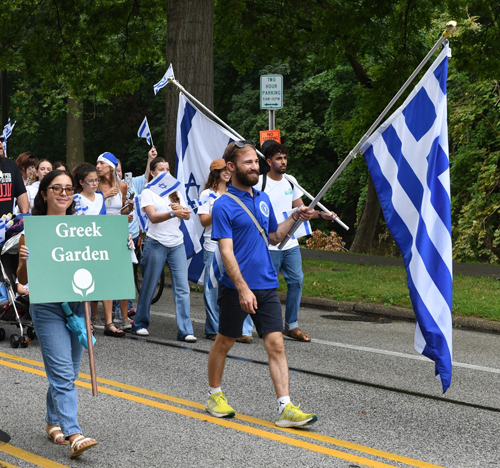
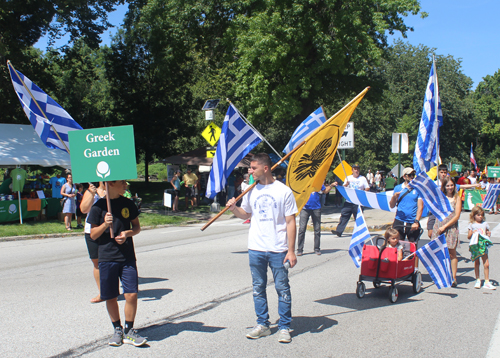
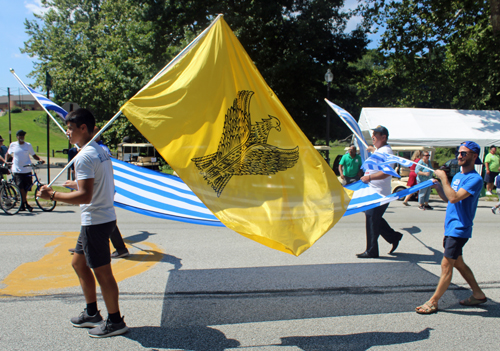
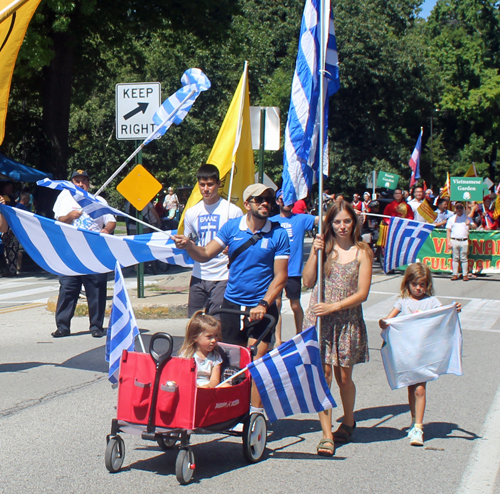
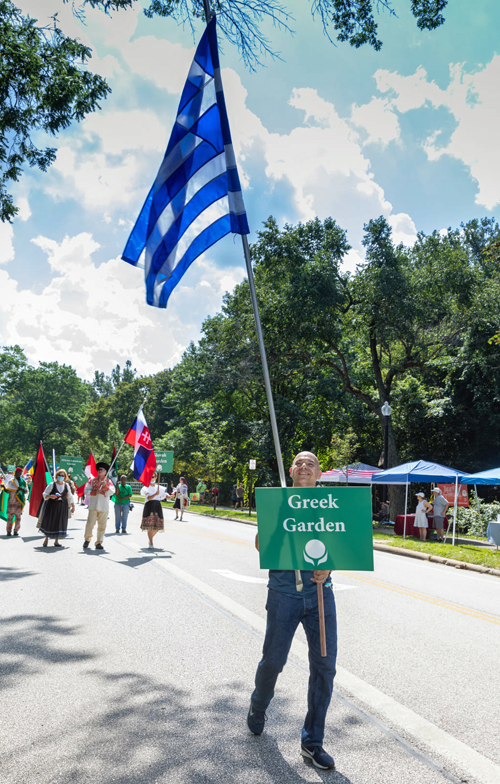
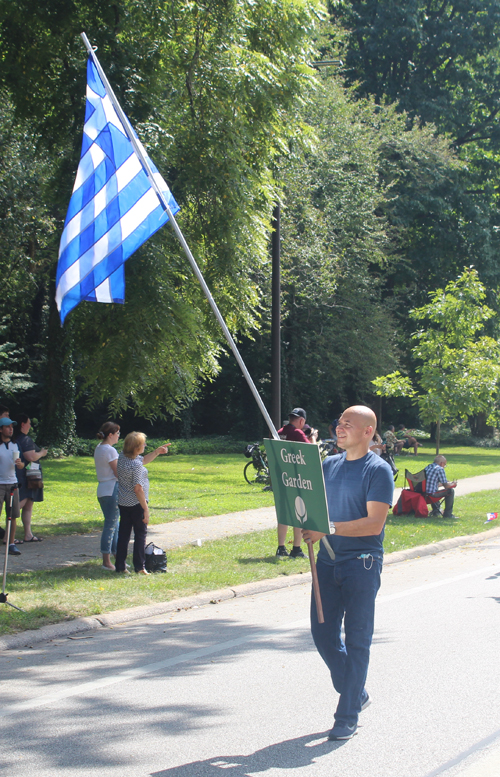
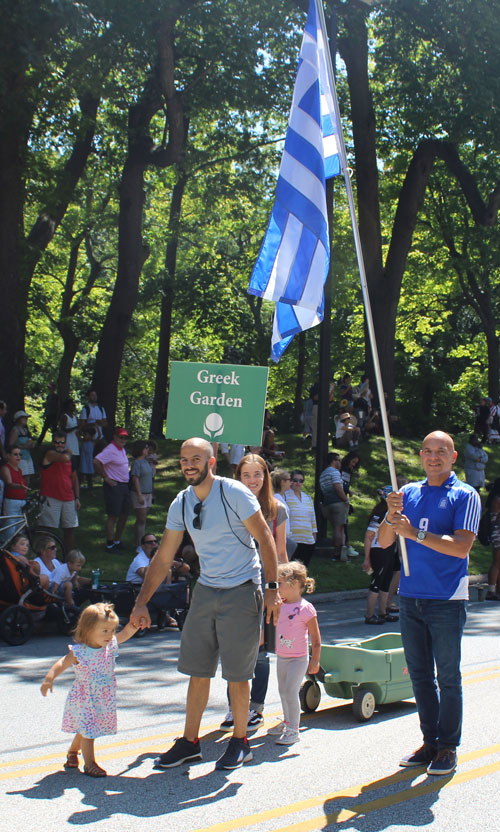
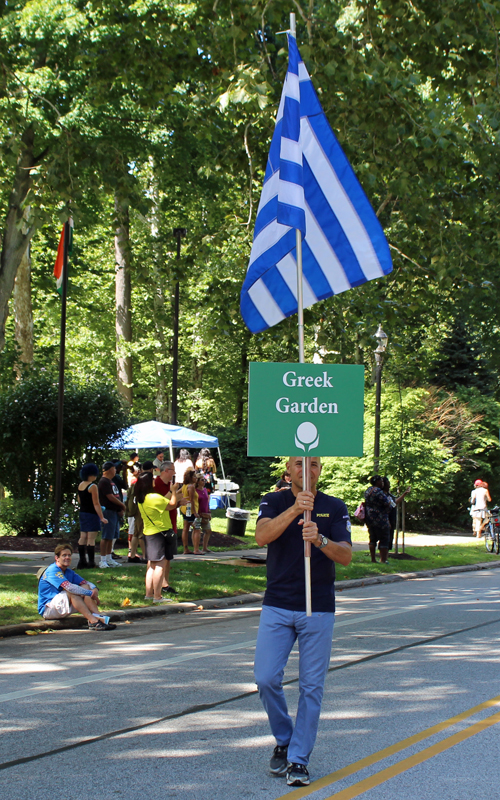
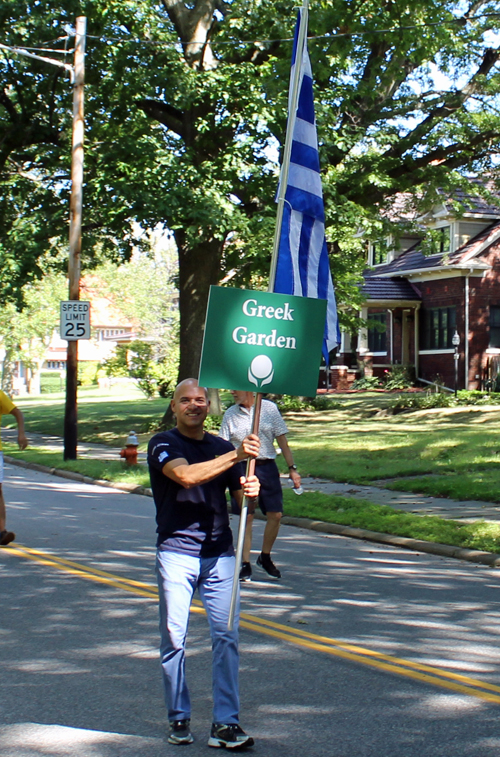
The Greek Cultural Garden was very busy on One World Day in the Cleveland Cultural Gardens. One World Day has been the official event of the Cleveland Cultural Gardens Federation since 1946. The Greek Garden community participated in the Parade of Flags which had 1500 people from over 53 countries.
All the traditional Greek food items were available at the St Paul Greek Fest in either the Dining Room, Under the Tent or On the Deck such as Lamb Shank, Athenian Chicken, Moussaka, Gyros, Souvlaki (pork and chicken), Pastitsio, Spanakopita, Orzo Salad, Tzatziki, Dolmathes, Tiropita, Saganaki with Pita and much more. Of course the Pastries are very popular such as Baklava, Bougatsa, Karithopita and much more including Loukoumades.
Here is a short video explaining Loukoumades.
Reception for Greek Deputy Minister
The Greek Cultural Garden in Cleveland, under the direction of Greek Garden Association President Lou Frangos, hosted a program on June 17 in the Greek Cultural Garden in Cleveland to welcome Honorable Ioannis-Michail Loverdos the Deputy Minister of Foreign Affairs of Greece.
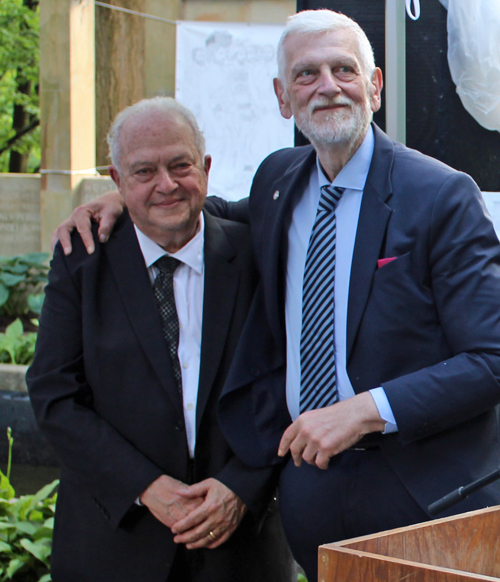
Lou Frangos and Deputy Minister Loverdos
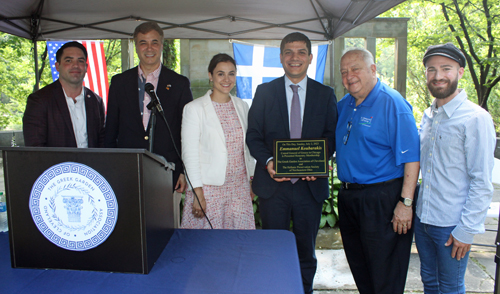
Other guests included Consul General of Greece in Chicago Emmanuel Koubarakis and His Eminence Metropolitan Savas, Greek Orthodox Metropolis of Pittsburgh.
The annual Tremont Greek Festival at Annunciation Greek Orthodox Church is a Memorial Day tradition. Great food, Greek desserts, dances, music, tours of the Church and more.
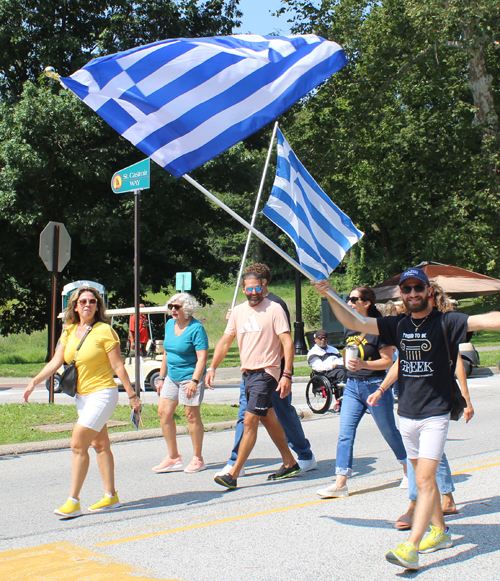
The Greek Cultural Garden was very busy on One World Day in the Cleveland Cultural Gardens. One World Day has been the official event of the Cleveland Cultural Gardens Federation since 1946. The Greek Garden community participated in the Parade of Flags which had 1500 people from over 53 countries.
Ted Theodore Honored and a Greek Cultural Garden Update
The Greek Garden Association of Cleveland (GGAC) hosted one of their educational series events in the Greek Cultural Garden on Sunday August 4, 2004. The topic of the lecture was: On the Nature of Things: An introduction to Aristotle's Life and Thought by Peter Gilbert PhD. Before the lecture, GGAC President Lou Frangos told of a special honor to be given to Ted Theodore as the first Greek Garden Board Member Emeritus.
Bert Moyar, Ted Theodore, Lou Frangos, Jonathan Cambouris
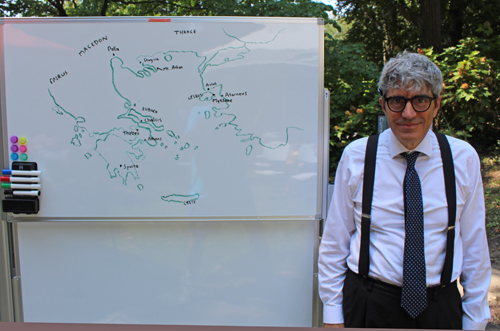
The Greek Garden Association of Cleveland (GGAC) hosted one of their educational series events in the Greek Cultural Garden on Sunday August 4, 2004. The topic of the lecture was: On the Nature of Things: An introduction to Aristotle's Life and Thought by Peter Gilbert PhD. The Greek Cultural Garden was the perfect setting for such a lecture.
Dr. Peter Gilbert with a map he drew for the lecture
The annual Tremont Greek Festival at Annunciation Greek Orthodox Church is a Memorial Day tradition. Great food, Greek desserts, dances, music, tours of the Church and more.
Greek Orthodox Religion in the Africa & Byzantium Exhibit
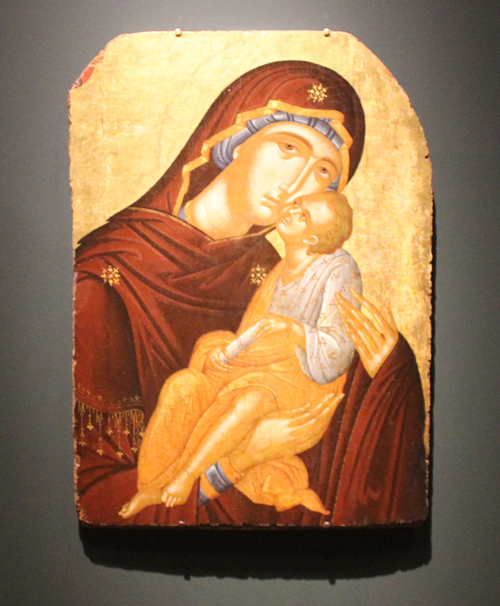
The new exhibition at the Cleveland Museum of Art, Africa & Byzantium, considers the complex artistic relationships between northern and eastern African Christian kingdoms and the Byzantine Empire from the fourth century CE and beyond. The first international loan exhibition to treat this subject, the show includes more than 160 works of secular and sacred art from across geographies and faiths, including large-scale frescoes, mosaics, and luxury goods such as metalwork, jewelry, panel paintings, architectural elements, textiles, and illuminated manuscripts.
Icon of the Mother of God and Infant Christ Attributed to Angelos Akotantos, Greek 1450
You will see pieces representing Christian, Jewish and Muslim faiths. One of our favorite parts of the exhibition is a Cleveland religious connection. The CMA's presentation is bolstered by loans from two local religious communities, reflecting years of community collaboration that powerfully demonstrates the contemporary relevance of the exhibition's topic today.
"Our work with local religious communities has been very meaningful," said Curator Windmuller-Luna. "We are grateful for their willingness to tell their stories and loan their precious artworks to us. To share these Greater Clevelanders' vivid perspectives, we have placed Community Voice labels throughout the exhibition, offering a firsthand glimpse of artworks' personal significance. We have also included Community Voice videos in this exhibition, a first for the CMA."
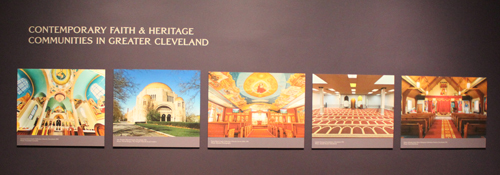
Another nice touch is the display of "Contemporary Faith and Heritage Communities in Greater Cleveland."
Contemporary Faith and Heritage Communities in Greater Cleveland
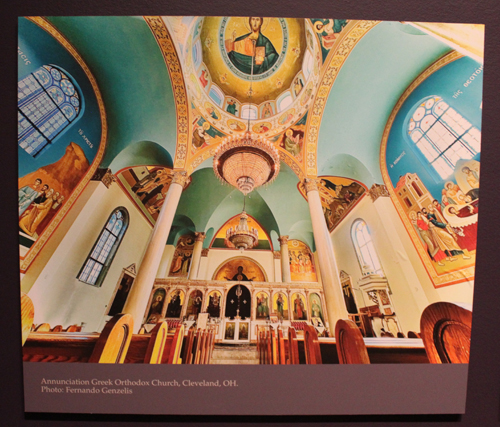
Annunciation Greek Orthodox Church
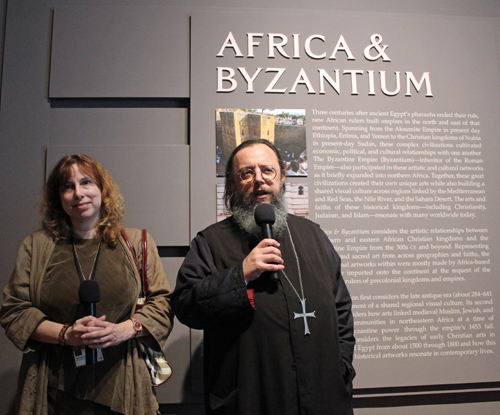
One of the speakers was The Very Reverend Archimandrite Porphyrios from the Holy Monastery of Saint Catherine, Sinai
The Very Reverend Archimandrite Porphyrios Holy Monastery of Saint Catherine, Sinai and translator.
Greek Independence Day Celebration - March 30, 2024
Greater Cleveland is the home of over 20,000 Americans of Greek heritage, and the Annunciation Greek Orthodox Church is the oldest church, or mother church of Greek Orthodoxy in the area. The linkage of the Annunciation of the Virgin Mary, celebrated on March 25th, and the Greek Revolution are very sacred to the Greek people, since the church sanctioned the Revolution.
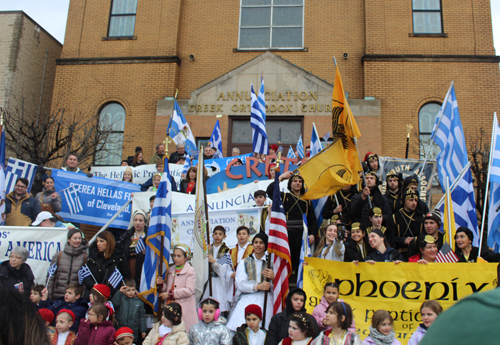
On March 30, 2024, there was a Doxology, church service, at Annunciation Church followed by a Parade and then festivities in the Church hall.
Greek Independence Day group on Annunciation Church steps
Greek Independence Day was celebrated with a parade and more in Cleveland, Ohio on Saturday March 30, 2024 at Annunciation Church in Tremont in Cleveland. Here are some video highlights of the Parade starting with the start of the Parade as they left Annunciation Church and began their march around Lincoln Park and then arrived back at the Church traveling along West 14th Street.
Greek Independence Day was celebrated with a parade and more in Cleveland Ohio on Saturday March 30, 2024 at Annunciation Church in Tremont in Cleveland. Members of Annunciation Church in Dayton came up for the event and we spoke with Pothitos Pitychoutis who was born in Greece and now lives in Dayton Ohio. Pothitos told us about the symbolism of the Greek flag.
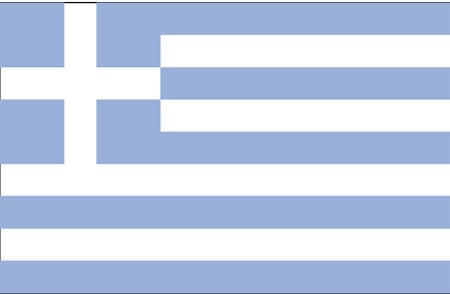
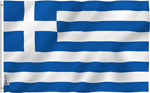
The blue is for truth, loyalty and justice and the blue color of the Greek sea. The white is for peace and honesty and the white colors of Greece's waves crust. There are nine stripes which stand for the nine syllables of the Greek phrase which translates to Freedom or Death. The equal-armed cross in the upper left of the flag symbolizes the Greek Orthodox Church which has had a major role in the fight for independence against the Ottomans.
Greeks at St. Patrick's Day Parade
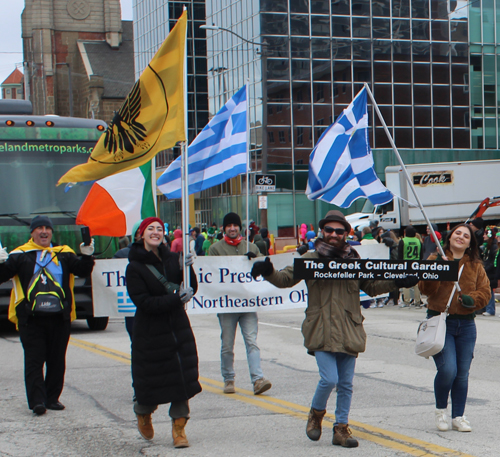
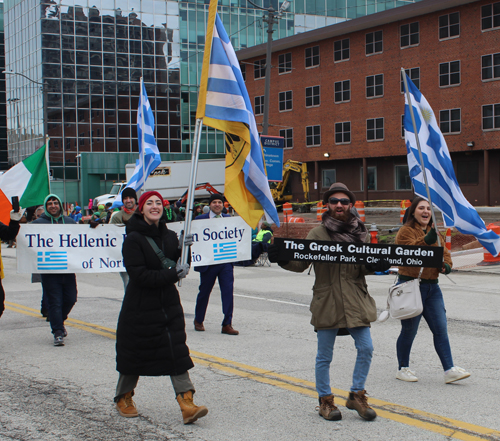
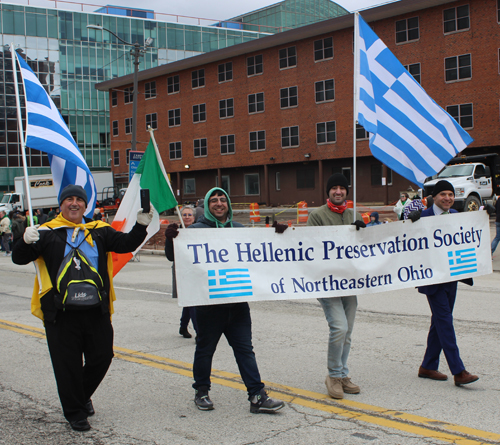
The Greek community was well-represented at the 2024 St. Patrick's Day Parade in Cleveland. The Greek Cultural Garden marched as part of the Cleveland Cultural Gardens Federation unit.
The Greek Cultural Garden was very busy on One World Day in the Cleveland Cultural Gardens. One World Day has been the official event of the Cleveland Cultural Gardens Federation since 1946. Over 50,000 people visited the gardens on One World Day 2023. The Greek Garden community participated in the Parade of Flags which had 1500 people from over 53 countries.
Greek Cultural Garden Lecture Series - The Golden Ratio
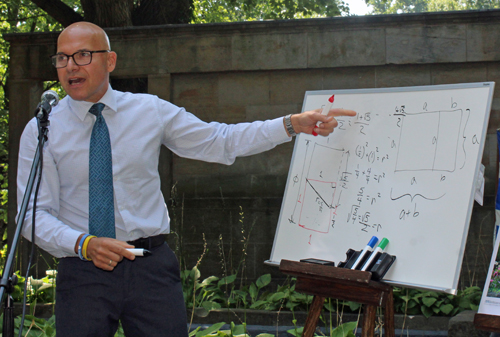
The Greek Cultural Garden hosted a Lecture Series in the summer of 2023 showcasing some of the great thoughts from Greek cultural luminaries. On August 19, 2023 the topic was Demystifying the Golden Ratio and it was presented by math professor Athanasious Sarantopoulus.
Congratulations to Stonebrook Montessori from the Greek Gardens Association of Cleveland
Schools are ranked on their performance on state required tests and how well they prepare students for high school. Learning standards are one of the most important issues in public education today.
The Greek Garden Association wants to shout-out a big Congratulations to Stonebrook Montessori for earning top stars and meeting the State of Ohio learning standards for education.
Stonebrook Montessori is a charter school in Cleveland, OH near the Cleveland Cultural Gardens in Rockefeller Park. We applaud them for their exciting achievement and we appreciate them for their help during our events this past summer at the Greek Garden.
The Greek Garden’s mission is to promote education for the youth in our community especially through teachings of the thirty-four (34) famous Greek philosophers in history. Stonebrook Montessori has shown our community the dedication of teachers that promote education to our youth. They value and promote every child and encourage them to make a positive difference in the community and in the world.
Our wonderful friends at Stonebrook Montessori supports the events of the Greek Garden and that of all of the Cleveland Cultural Gardens. We wanted to send our heart-felt appreciation their way by providing lunch for Principal Hayes and her staff with food from the Rascal House and we wish them continued success for years to come. The work you do is important and so appreciated!
We are so proud of their accomplishment!
Sts. Constantine & Helen Greek Fest
Another highlight of the summer is the Sts. Constantine & Helen Greek Fest, an annual weekend of authentic Greek food, traditional entertainment, and much more.
The need for a Greek Orthodox Church in the eastern suburbs of Greater Cleveland was felt prior to World War II, when many Greek Orthodox communicants had scattered throughout the city. In 1957 the first service was held at the new Sts. Constantine & Helen in Cleveland Heights. On December 17, 1967, the Archbishop designated Sts. Constantine & Helen a Cathedral.
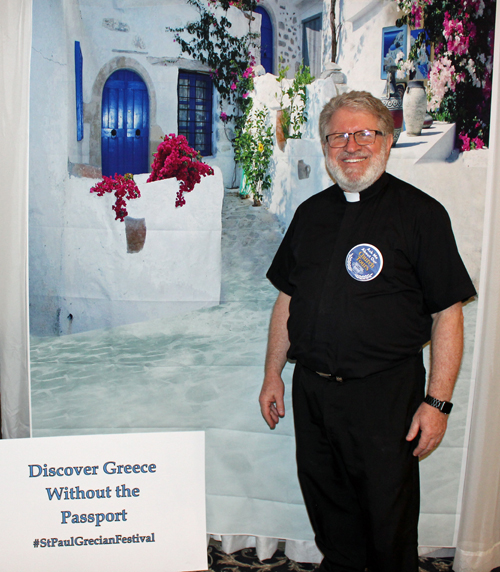
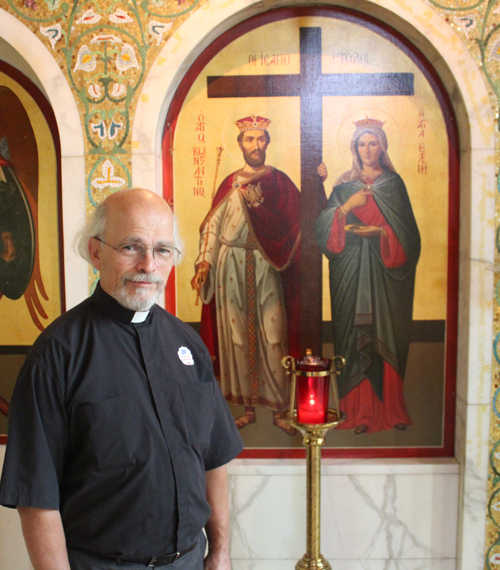
Father Stephen Callos in front of Sts Constantine and Helen icons
Did you know that there are some 225 million Orthodox Christians worldwide and over 6 million right here in the United States? It's the second largest body in all of Christendom. On Palm Sunday, April 19, 1970 the doors of St. Paul Greek Orthodox Church opened for the first time.
Greek Consul General Emmanuel Koubarakis visits the Greek Cultural Garden
The Consul General of Greece in Chicago Emmanuel Koubarakis visited the Greek Cultural Garden in Cleveland Ohio on July 2, 2023. A ceremony was held with dignitaries and members of the Greek community.
Steve Demetriou, Jim Trakas, Mrs and Consul Koubarakis, Lou Frangos and Jonathan Cambouris
St Paul Greek Orthodox Church Summer Camp in the Greek Cultural Garden
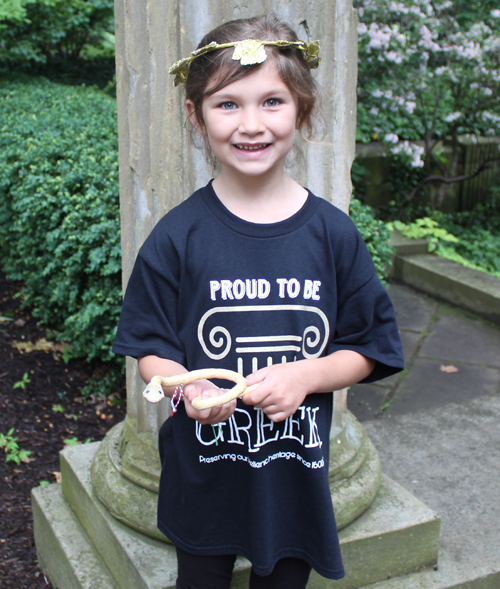
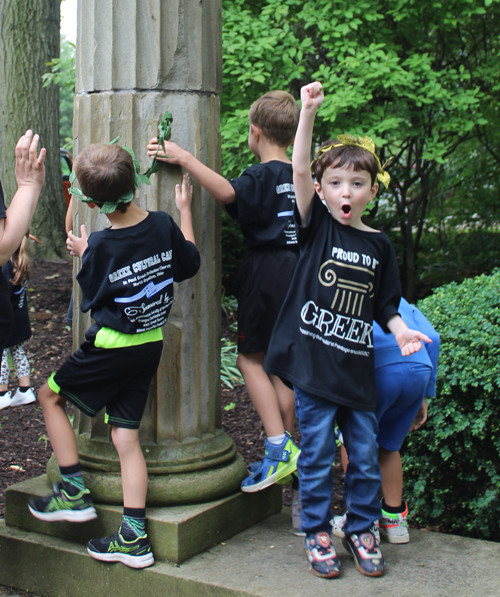
St Paul Greek Orthodox Church is located in North Royalton, OH and Rev. Fr. Costas P. Keares is the Presiding Priest. 120 or so youngsters participated in a week learning about Greek Culture at their Greek Cultural Summer Camp. One of the activities of the St Paul Greek Orthodox Church Greek Cultural Summer Camp was a visit to the Greek Cultural Garden in Cleveland.
Among the many fun and educational activities were the presentation of 3 Aesop's Fables acted by some of the older students.
The annual Tremont Greek Festival at Annunciation Greek Orthodox Church is a Memorial Day tradition. Great food, Greek desserts, dances, music, tours of the Church and more.
Greater Cleveland is the home of over 20,000 Americans of Greek heritage, and the Annunciation Greek Orthodox Church is the oldest church, or mother church of Greek Orthodoxy in the area. The linkage of the Annunciation of the Virgin Mary, celebrated on March 25th, and the Greek Revolution are very sacred to the Greek people, since the church sanctioned the Revolution.
I learned this new word from these two proud Greek-Americans: Demetrios Anagnostos and Lou Frangos. It translates to "love of honor" but they said it is almost impossible to translate sufficiently as it describes a complex array of virtues.
Demetrios Anagnostos and Lou Frangos
Cleveland Cultural Gardens Federation Election Ceremony
Each year the newly elected members of the Cleveland Cultural Gardens Federation (CCGF) board of directors is sworn in at a ceremony at a different ethnic location. Thanks to new board member Lou Frangos and his wife Ann the venue in 2023 was the hall of the beautiful and historic Annunciation Greek Orthodox Church in the Tremont neighborhood of Cleveland.
In his welcoming remarks, Lou Frangos spoke about Annunciation Greek Orthodox Church, the first Greek Orthodox Church founded in Cleveland, Ohio. It is considered the "Mother Church" of the Greek community in Cleveland.
Watch a video of Lou's remarks.
Besides the swearing in and official business there were performances by the Annunciation Senior Dancers, a Greek band and delicious food.
Cleveland's Tremont neighborhood was teeming with the blue and white of the Greek flag, as hundreds of celebrants paraded around Lincoln Park in celebration of the 202nd anniversary of the start of the Greek Revolution of 1821.
Greater Cleveland is the home of over 20,000 Americans of Greek heritage, and the Annunciation Greek Orthodox Church is the oldest church, or mother church of Greek Orthodoxy in the area. The linkage of the Annunciation of the Virgin Mary, celebrated on March 25th, and the Greek Revolution are very sacred to the Greek people, since the church sanctioned the Revolution.
Annunciation Greek Orthodox Church steps after the Parade
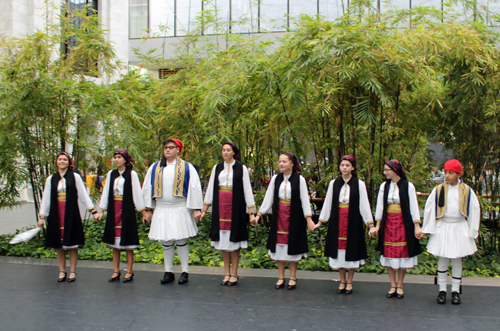
The goal of the dance troupe is "to preserve the rich musical and dance heritage of all the regions of Greece and the Greek diaspora by teaching our dancers the pride of performing, while also acting as ambassadors to the Greater Cleveland community."
The troupe performed dances from the Naxos, Kalymnos, Icaria and Epiros and the popular and traditional Kalamatiano Greek dance was performed as a grand finale.
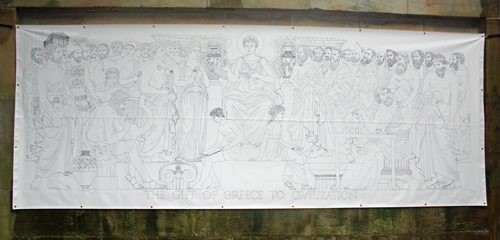
Greek Cultural Garden Signing Ceremony The Gift of Greece to Civilization
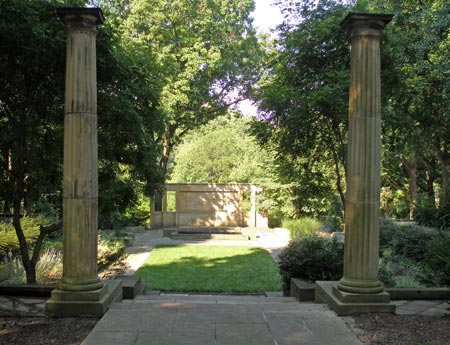
The Hellenic Preservation Society (HPS) is commissioning an ambitious and exciting work for the Greek Cultural Garden, one of 35 (and growing) in a chain of Cultural Gardens in Cleveland Ohio. The Garden was dedicated in 1940 and has been sponsored by the HPS since 1992. The Hellenic Preservation Society has commissioned Master Stone Carver Nicholas Fairplay to sculpt a 5 x 15' stone relief to be installed on the Parthenon Wall featuring dozens of Greek cultural figures.
The ceremony was held in the Greek Garden on September 4, 2022 with over 100 people attending despite the rain.
The Cleveland Greek community demonstrated their proud heritage at One World Day in the Cleveland Cultural Gardens. One World Day has been the official event of the Cleveland Cultural Gardens Federation since 1946. Over 40,000 people visited the gardens on One World Day 2022.
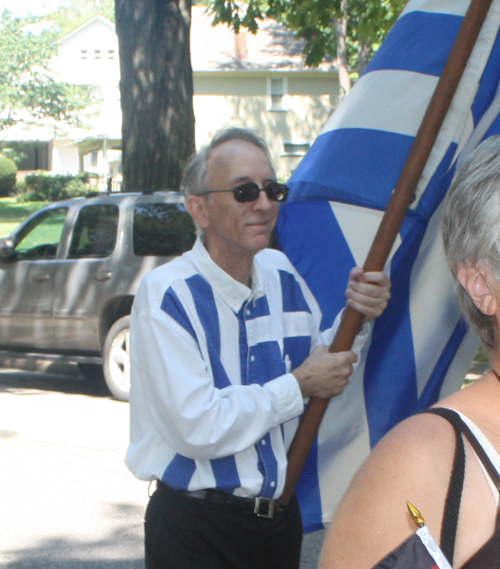
The Greek community participated in the Parade of Flags.
Greek Garden in Parade of Flags
Here is a video of the entire Parade of Flags.
They then welcomed visitors to the Greek Garden and shared their culture.
The annual Greek Festival at Sts. Constantine & Helen Cathedral featured delicious food and drink, Greek culture, camaraderie and music and dancing.
Food included gyros, souvlaki, smelts, keftethes, saganaki, stifado, fish piaki, baked lamb shank, moussaka, pastitsio, dolmades, spanakopita and much more. And of course there were desserts such as rizogalo, baklava, finikia, galaktobouriko, kataifi, koulourakia, tsoureki, loukoumathes and more.
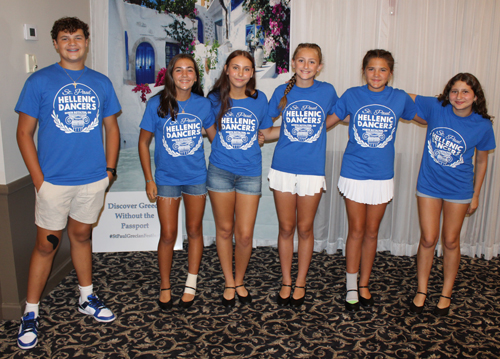
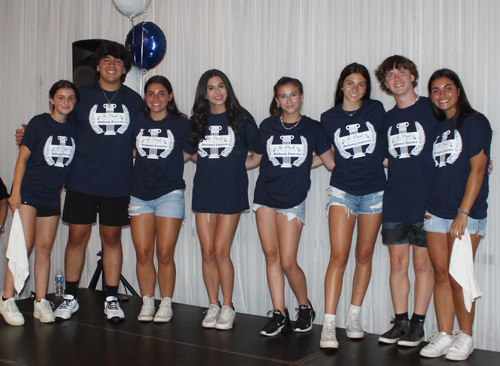
A highlight was the dances performed by both the Junior and Senior Hellenic Dancers.
We have many videos of their performances of dances from all around Greece.
Sts. Constantine and Helen Greek Orthodox Cathedral
Saints Constantine & Helen Cathedral is a parish of the Greek Orthodox Archdiocese of America. The word “Greek” in the church’s name refers both to the ethnic heritage of its founders and to the cultural roots of its history and theology. The church is open to people of all nationalities. Its mission is “To lead people to God through Orthodox Christianity and to provide ways for them to live and share God’s love.”
Each year they hold a very popular Greek festival sharing culture and friendship, music & dancing, as well great food, with neighbors.
They also offer tours of the beautiful Church.
In this video, Father Tom told about the Church and about Greek Orthodox liturgy. He told about the icons and shared the story of St. Constantine and his mother St. Helen.
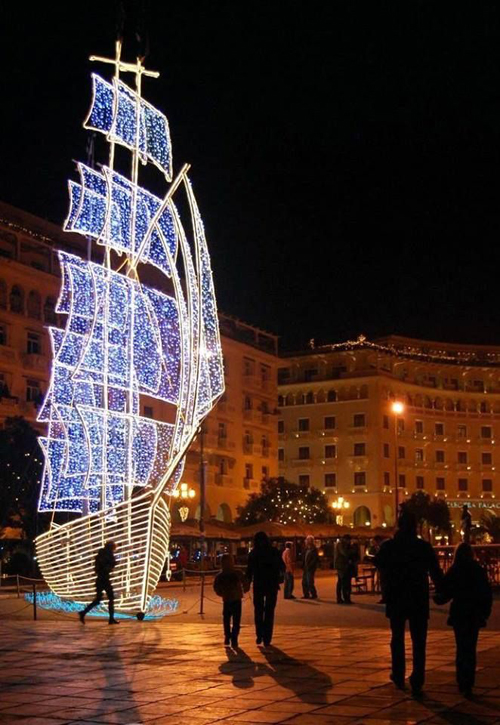
We asked community leaders of various ethnic heritages to share some holiday traditions of their culture. A Greek heritage young lady said "In Greece it's popular to decorate both Christmas trees and wooden boats. The picture is from Thessaloniki that shows a decorated ship in one of the main streets of the city.
Decorated ship in one of the main streets of the city of Thessaloniki in Greece
The Cleveland Cultural Gardens Federation hosted the 74th annual One World Day on August 25, 2019. Police estimates say that over 30,000 people visited the Gardens and attended One World Day. There was a lot of activity in the beautiful and historic Greek Cultural Garden.
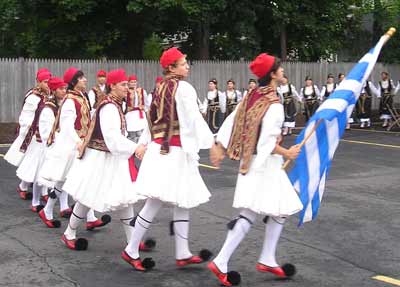
A highlight of One World Day is the Parade of Flags where people in costumes of their heritage carry the flags. This year was undoubtedly the largest and most colorful in memory.
Greek community at annual International Cleveland Community Day at the Art Museum
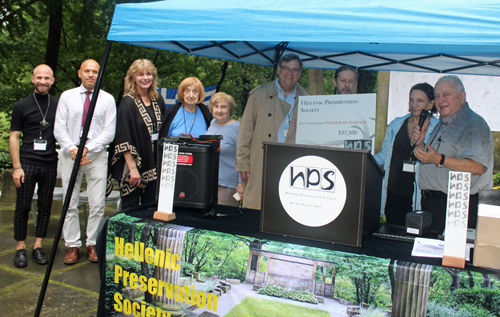
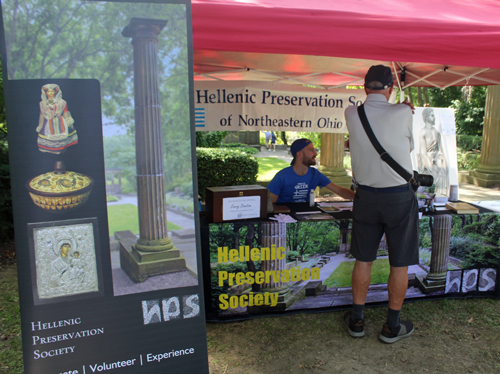
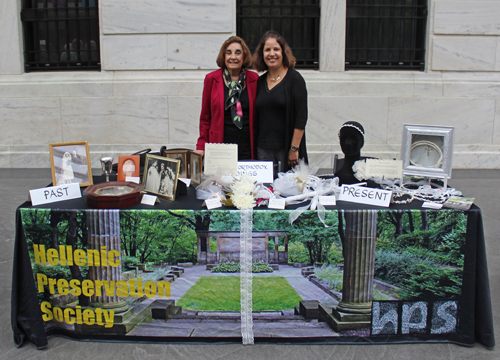
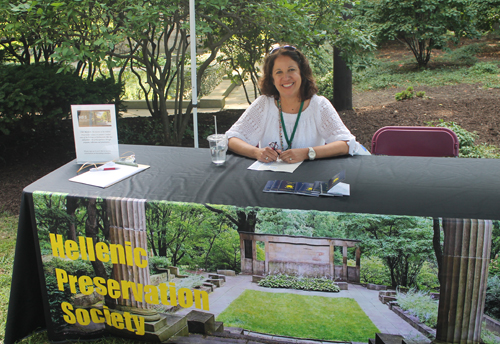
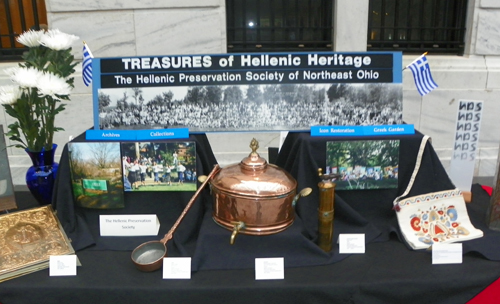
International Cleveland Community Day at the Cleveland Museum of Art is a celebration of the rich diversity of our region’s multiethnic communities, featuring traditional music and dance performances, cultural displays, and ingallery experiences. The Greek community was well represented with the Hellenic Preservation Society display table.
Hellenic Preservation Society
There was also a performance by the St Paul Senior Hellenic Dancers.
The Cleveland Cultural Gardens Federation (CCGF) hosted the 73rd annual One World Day on September 16, 2018. A highlight is the Parade of Flags where people in costumes of their heritage carry the flags. The Greek Garden was represented in the Parade.
Winter formal wear of Greece at Cleveland multicultural party
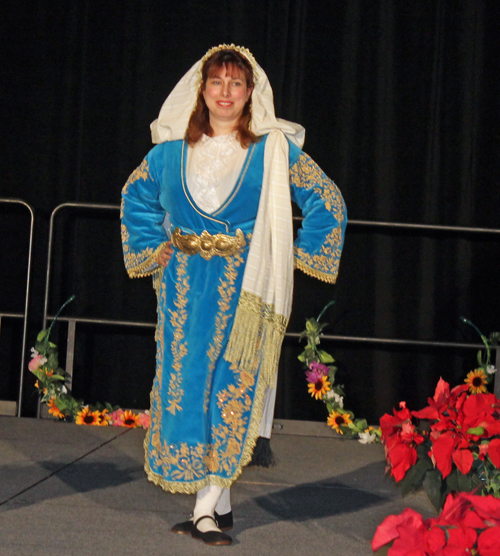
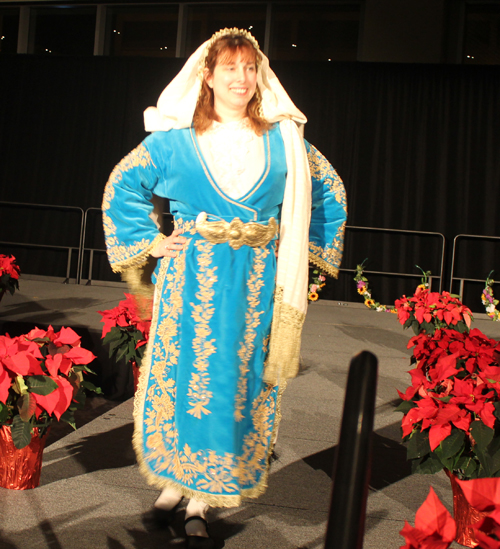
A highlight of the 8th Annual ICC-WIN Cleveland Multicultural Holiday Celebration on Wednesday, December 6, 2017 at the Global Center for Health Innovation in Cleveland was the International Fashion Show featuring almost 100 models from about 30 countries.
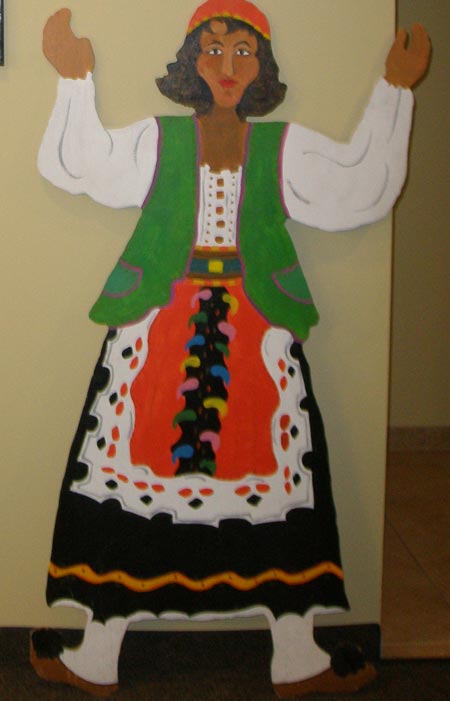
Eleni Papouras-Jenks wore the winter formal wear from the villages surrounding Thebes in mainland Greece. Brides were given this dress and draped in gold jewelry as part of their dowry and the headscarf would be wrapped. She would continue to wear it as a married woman with the headscarf thrown over the shoulders.
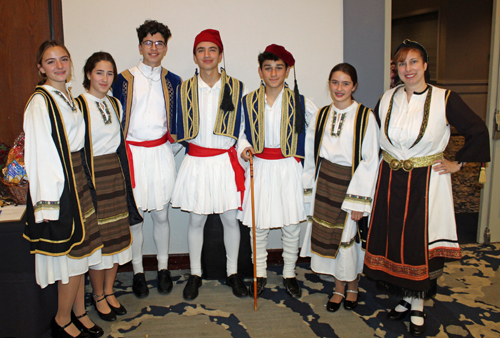
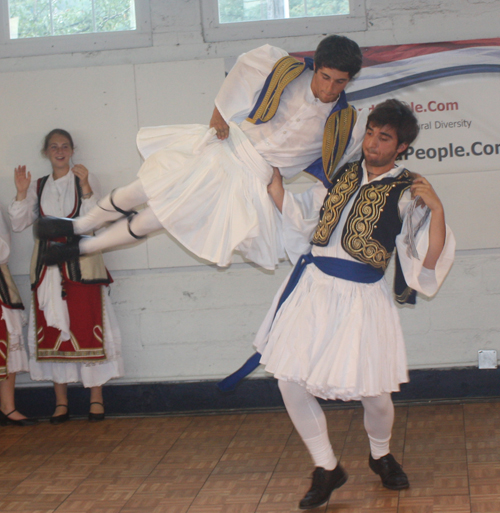
A man's Evzone costume would be based on clothing worn by the mountain men of mainland Greece during the war of Independence, with wool leggings and vest. By adding decorations to a velvet vest and putting 400 pleats in the foustanella kilt, it became the official uniform of those guarding the tomb of the Unknown Solder in Athens.
Annunciation Senior Dance Troupe from Annunciation Greek Orthodox Church at Art Museum
Young people from the Annunciation Senior Dance Troupe from Annunciation Greek Orthodox Church in Tremont performed at the Cleveland Museum of Art's International Cleveland Community Day in the Atrium of the museum.
Cleveland Greek Community at 72nd annual One World Day
Over 25,000 people attended the 72nd annual One World Day in the Cleveland Cultural Gardens on Sunday August 27, 2017. The weather was beautiful and the Greek Cultural Garden looked terrific and was a popular destination.
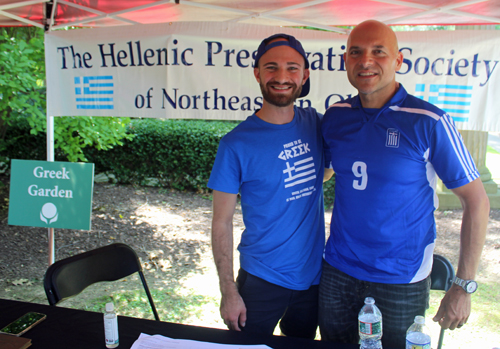
Representatives from the Hellenic Preservation Society of Northeastern Ohio (HPS) were on hand to answer questions about Greek culture.
Renee Steffas from Hellenic Preservation Society
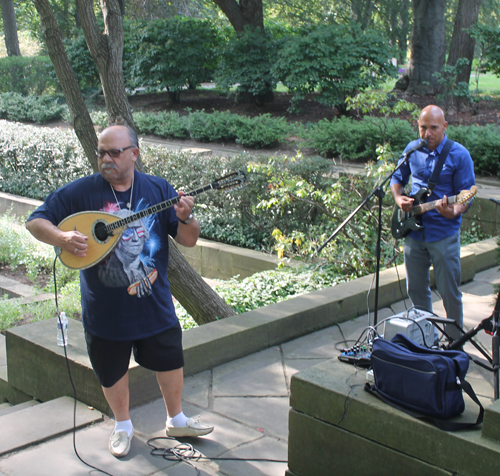
Traditional Greek bouzouki music was performed in the Greek Cultural Garden by Abraham Anastasiadis & Athanasios Sarantopoulos.
Abraham Anastasiadis & Athanasios Sarantopoulos
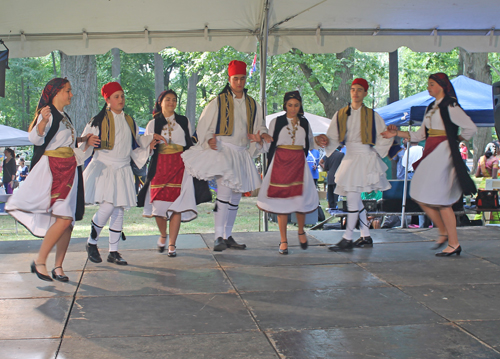
A group of St Paul Senior Hellenic Dancers performed traditional Greek dances.
The St Paul Hellenic Dancers under the direction of Eleni Johnson performed a Greek dance from the mainland at the 70th annual One World Day in the Cleveland Cultural Gardens.
Phoenix Greek Pontian Society of Cleveland 2015 International Cleveland Community Day
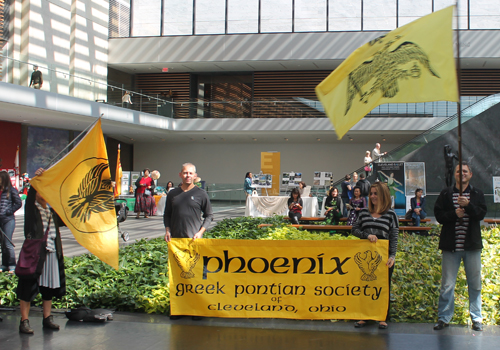
Pontus is a historical Greek designation for a region on the southern coast of the Black Sea, located in modern-day eastern Black Sea Region of Turkey. Young people from the Phoenix Greek Pontian Society of Cleveland performed at the Cleveland Museum of Art's International Cleveland Community Day in the Atrium of the museum.
Stay informed about the local Greek community by signing up for the free Cleveland Greek eNews mailings. You can select other groups as well. It's easy and free.
St Demetrius Greek Orthodox Church Dancers at Continental Cup July 2, 2015
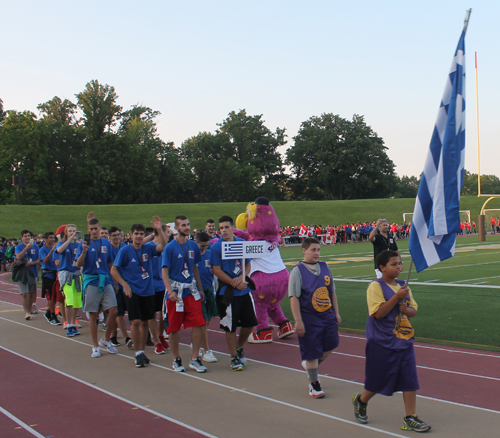
The St Demetrius Greek Orthodox Church Dancers performed at the opening ceremony of the 2015 Continental Cup put on by the Greater Cleveland Sports Commission.
The Continental Cup is now in its 10th year and the 2015 event had 3300 athletes from 11 countries including Tanzania, Kenya, Mongolia, China, Bermuda, China, Colombia, Canada, Brazil, Nepal and Greece.
Young athletes from Greece in the Opening Ceremony
Mad Greek Restaurant in Cleveland Heights January 13, 2015
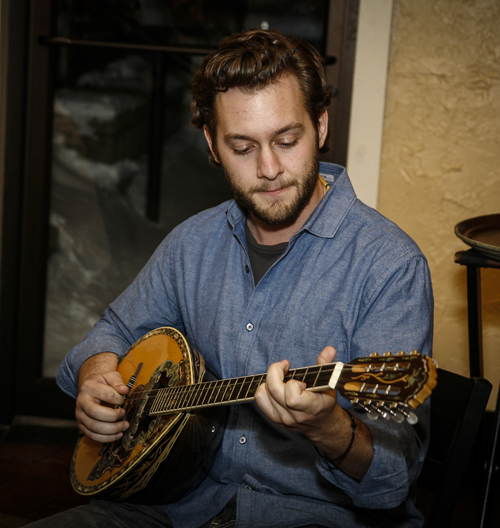
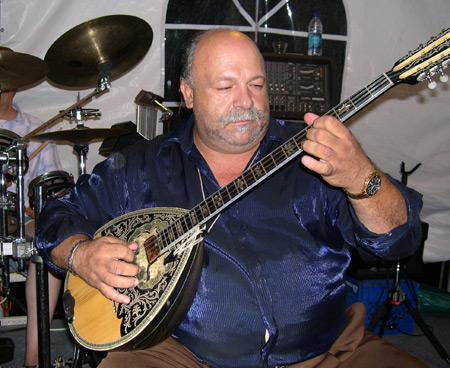
The Cleveland Food Adventurers Passport event in January 2015 was at the Mad Greek Restaurant in Cleveland Heights. The adventurers learned about Greek culture and sampled traditional Greek food and drink. One highlight was the bouzouki playing by Kosta Revelas.
Kosta Revelas played a tetrachordo (four pairs of strings) bouzouki at the Mad Greek Restaurant in Cleveland Heights, Ohio. He played a Greek Zeibekiko Dance Song with a rhythm pattern of 9/8th.
This was part of the Adventure to Greece as part of the ClevelandPeople.Com Food Adventurers passport club. People who enjoy trying different foods and learning about different cultures participate in the Food Adventurer's group.
Alexander the Great - Top Ten Facts
Lt Colonel (and history buff) Joseph Meissner gave the Top Ten Facts about Alexander the Great at the Mad Greek Restaurant in Cleveland Heights, Ohio. Alexander was King of Macedonia and the young conqueror of the Persian Empire. Did Alexander cut the Gordian Know with his sword? Listen to Joe.
2014
Greek Festival at Sts Constantine and Helen Greek Orthodox Cathedral
The annual Greek Festival at Sts Constantine and Helen Greek Orthodox Cathedral in Cleveland Heights took place from August 21-24,2014. The festival featured live music, folk dancing, Greek food and beverages, Cathedral tours, homemade pastries and even a flea market.
Greek dance Tsamiko from Epirus at International Folk Fest
The Inner Circle Hellenic Dancers performed a traditional Greek dance at the 2013 International Folk Festival at Wade Oval in University Circle in Cleveland. They performed Tsamiko from Epirus. The group is directed by Olympia Christides and practices at Saint Demetrios Greek Orthodox Church in Rocky River.
Greek dance Maleviziotiko from Crete at International Folk Fest
The Inner Circle Hellenic Dancers performed a traditional Greek dance at the 2013 International Folk Festival at Wade Oval in University Circle in Cleveland. They performed Maleviziotiko from Crete. The group is directed by Olympia Christides and practices at Saint Demetrios Greek Orthodox Church in Rocky River.
Greek dance Podaraki from Thrace at International Folk Fest
The Inner Circle Hellenic Dancers performed a traditional Greek dance at the 2013 International Folk Festival at Wade Oval in University Circle in Cleveland. They performed Podaraki from Thrace. The group is directed by Olympia Christides and practices at Saint Demetrios Greek Orthodox Church in Rocky River.
Greek dance goes into audience at International Folk Fest
The Inner Circle Hellenic Dancers performed a traditional Greek dance at the 2013 International Folk Festival at Wade Oval in University Circle in Cleveland. They danced through the audience and others joined the dance line. The group is directed by Olympia Christides and practices at Saint Demetrios Greek Orthodox Church in Rocky River.
2012
Greek Community at Opening of Ames Family Atrium Cleveland Museum of Art October 28, 2012
The Cleveland Greek community was represented at the grand opening of the Ames Family Atrium in the Cleveland Museum of Art on Sunday October 28, 2012.
Tell us about the music, food, holidays, traditions, costumes, language and other qualities that make Greeks so special.
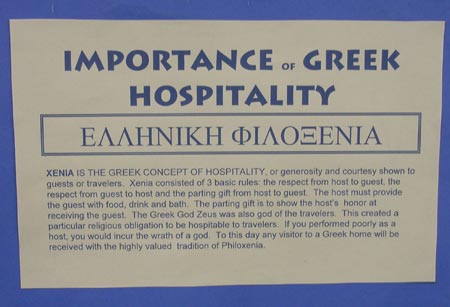
Xenia is the Greek concept of hospitality or generosity and courtesy shown to guests or travelers.
Xenia consists of three basic rules: The respect from host to guest, the respect from guest to host, and the parting gift from host to guest. The host must provide the guest with food, drink and bath. The parting gift is to show the host's honor at receiving the guest.
The Greek god Zeus was also god of the travelers. This created a particular religious obligation to be hospitable to travelers. If you performed poorly as a host, you would incur the wrath of a god.
To this day any visitor to a Greek home will be received with the highest valued tradition of Philoxenia.
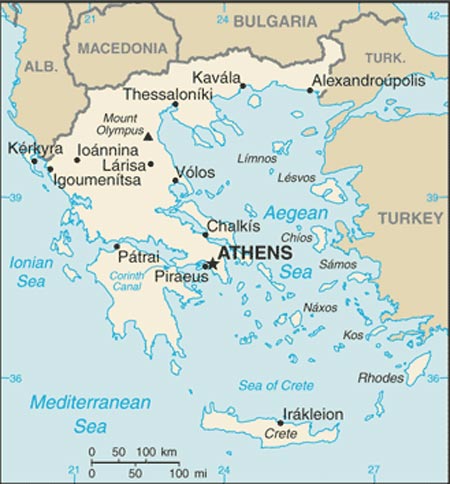
Greece achieved independence from the Ottoman Empire in 1829. During the second half of the 19th century and the first half of the 20th century, it gradually added neighboring islands and territories, most with Greek-speaking populations.
In World War II, Greece was first invaded by Italy (1940) and subsequently occupied by Germany (1941-44); fighting endured in a protracted civil war between supporters of the king and Communist rebels. Following the latter's defeat in 1949, Greece joined NATO in 1952.
A military dictatorship, which in 1967 suspended many political liberties and forced the king to flee the country, lasted seven years. The 1974 democratic elections and a referendum created a parliamentary republic and abolished the monarchy.
In 1981, Greece joined the EC (now the EU); it became the 12th member of the European Economic and Monetary Union in 2001.
Read more about the Greek and other Ambassadors. If you are interested in being considered to be an official ClevelandPeople.com Ambassador to the Cleveland Greek community, please contact us.
The Hellenic Preservation Society
The Unified Voice of the Hellenes in NEO
The mission of the Hellenic Preservation Society is to present a unified voice of the Hellenes in Northeastern Ohio that will promote the Greek experience through programs, presentation and cultural collections.
Stay informed about the news and special events of the Group(s) you choose by signing up for the free ClevelandPeople.Com e-newsletter