News and Upcoming Events for the Rusyns in Cleveland
Slovakia, Treasures in the Heart of Europe
October 14, 2025 6:30 PM Sokol Greater Cleveland/Bohemian Hall 4939 Broadway Avenue
Cleveland-Bratislava Sister Cities Presents: Slovakia, Treasures in the Heart of Europe. Produced & Narrated by History Channel's Pat Uskert.
Meeting Program: Come along with the History Channel's host Pat Uskert and Slovak guide Mila Kissova on a stunning journey across Slovakia from Bratislava to the High Tatra Mountains, exploring Slovakia's history, culture and breathtaking landscape. Pat & Mila will take us on a tour of Bratislava, the Rusyn churches and Andy Warhol Museum in eastern Slovakia, the medieval tour of Bardejov, Spis Castle, the Slovensky Raj, the Banska Stiavnica World Heritage site, the Velka Tatry mountains, and more. An open discussion of attendee's own experiences visiting these sites will take place after the video presentation. For more information about the meeting or Cleveland-Bratislava Sister Cities and its programs, please call 203-500-4371. Free. All are welcome!
Carpatho-Rusyn Velija Christmas Dinner and Jaslickari Nativity Play
Tanner Mills sent us this.
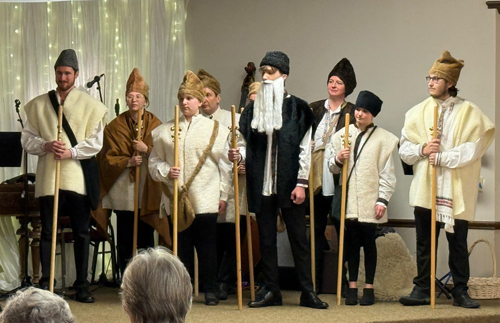
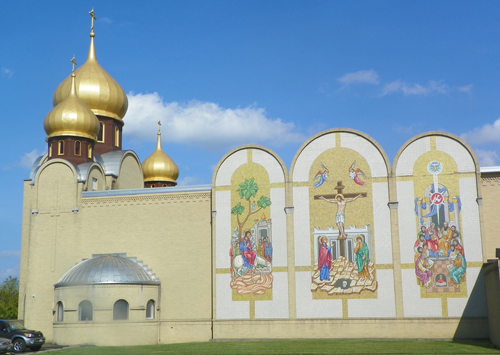
On January 11, 2025 the Rusyns of Cleveland came together to celebrate the Velija Christmas dinner. Traditionally for Byzantine Catholic Rusyns this takes place on Dec 24th. Jan 11th was chosen as the date of the celebration as it was still within season of Christmas for both Orthodox and Roman Catholics. Rusyns from Ohio, Pennsylvania and even as far away as Alaska descended on St. Joseph Byzantine Catholic Church to reconnect with this vital element of their heritage.
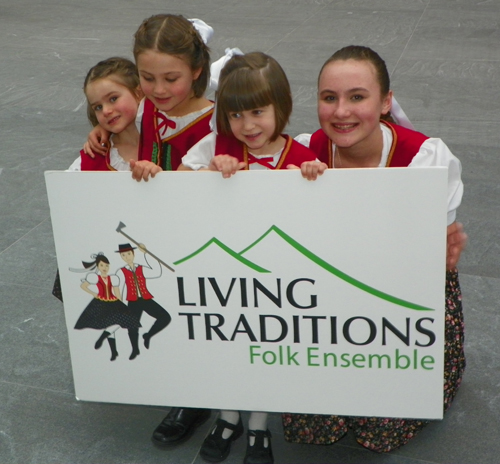
Father Jan Maturkanic pastor of St. Joseph's began the meal with the traditional Rusyn tropar and blessed the food. Living Traditions folk ensemble presented the Carpatho Rusyn Jaslickari Nativity Play. The evening ended with Harmonia and Jerry Jumba (a prominent Rusyn composer and teacher) leading a traditional Rusyn carol sing along.
Czech Cultural Center-Sokol Greater Cleveland Holiday Fair
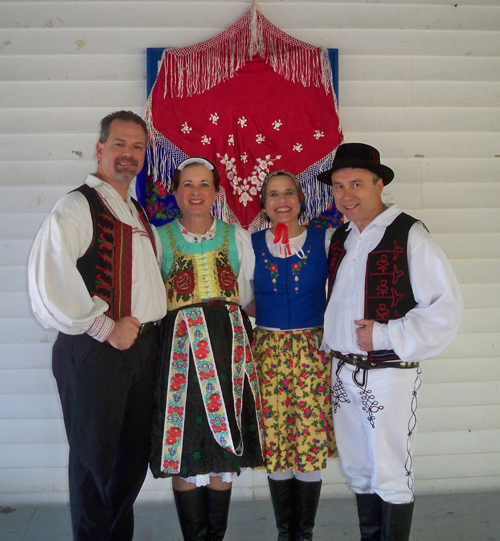
The annual Czech Holiday Fair sponsored by Sokol Greater Cleveland was held Saturday, November 9, 2024. It might have been a record setting number of people attending to shop for imported Czech and Slovak items. There were arts and crafts along with authentic Czech Food and Beer for sale. People lined up to purchase traditional Czech holiday foods, homemade bakery, vanocky, strudel and more. Dinners featured pork, dumplings, sauerkraut & chicken paprikas.
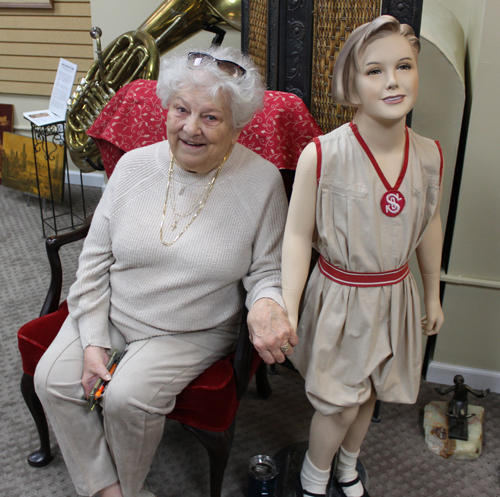
Georgia Maresh and Sokol mannequin
Throughout the building there were historical and cultural displays including lots of Kroje (traditional Czech and Slovak folk costumes) and other Czech and Slovak artifacts and displays.
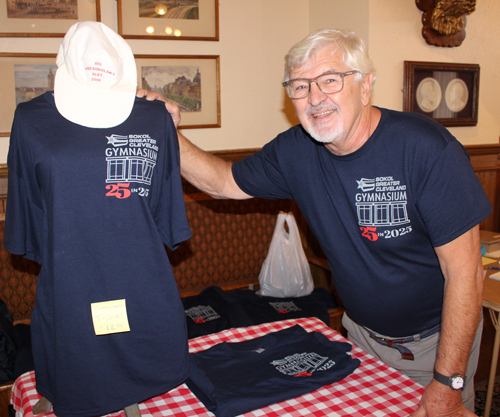
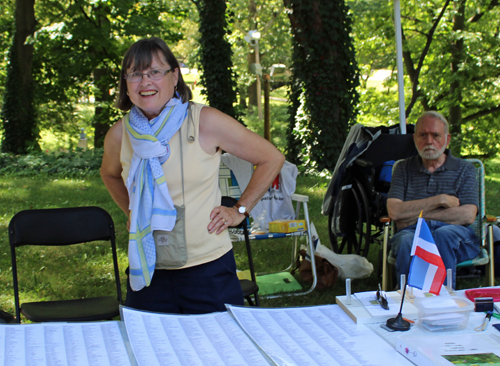
Paul Burik modeling the new 25 year gymnasium anniversary t-shirt
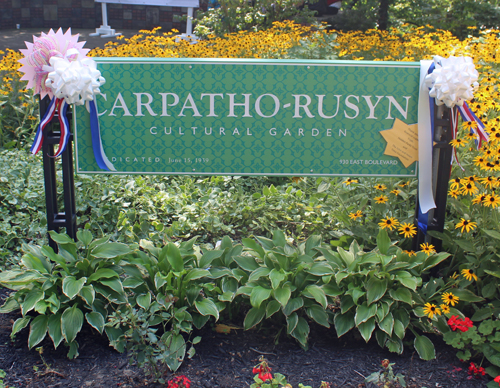
Carpatho-Rusyn Garden Information Pedestals Dedication
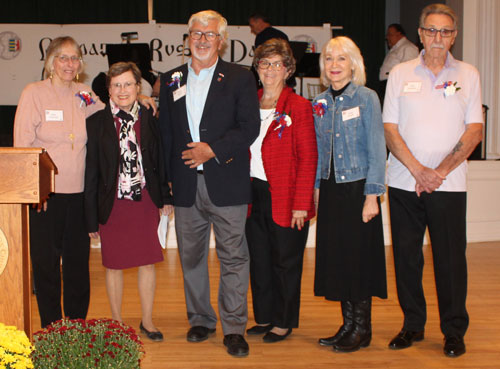
On Sunday October 15, 2023 many from the Carpatho-Rusyn communities in Cleveland, Ohio, Pennsylvania and beyond gathered to celebrate and dedicate 4 information pedestals that are in the Carpatho-Rusyn Cultural Garden in Cleveland. Because of rain the event was moved inside from the Cultural Garden to the Ballroom.
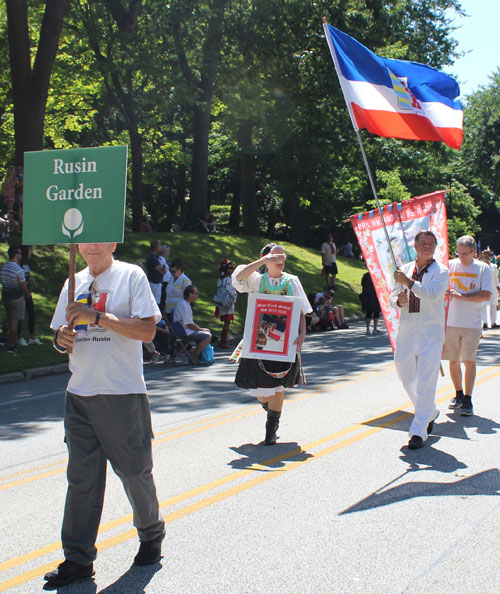
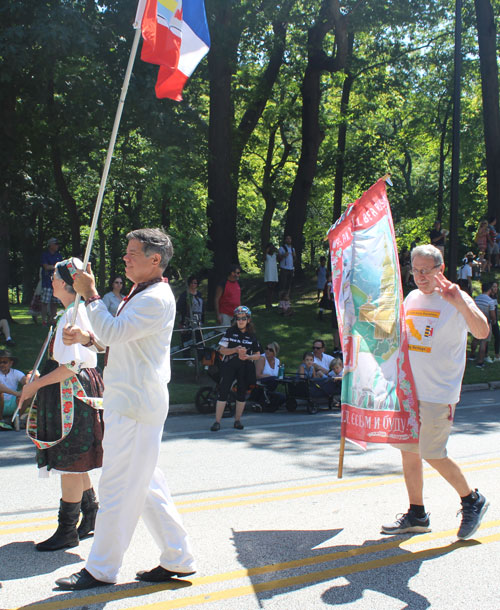
The Cleveland Rusyn Garden community demonstrated their heritage at One World Day in the Cleveland Cultural Gardens. One World Day has been the official event of the Cleveland Cultural Gardens Federation since 1946. Over 50,000 people visited the gardens on One World Day 2023.
The Parade of Flags had 1500 people from over 53 countries.
Rotary International President visits the Rusyn Garden
The Rotary Club of Cleveland welcomed Stephanie A. Urchick, Rotary International President-Elect to Cleveland. Among her activities was a tour of the Cleveland Cultural Gardens with Dan Hanson leading the tour.
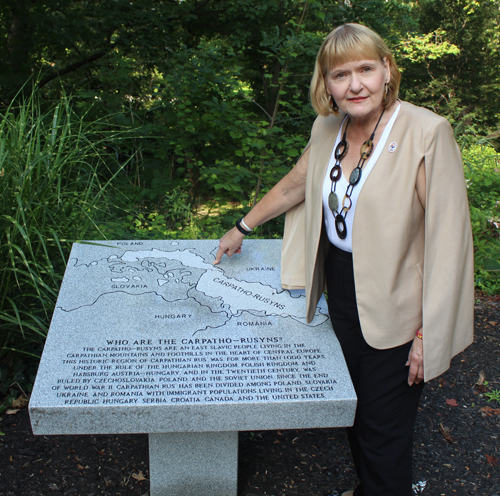
Because of her roots, Stephanie was eager to visit the Carpatho-Rusyn Garden.
President Elect Urchick showing where her family was from
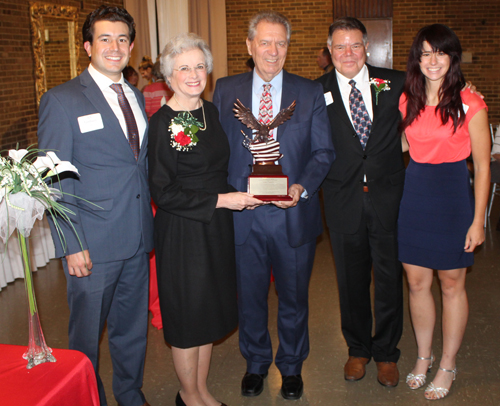
The American Nationalities Movement held their annual Captive Nations event on Thursday July 20, 2023. ANM President Judge Ralph Rocky Perk introduced Rusyn Laurel Tombazzi and presented her with the Freedom Award.
Tombazzi family with Judge Perk.
Watch the video of Laurel receiving the Freedom Award.
Bohemian National Hall 125th Anniversary Celebration
The Bohemian National Hall, an historic building located in the Broadway-Slavic Village neighborhood of Cleveland, Ohio. 2022 is the 125th anniversary of the historic Bohemian National Hall in Cleveland Ohio. It was listed on the National Register of Historic Places in May 1975.
Bohemians, Moravians, Silesians and Slovaks had begun coming to Cleveland in 1848. The cornerstone was laid in 1896 as a community hall to accommodate the cultural, social, and educational needs of Czech immigrants in their newly adopted country. Over these many years, the building has been lovingly restored to its glory.
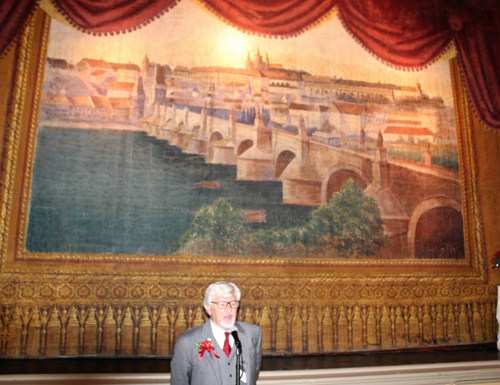
Sokol Cleveland president Paul Burik speaks in the Bohemian Hall ballroom
The festivities included Dvorak music performed by members of the Cleveland Orchestra, dignitaries such as the Czech Ambassador to the US Miloslav Stasek and a sumptuous dinner.
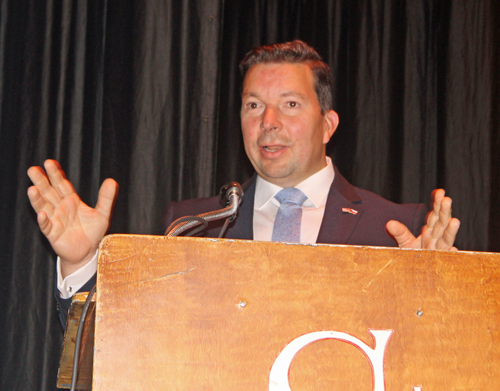
Miloslav Stasek, Czech Republic Ambassador to the United States
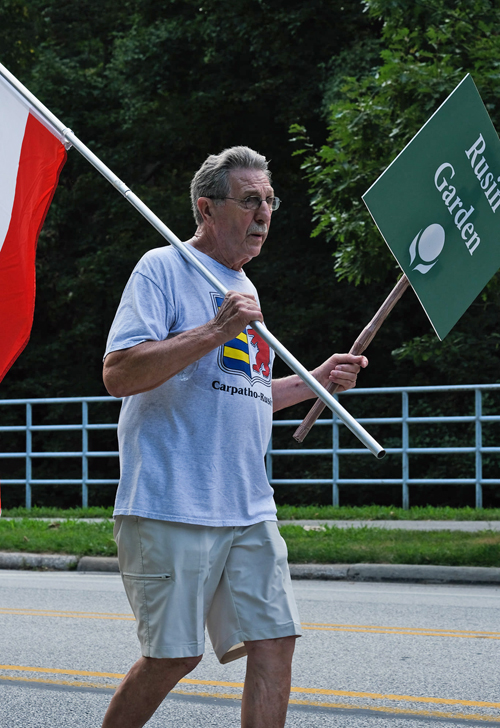
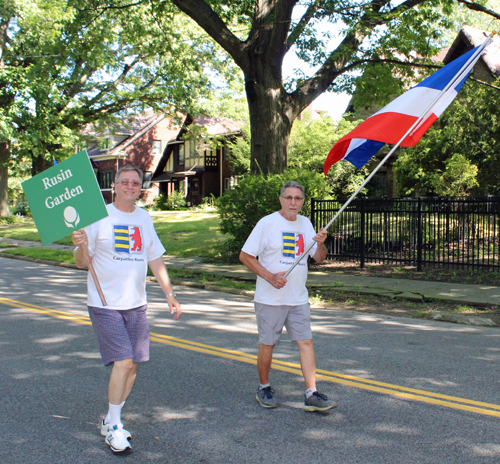
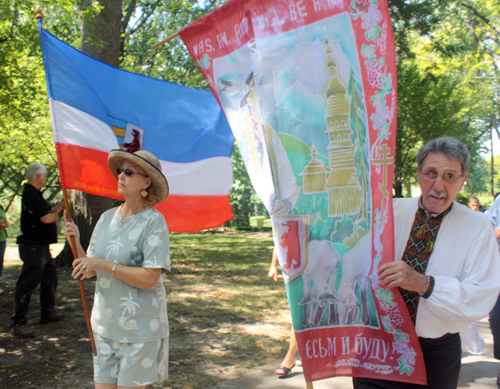
Cleveland's Rusyn community took part in the 76th One World Day in the Cleveland Cultural Gardens on August 28, 2022. Over 40,000 people came to the Gardens that day. The Rusyns marched in the Parade of Flags.
After the Parade of Flags, people gathered in the Rusin Cultural garden for a ceremonial renaming of the Garden from Rusin to Carpatho-Rusyn.
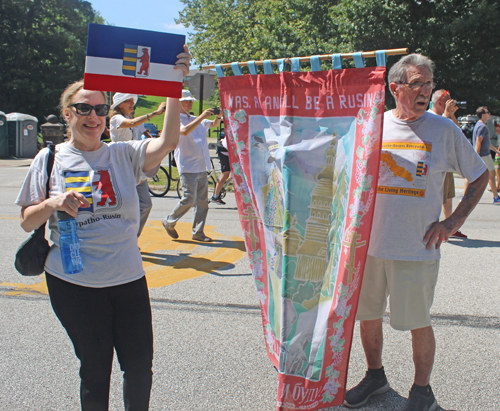
Cleveland's Rusyn community took part in the 75th One World Day in the Cleveland Cultural Gardens on August 29, 2021. John Krenisky marched in the Parade of Flags and they hosted visitors in their beautiful Rusin Cultural Garden.
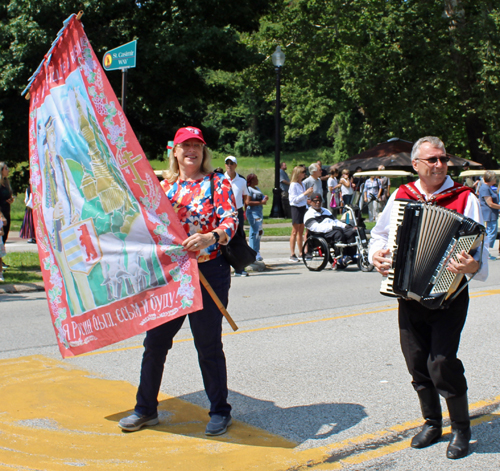
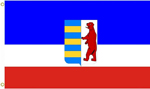
John Krenisky carrying the Rusyn flag in the Parade of Flags
The Cleveland Cultural Gardens are a collection of over 30 gardens each dedicated to a particular heritage. They feature busts, statues and monuments to their cultural icons. The Czech Cultural Garden was dedicated in 1935.
Paul Burik has been caretaker of the Czech Garden for over 20 years and he leads a virtual tour explaining the busts and monuments. Statues and busts include Antonin Dvorak, Karel Havlicek, Bedrich Smetana, Tomas Masaryk, Jindrich Simon Baar, Frantisek Palacky, Jan Amos Komesnky and a tribute to Czech Immigrants.
Watch the video tour.
2019
Rusyn Cultural Garden at One World Day
The Cleveland Cultural Gardens Federation hosted the 74th annual One World Day on August 25, 2019. Police estimates say that over 30,000 people visited the Gardens and attended One World Day. There was a lot of activity in the historic Rusyn Cultural Garden.
A highlight of One World Day is the Parade of Flags where people in costumes of their heritage carry the flags. This year was undoubtedly the largest and most colorful in memory.
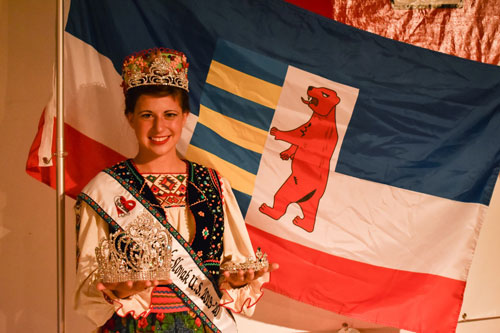
Anna Sophia Tombazzi first Rusyn crowned Miss Czech-Slovak Us National Queen
Anna Sophia Tombazzi became the first Rusyn crowned Miss Czech-Slovak Us National Queen 2019-2020.
Anna Sophia Tombazzi
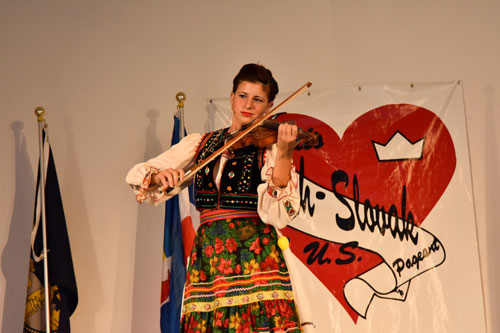
Anna's maternal Rusyn lineage comes from her great-grandfather, Stephen Pusti from Šoma (now called Driencia) in Šaryš County near Prešov. Anna's great-grandmother, Anna Bittner Pusti was from Kamienka, in Spiš County. Both Anna's great-grandparents came to America in the early 1900's from present day eastern Slovakia. Born and raised in Ohio, Anna has been active in her Rusyn heritage from a young age. She donated (along with her older brother) money proceeds from a toy sale to an orphanage in eastern Slovakia, spoke on Rusyn Radio program based out of Pittsburgh, PA, acted as a family's little girl for the traditional Christmas Eve Velija play in Youngstown, OH. Anna has also played her violin for multiple Rusyn cultural events, been a volunteer at other festival events, like the Simply Slavic Festival in Youngstown, OH.
The knowledge for Anna's national title began when she was a member of the Cleveland, Ohio based Rusyn folk ensemble, Karpato-Rus' Ensemble in 2009. Anna was the lead violinist and a dancer. The ensemble was directed by her mother, Laurel Tombazzi. Paul Makousky, from the Czechoslovak Genealogical Society, informed Laurel about the Miss Czech-Slovak US Pageant. Noticing that the Pageant requires ladies starting at age 16 to compete, the Karpato-Rus' Ensemble had no female performers that were age 16 or older at this time.
In early 2015, Laurel Tombazzi was aware on the Miss Czech-Slovak US Pageant website that the nationalities of Czech, Silesian, Moravian and Slovak were on the Pageant application. Winning Queens are awarded the prize of going to either the Czech Republic or Slovakia. Since Rusyns live in eastern Slovakia, Laurel asked the Pageant Committee to add "Rusyn" to the application. (Rusyns live as a minority group in present day eastern Slovakia and do not have a land to call their own. They are eastern Slavs.) The committee happily agreed and asked Laurel to be one of three judges to select a Queen the same year.
(Photo credit Evening Blush Photography & Miss Czech-Slovak US Pageant)
The annual three day Czech Days Festival has been going for 58 years in Wilber, NE drawing crowds of over 50,000 during the first weekend in August. The Pageant has taken place for the past 33 years and is part of the Czech Days Festival.
2018
Czechoslovakia 100th anniversary celebration at Bohemian National Hall
2018 is the centennial year of the founding of the country of Czechoslovakia after World War I. This little country, formed out of a piece of the Austro-Hungarian empire became an example of people who had persevered for hundreds of years despite challenges to their very existence. Sokol Greater Cleveland and other organizations hosted a weekend full of events commemorating the centennial of the founding of Czechoslovakia 100 years ago at the Czech Cultural Center in Historic Bohemian National Hall in Cleveland Ohio.
Rusyn community at Czechoslovakia 100th celebration
Members of the Czech, Slovak and Rusyn communities gathered for music and dance, gymnastic demonstrations, special food and imported beers, tours of the historic building and museum, ethnic exhibits, children's activities and a gala a sit-down dinner on Sunday.
Czechoslovakia 100th and Prague Spring 50th anniversaries
2018 is a special year. Not only are we celebrating 100 years of the founding of Czechoslovakia, but also 50 years since Prague Spring - the loosening of the tight grip by the communist regime by Slovak Alexander Dubcek, that came to a sudden halt on August 20, 1968 when the country was invaded by Soviet forces.
To commemorate these anniversaries, a re-installation and a re-dedication of two plaques in the Czech Cultural Garden took place on Sunday, August 19, 2018. Paul Burik is a past-president of the Cleveland Cultural Gardens Federation (CCGF) and is also the delegate for the Czech Cultural Garden. He was the driving force behind the celebration of the 100th anniversary of the formation of Czechoslovakia as well as the 50 year anniversary of the Prague Spring. He also served as Master of Ceremonies.
Paul Burik
Czechs, Slovaks, Rusins and representatives from other communities took part as well.
The Cleveland Rusyn community was out in full force at the 73rd annual One World Day on the site of the Albanian Cultural Garden. Members of the community marched in the annual Parade of Flags and later there was more fun as members of the Rusyn community shared their culture with thousands of visitors on One World Day.
Carpatho-Rusyn Day celebrated at Cleveland City Hall
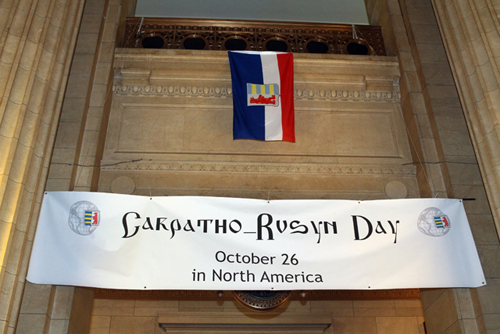
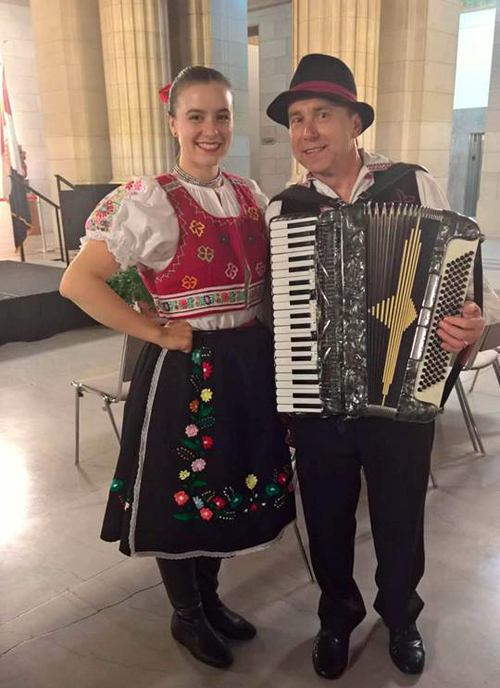
On October 26, 2017 the Cleveland Chapter of the Carpatho-Rusyn Society celebrated Carpatho-Rusyn Day in North America by having the Rusyn flag flown over Cleveland City Hall for the entire day. A celebration was held in the evening in the Rotunda of City Hall.
Carpatho-Rusyn Day Banner in Cleveland City Hall Rotunda
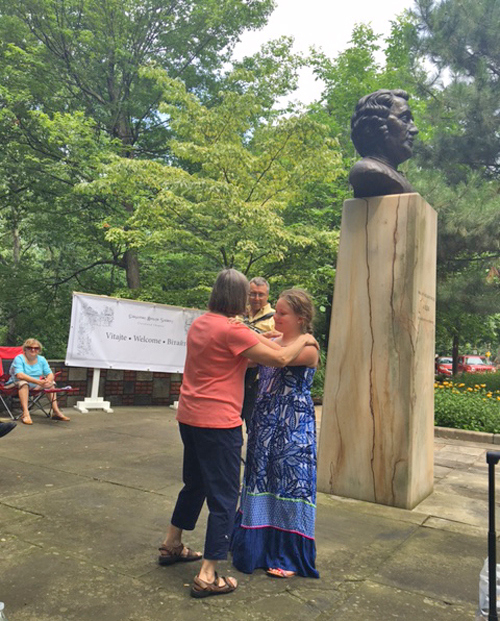
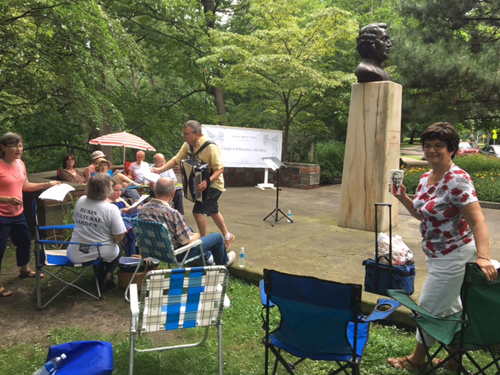
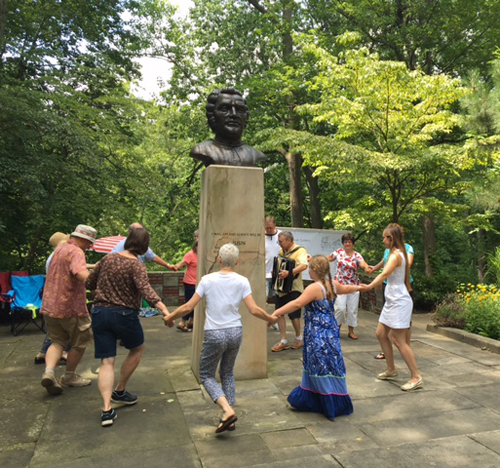
Rusyns and friends gathered in the Rusin Cultural Garden on Sunday July 23, 2017 for a musical picnic.
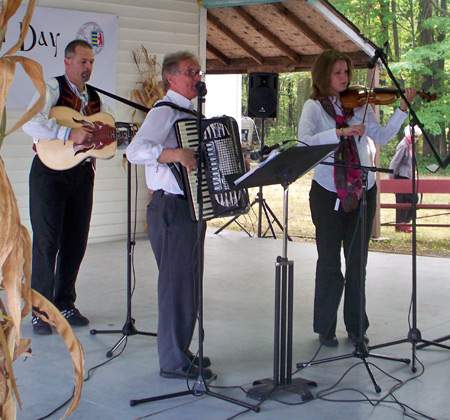
The bust of Aleksander Duchnovic became the focal point as the picnic turned into a sing-along, dance and czardas lessons accompanied by the accordion music of Tom Katrenich.
Thanks to Paul Burik for the photos and report.
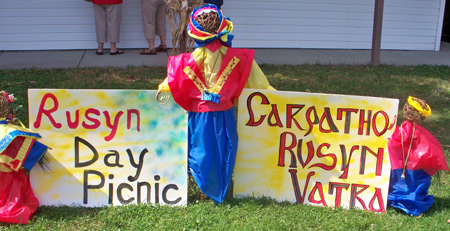
Carpatho-Rusyn Society Vatra
The Cleveland Chapter of the Carpatho-Rusyn Society sponsored a Vatra (outdoor festival) on Saturday, June 3, 2017 on the grounds of the Shrine of Mariapoch located on 17486 Mumford Road, Burton, Oh and just north of Route 422.
There was ethnic food, music, children's activities, genealogy information and help, C-RS items for sale and a Liturgy in Old Slavonic
The Rusyn Cultural Garden, Living Traditions Folk Ensemble and Rusyn community took part in the 71st One World Day in the Cleveland Cultural Gardens on August 28, 2016. They began with marching in the Parade of Flags. Throughout the day members of the Rusyn community of Cleveland hosted hundreds of visitors in the Rusyn Cultural Garden and shared Rusyn culture.
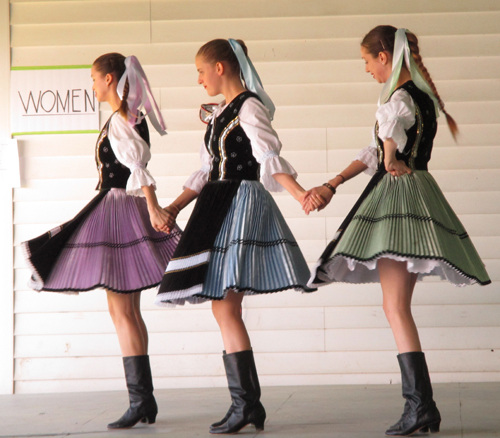
Later on One World Day, Living Traditions Folk Ensemble performed dances from Slovakia, Poland and Ukraine on the main stage
The week following PASCHA (Easter) is called "Bright Week" in the Eastern (Orthodox) Christian Church. During Bright Week there are many different ways to enjoy this "Feast of Feasts" - including the "Sprinkling Days"!
On Monday within some of the various nationalities who are Orthodox, the boys seek out the girls of their parishes to "sprinkle" them - usually with scented water - and on Tuesdays, the girls seek out the boys to do the same "sprinkling"
On this Tuesday Ukrainian Dozia Krislaty and Rusyn Laurel Tombazzi sprinkled Ken Kovach. Then Vietnamese Gia Hoa Ryan sprinkled him as well
2014
10th Annual Carpatho-Rusyn Vatra
The 10th Annual Carpatho-Rusyn Vatra was produced by the Cleveland Chapter of the Carpatho-Rusyn Society. The Vatra was held at Carpathian Hall at the Cathedral of St. John the Baptist in Parma Ohio.
Kecera Folk Ensemble at 10th Annual Carpatho-Rusyn Vatra
The Kecera Folk Ensemble from Jakubany, Slovakia performed at the 10th annual Carpatho-Rusyn Vatra. This tour was the first time performing in the US for Kecera.
Kecera Folk Ensemble from Jakubany,Slovakia at the Vatra
One of the entertainment highlights of the Vatra was the performance by the young men and ladies from the PIAST of the Polish Roman Catholic Union of America in Cleveland who performed traditional Polish dances in costumes.
Carpatho-Rusyn Society, Cleveland Chapter Ames Atrium opening at Cleveland Museum of Art
October 28, 2012 Including videos and photos of the Living Traditions Folk Ensemble performance.
Harmonia Opening of Ames Family Atrium in Cleveland Museum of Art October 28, 2012
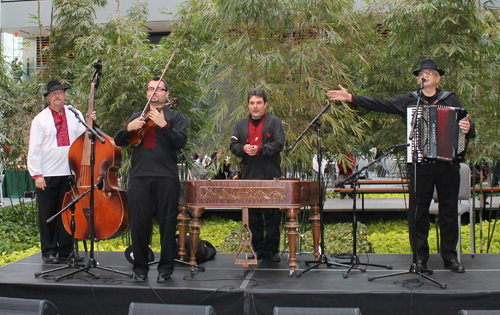
The band Harmonia played at the grand opening of the Ames Family Atrium in the Cleveland Museum of Art on Sunday October 28, 2012.
Harmonia at Cleveland Art Museum Ames Atrium opening
8th Annual Vatra - Dean Poloka, Director of Slavjane Folk Ensemble, Pittsburgh, Laurel Tombazzi, Mistress of Ceremonies and Director of Karpato-Rus' Ensemble, Cleveland, Cathy and Tom Katrenich, Directors of Living Traditions Folk Ensemble, Cleveland
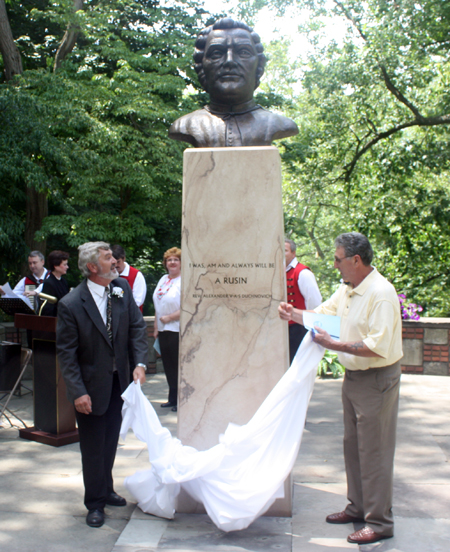
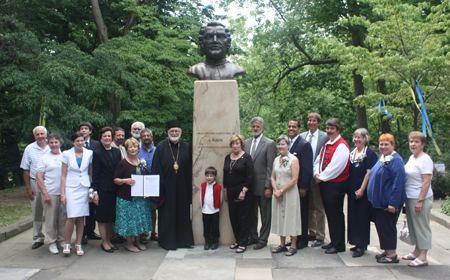
Rusyn and community leaders at the Duchnovic statue
2011
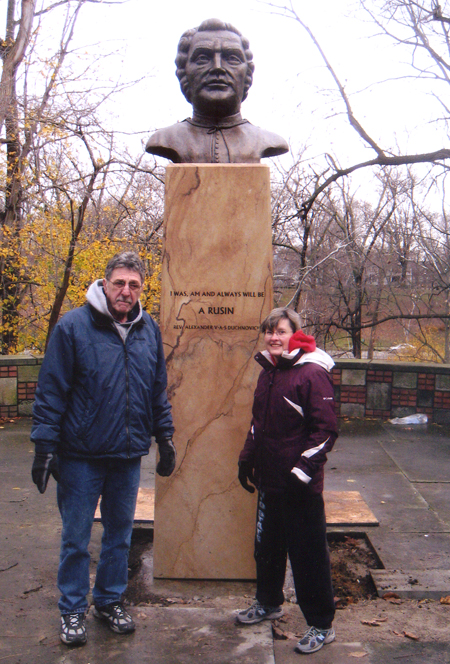
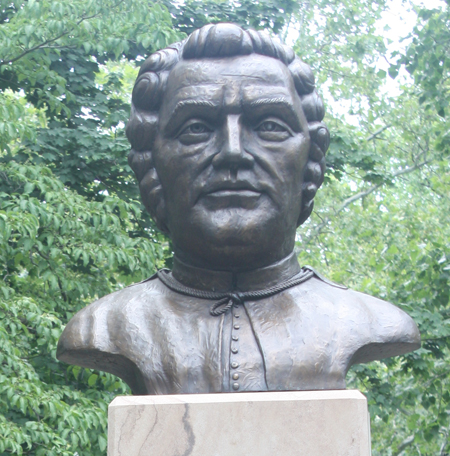
A bust of Aleksander Vasylovych Dukhnovych was installed in the Rusin Cultural Garden in Cleveland on November 30, 2011. Dukhnovych was a priest, poet, writer, pedagogue, and social activist of the Rusyn nation. Dukhnovych is regarded to be one of the outstanding Ruthenian humanists and educators.
John Krenisky and Marcia Benko from the Carpatho-Rusyn Society at the new bust of Dukhnovych
In the video below, the Living Traditions Folk Ensemble performs a Carpatho-Rusyn dance number from the SW corner of Ukraine. They are wearing costumes from the Zemplin region of Slovakia at the annual One World Day celebration in the Cleveland Cultural Gardens.
Organizations and Resources for Rusyns in Cleveland
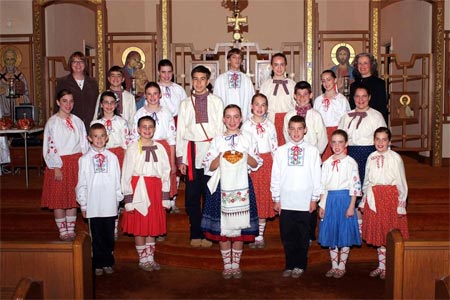
Cleveland's Carpatho-Rusyn Folk Ensemble The Karpato-Rus’ Ensemble (KRE) was formed in August 2006. The purpose of the KRE is to promote the culture and values of the Carpatho-Rusyn religious and folk art traditions through dance, music and skits.
Karpato-Rus' Ensemble October 2008 Performance group
The Carpatho-Rusyn Society is a non-profit, 501(c)(3) organization dedicated to manifesting Carpatho-Rusyn culture in the United States and supporting Rusyn culture in the Homeland in east central Europe. It works to educate Rusyns and non-Rusyns about Rusyn culture and history, and to support the development of Rusyn culture on both sides of the Atlantic.
As a membership organization, it boasts over 1,800 members worldwide who support the organization's work through their annual contributions of dues as well as voluntary contributions to funds that support Rusyn cultural development abroad as well as humanitarian aid for Rusyn communities in Europe.
Although this site clearly focuses on Carpatho-Rusyn genealogy, it is recognized that the ethnic background of persons from areas where Carpatho-Rusyns lived (primarily where Poland, Slovakia, the Ukraine, and Hungary adjoin or nearly adjoin) is often in doubt. Many other ethnic groups previously lived or now live in this area (Polish, Slovak, Hungarian, Ukrainian, German, Jewish, and others).
Understandably, many persons whose ancestors come from this area are unclear of their ethnic origins. Also, there was intermarriage between such groups before and after immigration. The focus at this web site is on information that may aid those interested in genealogy in tracing their ancestors, all or some of whom may have been Carpatho-Rusyns.
Carpatho-Rusyns have also been known as Rusyns, Rusins, Rusnaks, Ruthenes, Ruthenians, Carpatho-Russians, Carpatho-Ruthenians, Carpatho-Ukrainians and Lemkos.
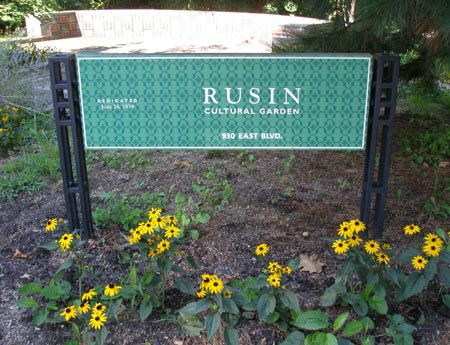
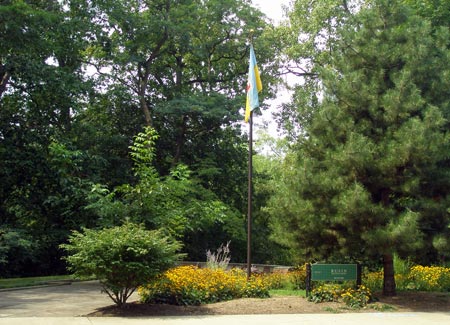
Rusyn Cultural Garden in Cleveland
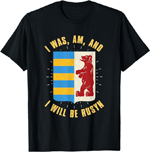
Cleveland Cultural Garden president Paul Burik gives a tour of the Rusyn Gardens and tells of plans for a new statue of Oleksandr (Aleksander) Dukhnovych known for his famous patriotic poem Ja Rusyn Byl, Jesm I Budo (I Was, Am, and Will Be a Rusyn)
Most Rusyn immigrants to United States came between 1880 and 1914, to places like New York City, Passaic, New Jersey, Bridgeport, Connecticut, the eastern Pennsylvania anthracite coal regions, Western Pennsylvania (especially Pittsburgh and Johnstown), Cleveland, Chicago, Minneapolis, and Detroit. Assimilation has been high and Rusyn American identity is frequently limited to the churches established by first-wave immigrants.
Today smaller numbers of Rusyns are coming from Slovakia, especially from villages like Litmanová and Jarabina, mostly to metro New York/New Jersey.
Tell us about the music, food, holidays, traditions, costumes, language and other qualities that make the Rusyns so special.
Profiles of Rusyns in Cleveland and Northeast Ohio
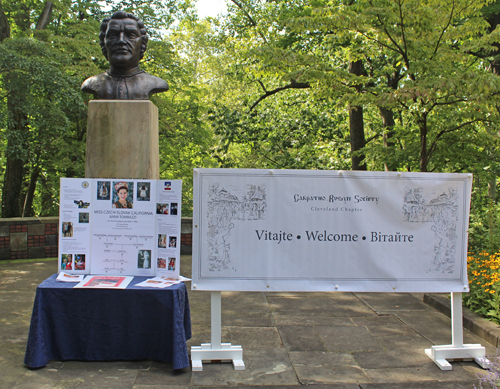
Bust of Aleksander Duchnovic in Rusyn Garden
Dukhnovych was a priest, poet, writer, pedagogue, and social activist of the Rusyn nation. Dukhnovych is regarded to be one of the outstanding Ruthenian humanists and educators.
In 1850 Dukhnovych established the first Ruthenian cultural association, the Prešov Literary Society. The society under his guidance published a series of books. His most famous patriotic poem Ja Rusyn byl, jesm i budu (I Was, Am, and Will Be a Ruthenian) was published as part of an anthology in 1851. This poem would later become the national anthem of Carpatho-Rusyns.
If you know of a Cleveland Rusyn who should be profiled, please let us know.
ClevelandPeople.Com - Rusyn Ambassadors
Read more about the Ambassadors. If you are interested in being considered to be an official ClevelandPeople.com Ambassador to the Cleveland
Rusyn Community please contact us.