ClevelandPeople.Com is sponsored in part by Cleveland American Middle Eastern Organization (CAMEO)
C.A.M.E.O. is designed to articulate the political interest of more than 100,000 Northeastern Ohio residents of Middle Eastern Heritage, Arab Americans. C.A.M.E.O. has one central purpose, to appraise candidates running for Public Office, that will offer political support to those who are best prepared to respond to our concerns.
C.A.M.E.O. accepts the diversity of religious and political philosophies and beliefs of its membership. C.A.M.E.O. membership means a commitment to local political action that will enhance the voting strength and amplify the profile of the Arab American community in Northeastern Ohio.
Over the past 44 years the Cleveland American Middle Eastern Organization (CAMEO) has worked to make sure that our elected leaders work to properly represent our community. Last year, over 70 candidates sought the C.A.M.E.O. endorsement with the endorsed candidate being elected in 76% of the races.
The American Lebanese Community Council (ALCC) is a 501(C)(3) non profit organization, created for all of Lebanese descent and their families regardless of their political affiliation or religion.
This organization was created with the following objectives:
To preserve, enrich, and promote our Lebanese heritage and traditions through educational, cultural, and charitable activities
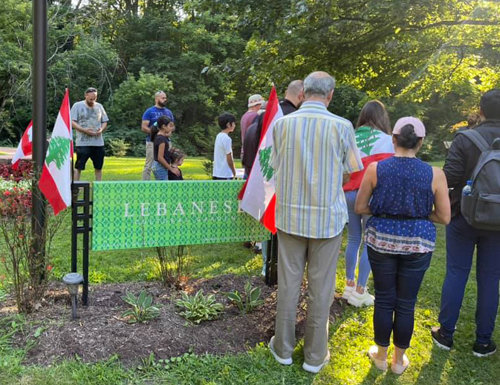
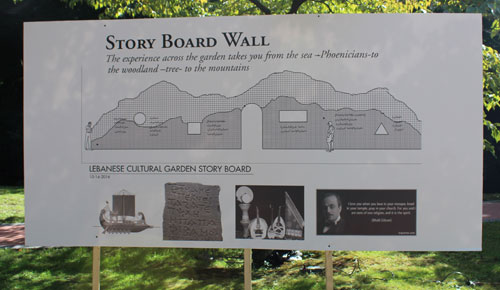
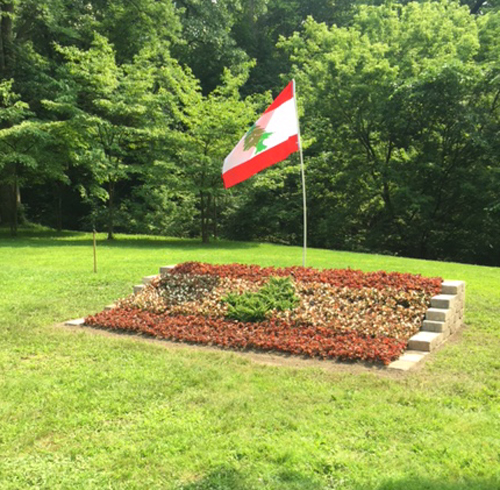
To establish and maintain the Lebanese Cultural Garden, at the Cleveland Cultural Garden Federation
To interact with local communities to increase public awareness of the Lebanese culture
To create understanding and unity among the Lebanese people and the community
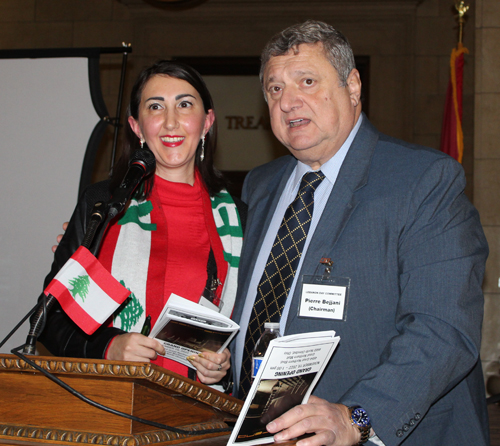
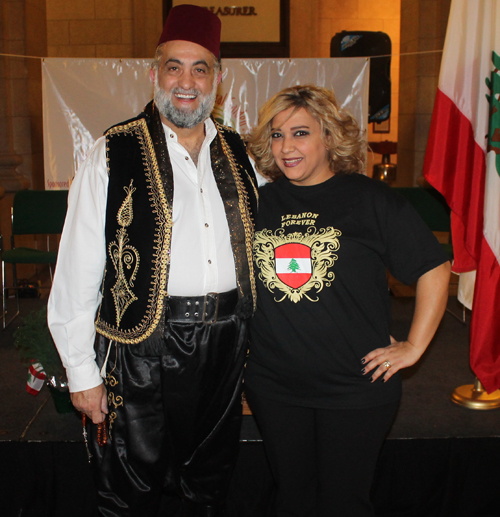
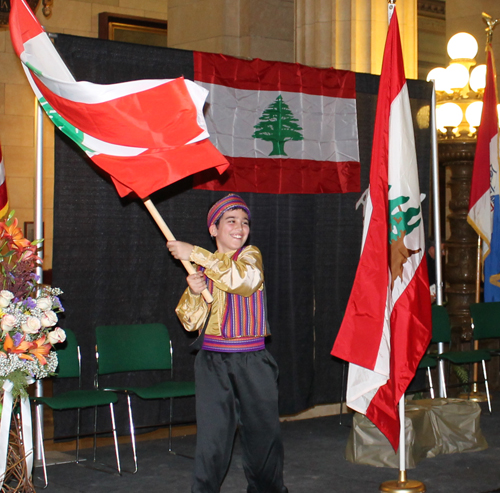
14th Annual Lebanon Day Celebrating the 82nd Independence of Lebanon
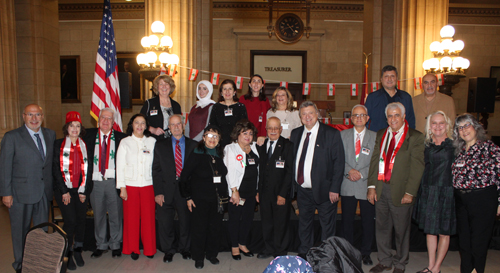
The American Lebanese Community Council hosted the 14th annual Lebanon Day in Cleveland at an event in the Rotunda of Cleveland City Hall.
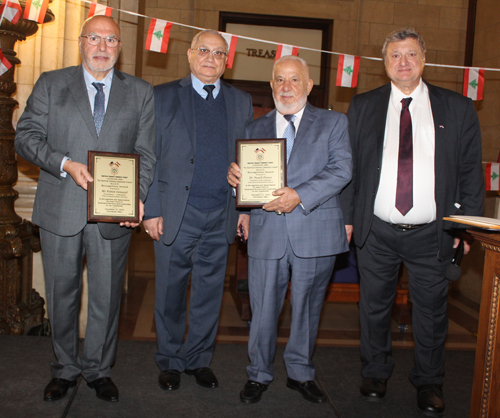
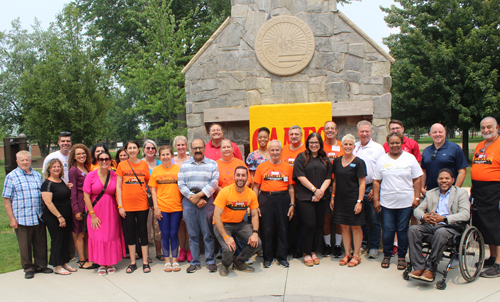
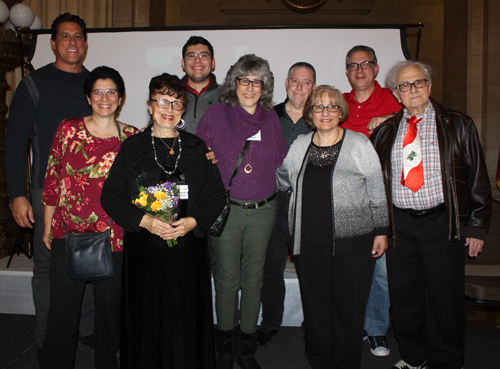
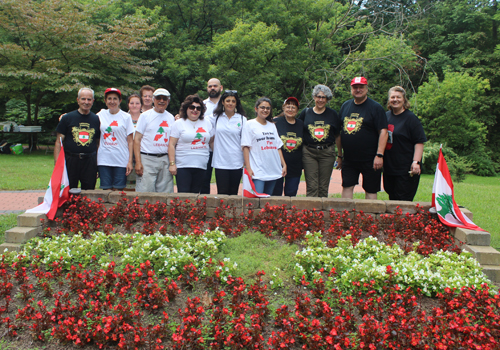
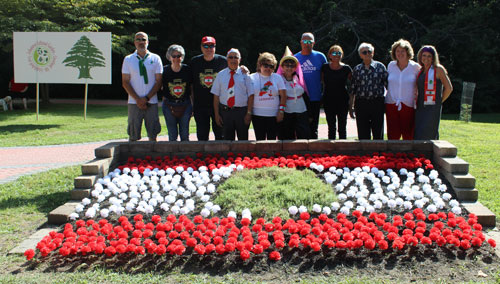
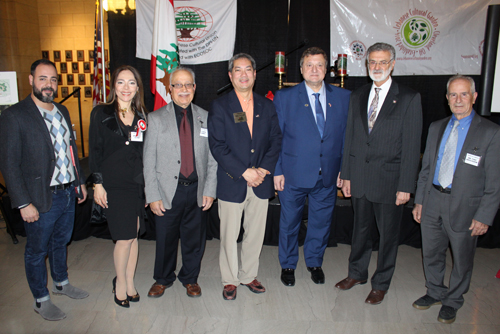
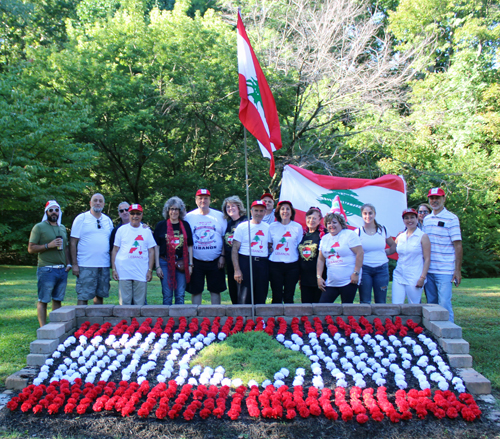
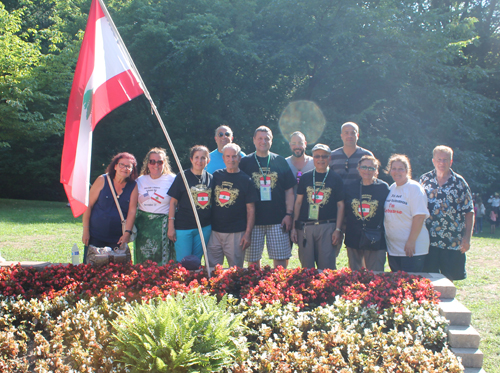
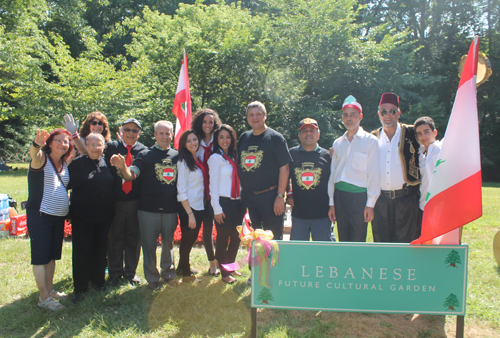
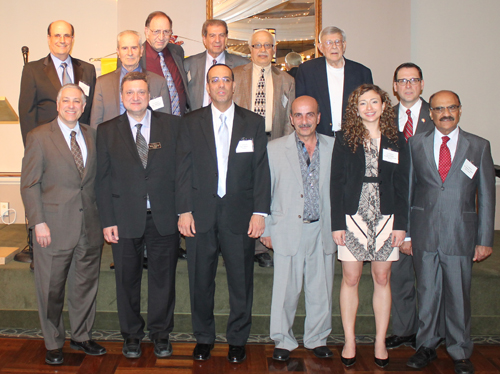
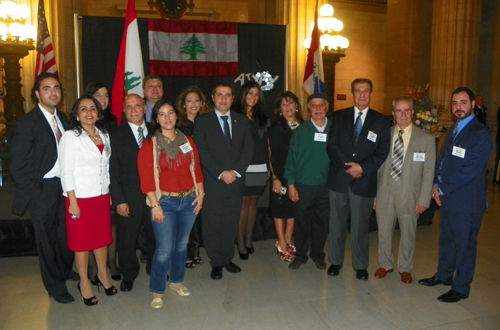
American Lebanese Community Council group
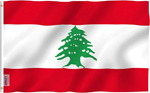
All day the flag of Lebanon flew above Cleveland City Hall and was displayed in the Rotunda. The event also honored Mr.Fahim Gemayel and Dr. Nassib Fawaz.
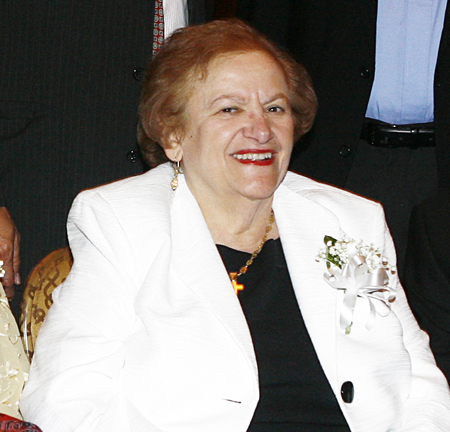
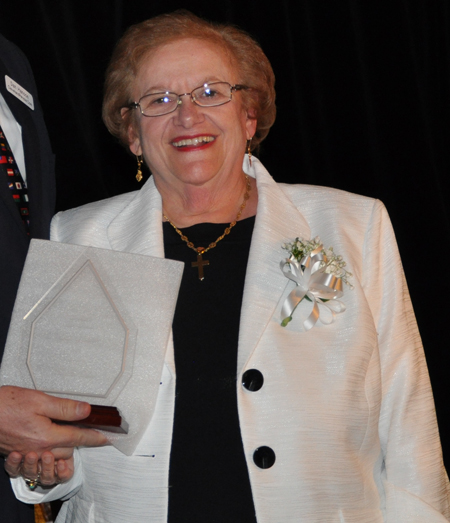
Hon. Mary Rose Oakar at Cleveland International Hall of Fame induction
It's very sad that we lost Mary Rose Oakar on September 13. She was a pioneer. She was the first Arab American woman, first Syrian American, and first Lebanese American woman to serve in Congress. She was also the first Democratic woman elected to the United States Congress from Ohio.
She was deservedly inducted into the Cleveland International Hall of Fame in 2012.
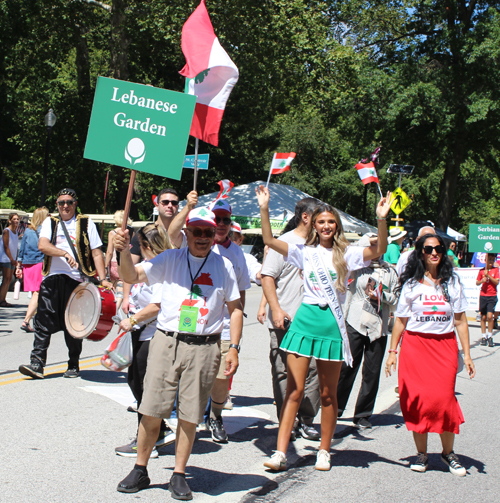
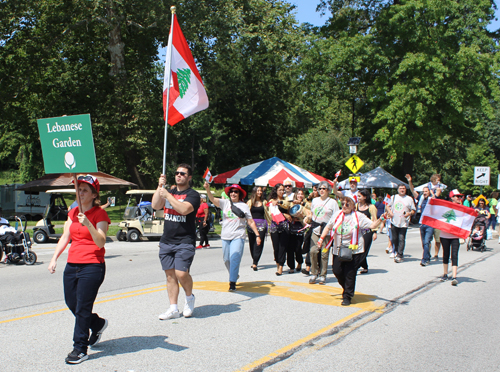
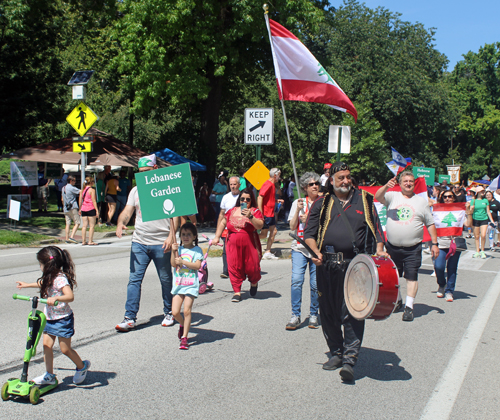
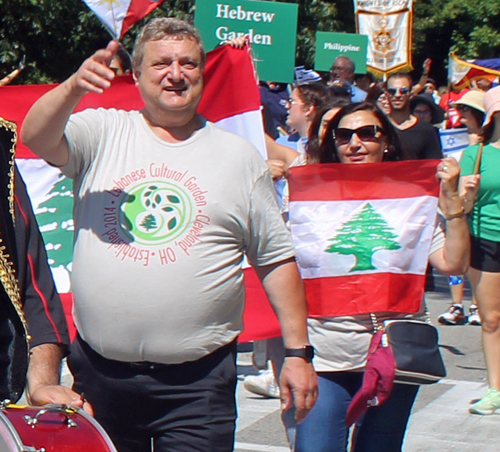
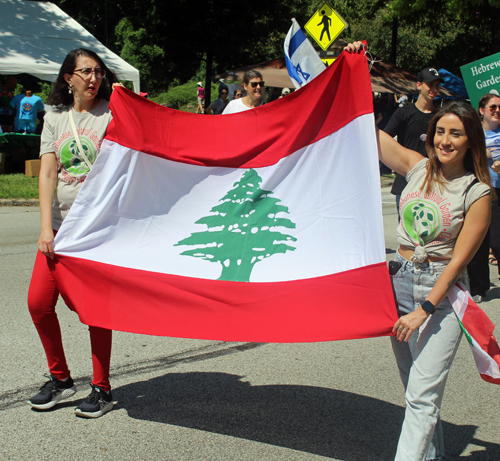
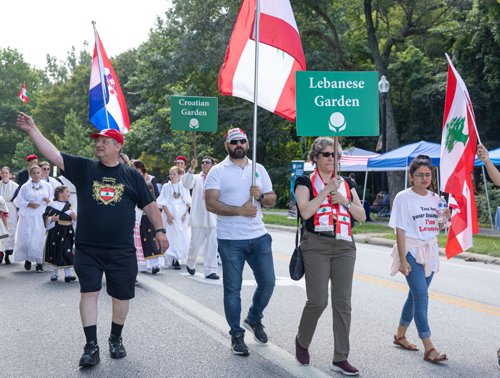
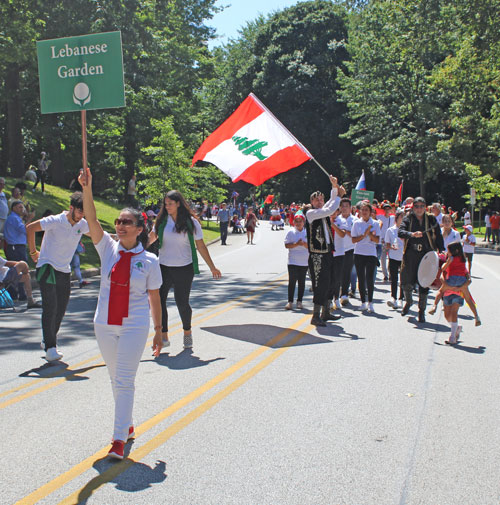
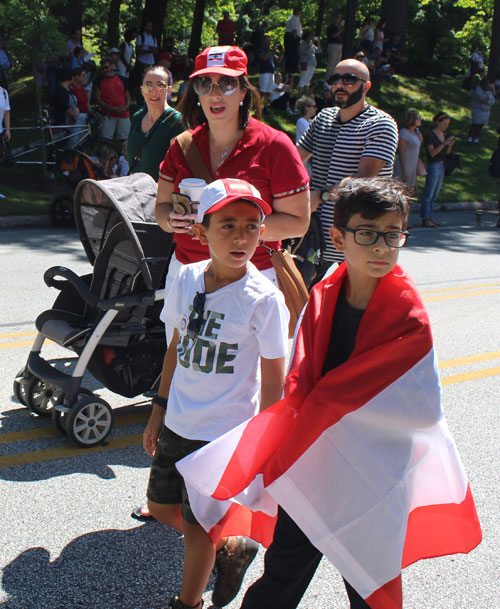
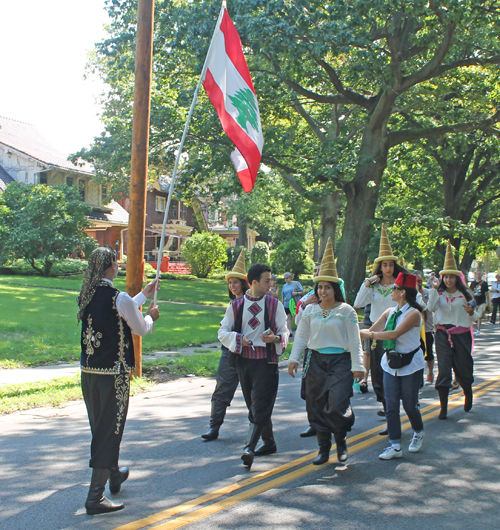
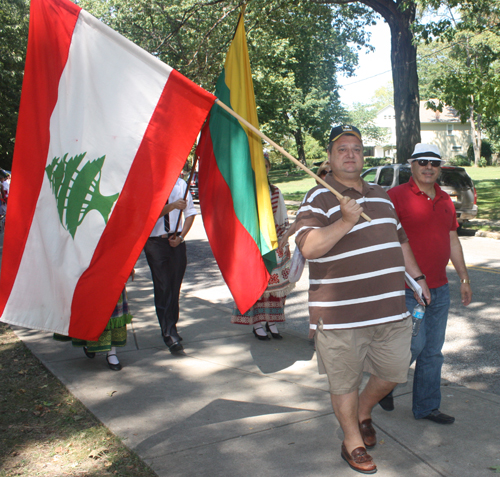
The Lebanese Cultural Garden was very busy on One World Day in the Cleveland Cultural Gardens. One World Day has been the official event of the Cleveland Cultural Gardens Federation since 1946. Over 50,000 people visited the gardens on One World Day 2025. The Lebanese Garden participated in the Parade of Flags which had 1500 people from over 53 countries.
Lebanese Cultural Garden in the Parade of Flags at One World Day 2025
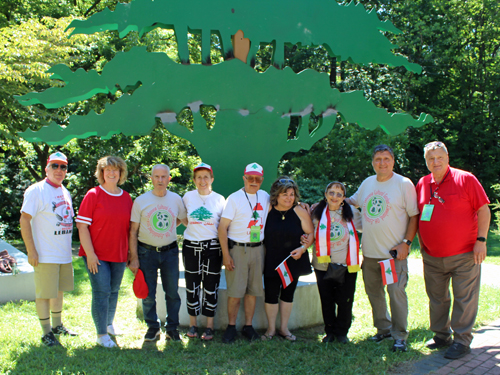
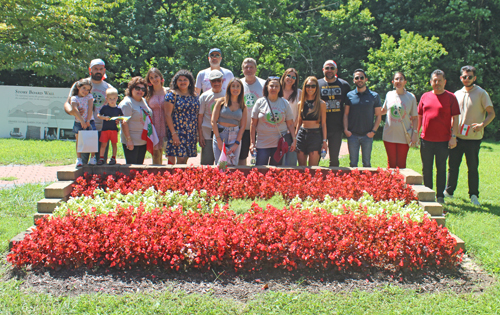
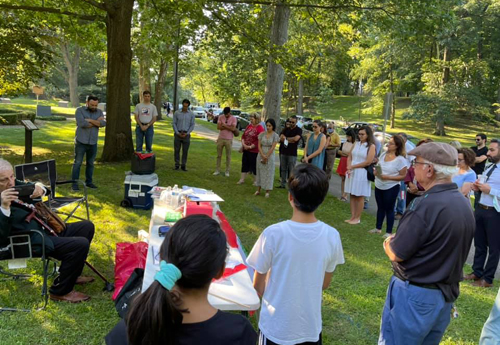
They then welcomed visitors to the Lebanese Garden and shared their culture.
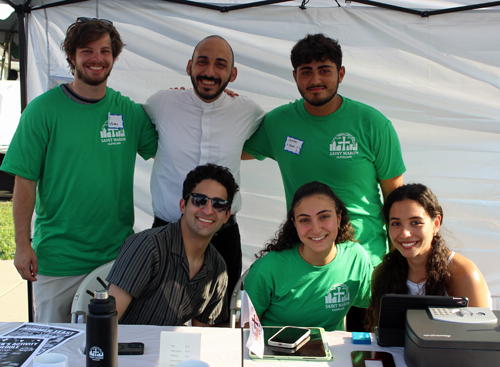
Each year, Saint Maron Church hosts a festival with great Lebanese and Syrian food and more. For more than one hundred years, Saint Maron's has been serving the Maronites of the greater Cleveland area.
The Cleveland American Middle Eastern Organization (CAMEO) has been in existence for over 50 years. C.A.M.E.O. is designed to articulate the political interest of more than 275,000 Northeastern Ohio residents of Middle Eastern Heritage, Arab Americans.
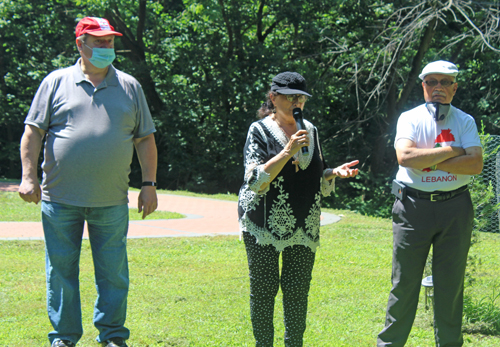
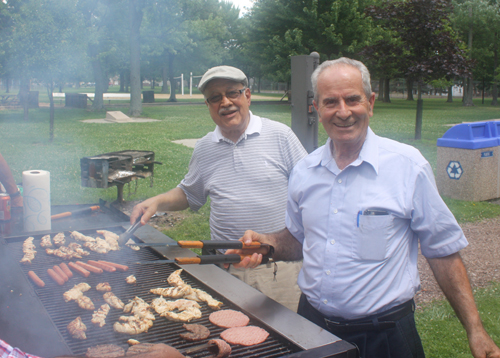
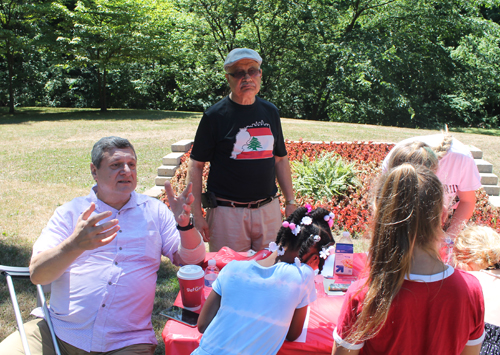
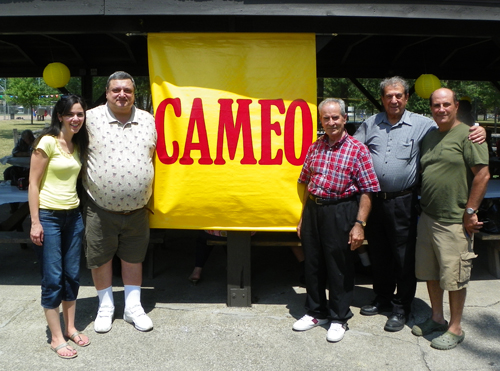
At their annual picnic on Sunday July 14, 2024 CAMEO welcomed friends and dozens of politicians running for office and/or there to show support for the Arab American community.
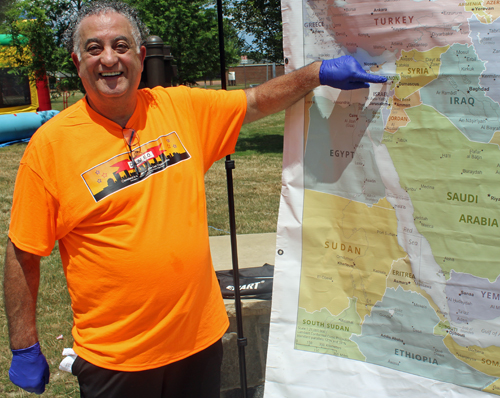
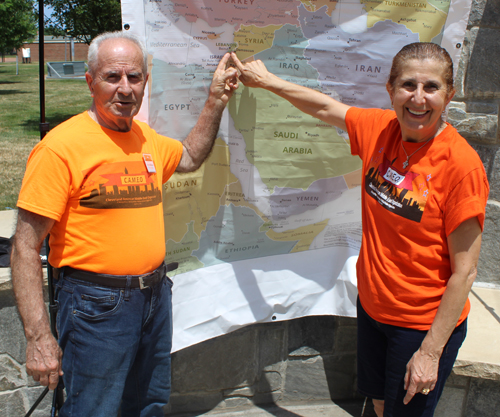
One new addition at the CAMEO picnic was the ClevelandPeople.com map of the Middle East where people showed where their heritage began.
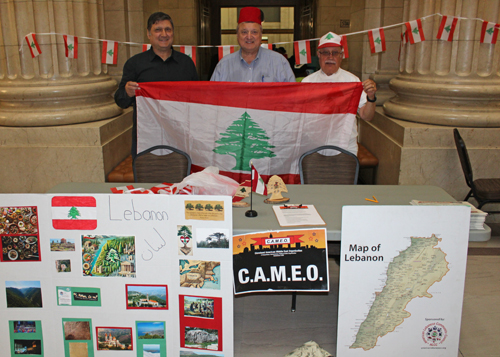
Lebanese Community at Asia Heritage Day at Cleveland City Hall
The City of Cleveland, under the leadership of Asian Community Liaison Chia-Min Chen, hosted the first Asian Heritage Day in the Rotunda of Cleveland City Hall on May 30, 2025. About 15 Asian heritages were represented with tables showcasing the flags, clothing and other items of their heritage - including Lebanon.
CAMEO reps Chafic and Pierre Bejjani and Faris Alameh at the Lebanon table
Cleveland American Middle Eastern Organization 55th Anniversary
The Cleveland American Middle Eastern Organization (CAMEO) has been in existence for 55 years. C.A.M.E.O. is designed to articulate the political interest of more than 275,000 Northeastern Ohio residents of Middle Eastern Heritage, Arab Americans.
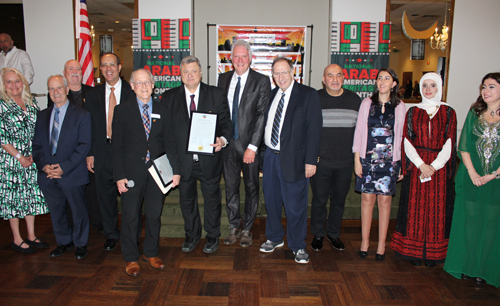
CAMEO celebrated their 55th anniversary as well as Arab American Heritage Month at a gala event on April 5, 2025.
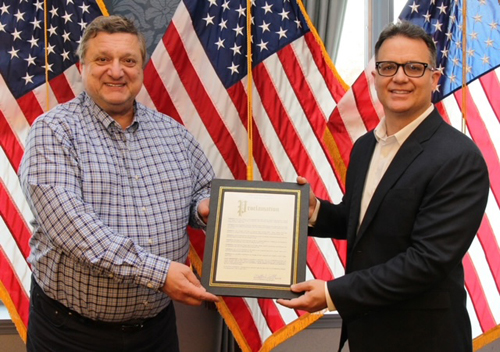
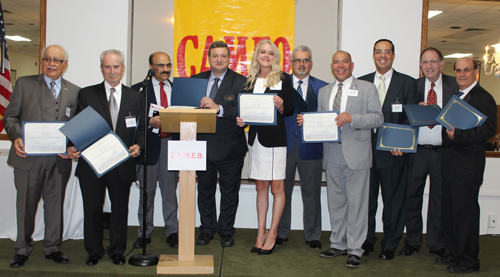
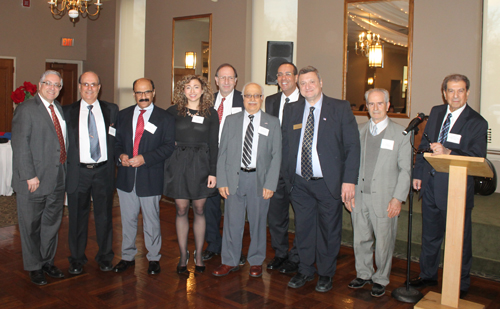
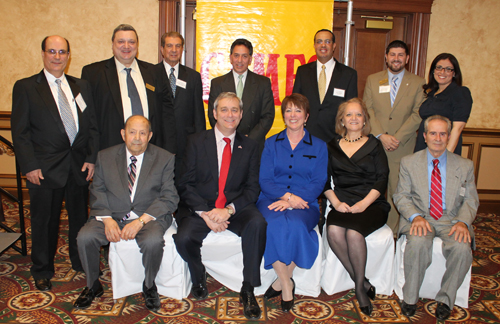
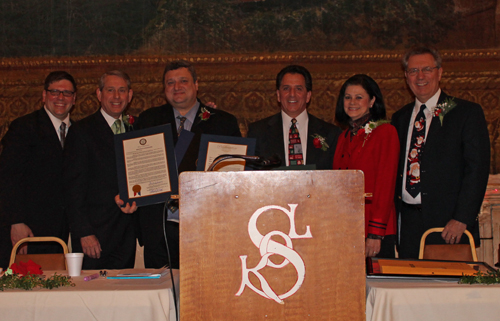
CAMEO Board members with proclamations from Dale Miller, Patrick Kelly and Chris Ronayne
The American Lebanese Community Council is a non profit organization created for all of Lebanese descent and their families regardless of their political affiliation or religion. They hosted the 12th annual Lebanon Day in Cleveland at an event in the Rotunda of Cleveland City Hall. All day the flag of Lebanon flew above Cleveland City Hall and was displayed in the Rotunda.
The special honoree was Berea Mayor Cyril Kleem.
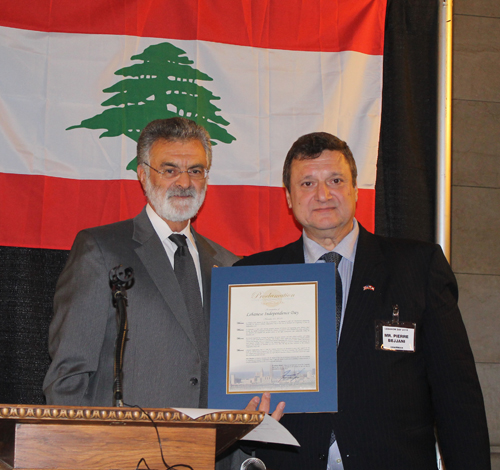
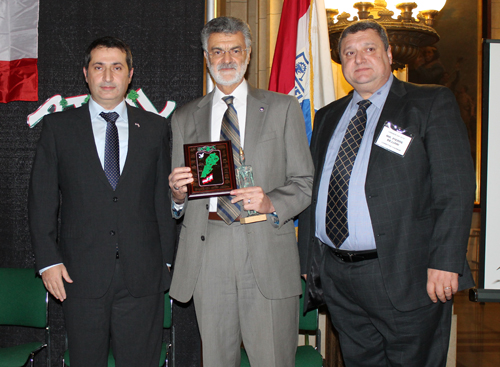
Ohio State Representative Tom Patton, Souad Kaddah, Mayor Cyril Kleem and Pierre Bejjani
The Lebanese Cultural Garden was very busy on One World Day in the Cleveland Cultural Gardens. One World Day has been the official event of the Cleveland Cultural Gardens Federation since 1946. Over 50,000 people visited the gardens on One World Day 2023. The Lebanese Garden participated in the Parade of Flags which had 1500 people from over 53 countries.
Lebanese Cultural Garden in the Parade of Flags at One World Day 2023
They then welcomed visitors to the Lebanese Garden and shared their culture.
Middle Eastern Heritage - World on Stage in the Cleveland Cultural Gardens
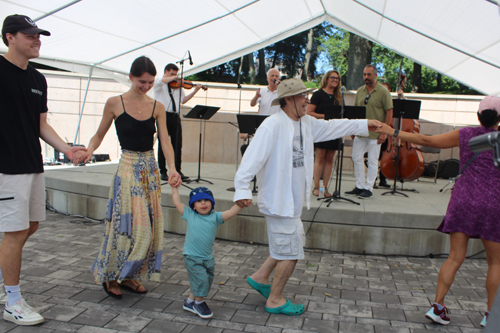
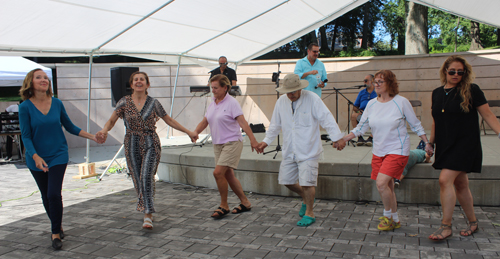
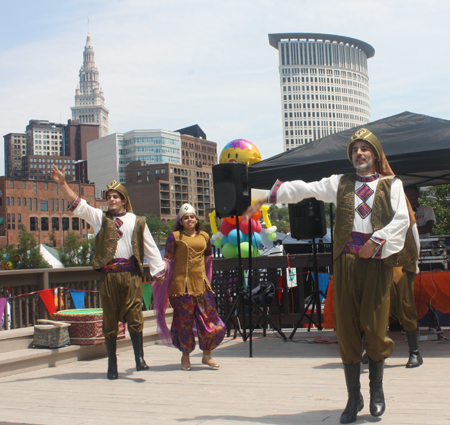
The Cleveland Cultural Gardens Federation presented a World on Stage event to showcase Middle Eastern Heritage on July 22, 2023 at the Centennial Peace Plaza in the Cultural Gardens. The plaza was full and the crowd enjoyed musical performances from Turkey, Azerbaijan, Iran, Lebanon and Syria.
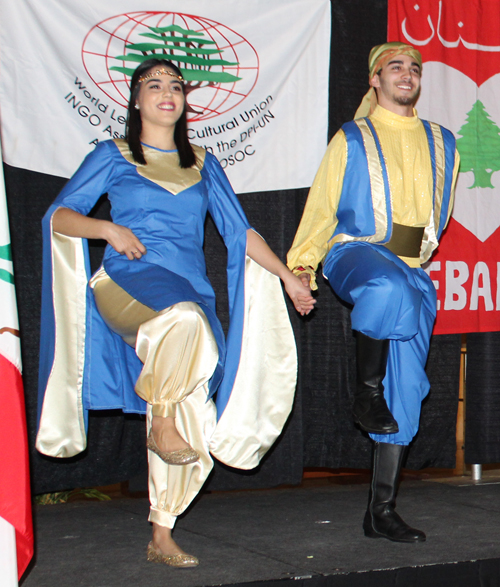
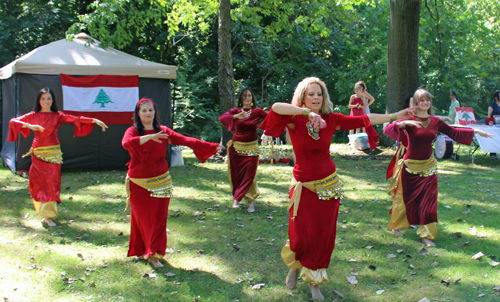
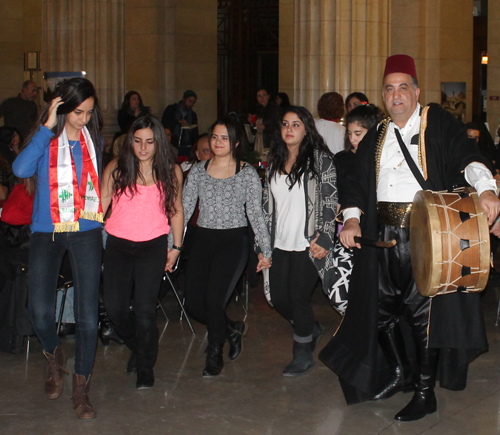
Dancing in the Plaza at the Middle East Heritage event
Cleveland American Middle Eastern Organization Annual Picnic
The Cleveland American Middle Eastern Organization (CAMEO) has been in existence for 53 years. C.A.M.E.O. is designed to articulate the political interest of more than 275,000 Northeastern Ohio residents of Middle Eastern Heritage, Arab Americans.
At their annual picnic on Sunday July 16, 2023 CAMEO welcomed friends and dozens of politicians running for office and/or there to show support for the Arab American community.
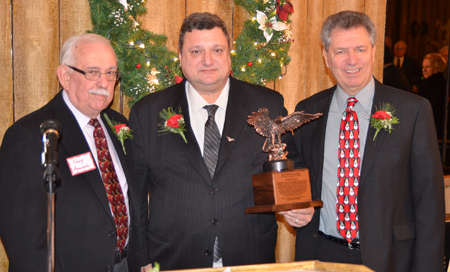
Pierre Bejjani inducted into the 2023 Cleveland International Hall of Fame
Pierre Bejjani is the Managing Director and Executive Editor of Profile News Ohio and the Senior Partner of Diversity Advertising Agency. In addition to running the region’s largest Arabic/English newspaper, Profile News Ohio, Pierre actively promotes Middle Eastern culture. He educates the public on the importance of diversity within our local, state, and national communities. He was born in Lebanon and came to Cleveland in 1981, where he pursued a degree in Civil Engineering from Ohio State University..
Pierre Bejjani was inducted by Seven Hills Mayor Anthony D. Biasiotta.
The American Lebanese Community Council is a non profit organization created for all of Lebanese descent and their families regardless of their political affiliation or religion. They hosted the 11th annual Lebanon Day in Cleveland at an event in the Rotunda of Cleveland City Hall. All day the flag of Lebanon flew above Cleveland City Hall and was displayed in the Rotunda.
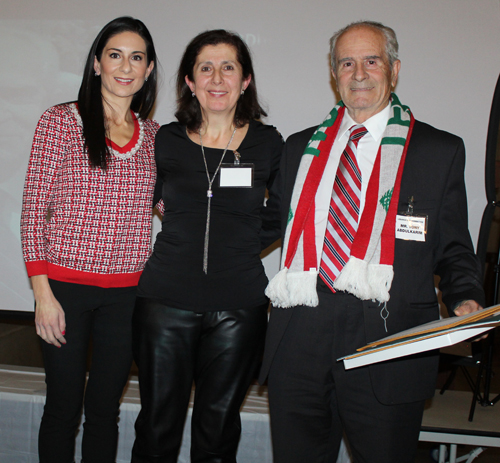
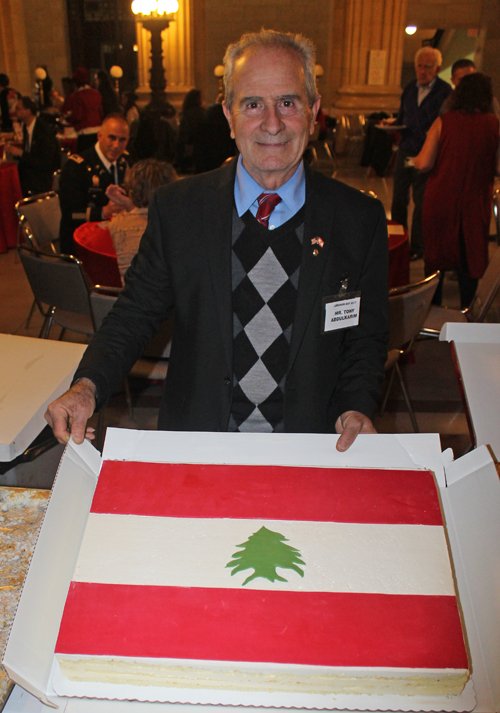
At the 11th annual Lebanon Day in Cleveland at an event in the Rotunda of Cleveland City Hall, Tony Abdulkarim was honored for his service to the community.
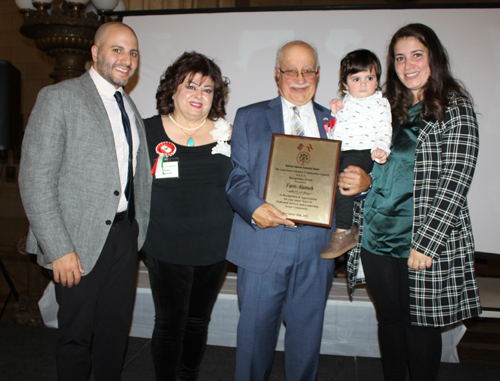
At the 11th annual Lebanon Day in Cleveland at an event in the Rotunda of Cleveland City Hall, Faris Alameh was honored for his service to the community.
At the 11th annual Lebanon Day in Cleveland at an event in the Rotunda of Cleveland City Hall, Blanche Salwan was honored for her service to the community.
The Cleveland Lebanese community demonstrated their proud heritage at One World Day in the Cleveland Cultural Gardens. One World Day has been the official event of the Cleveland Cultural Gardens Federation since 1946. Over 40,000 people visited the gardens on One World Day 2022.
The Lebanese community participated in the Parade of Flags.
Lebanese Cultural Garden in the Parade of Flags
Here is a video of the entire Parade of Flags.
They then welcomed visitors to the Lebanese Garden and shared their culture.
Lebanese Garden on One World Day
2021
Remembering the tragic explosion in Beirut
Lebanese and friends gathered in the Lebanese Cultural Garden to remember those effected by the tragic explosion in Beirut last year.
Beirut explosion rememberance in Lebanese Cultural Garden
Lebanese Cultural Garden on One World Day 2021
Cleveland's Lebanese community was well-represented at the 75th One World Day in the Cleveland Cultural Gardens on August 29, 2021. They marched in the Parade of Flags and hosted music, food and cultural activities in the beautiful Lebanese Cultural Garden.
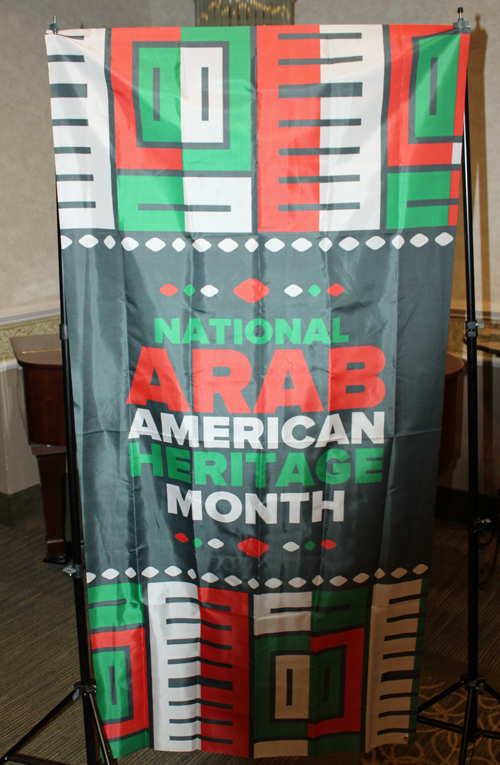
During the month of April, Arab America formally recognizes the achievements of Arab Americans through the celebration of National Arab American Heritage Month (NAAHM). Across the country, cultural institutions, school districts, municipalities, state legislatures, public servants, and Arab Americans will engage in special events that celebrate the community's rich heritage and numerous contributions to society.
Arab Americans have roots in 22 countries located in the Middle East and North African regions: Algeria, Bahrain, the Comoros Islands, Djibouti, Egypt, Iraq, Jordan, Kuwait, Lebanon, Libya, Morocco, Mauritania, Oman, Palestine, Qatar, Saudi Arabia, Somalia, Sudan, Syria, Tunisia, the United Arab Emirates, and Yemen. And within all those countries, there are various languages, religions, traditions that are now part of our American story. There are nearly 3.5 million Arab Americans in the United States, according to the Arab American Institute. Establishing Arab American Heritage Month was critical in combatting post-9/11 anti-Arab sentiments, and while Arab Americans still face prejudice regularly, acknowledging their fight for recognition and equality - and becoming better allies - is something we can all contribute toward.
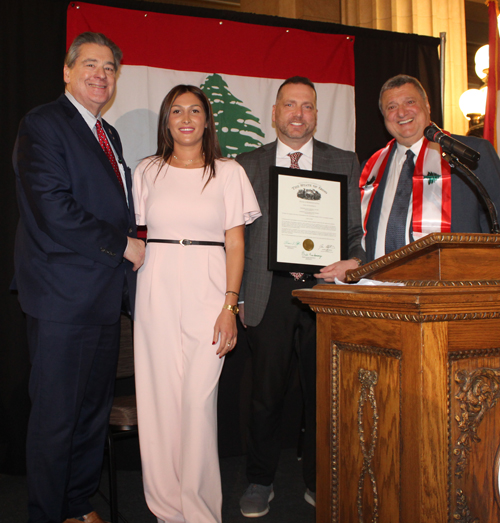
CAMEO president Pierre Bejjani receiving Arab American Heritage Month Proclamation
On the afternoon of August 4, 2020, explosions occurred at the port of the city of Beirut, the capital of Lebanon. The extremely powerful blast resulted in hundreds of deaths, thousands injured and hundreds of thousands instantly homeless. The Lebanese community of Cleveland Ohio began working on ways to assist the victims in the land of their heritage. The American Lebanese Community Council (ALCC ) met and began fundraising efforts including this vigil in the Lebanese Cultural Garden.
Pierre Bejjani, Ms. Blanche Salwan and Mr. Faris Alameh
The Cleveland Cultural Gardens Federation hosted the 74th annual One World Day on August 25, 2019. Police estimates say that over 30,000 people visited the Gardens and attended One World Day. There was a lot of activity in the beautiful new Lebanese Cultural Garden.
A highlight of One World Day is the Parade of Flags where people in costumes of their heritage carry the flags. This year was undoubtedly the largest and most colorful in memory.
Phase 1 of the plans to create a Lebanese Cultural Garden, part of the chain of Cleveland Cultural Gardens, took place on Saturday May 4, 2019 with a ceremonial groundbreaking event. Pierre Bejjani, Chairman of the American Lebanese Community Council said "The dream has become a reality."
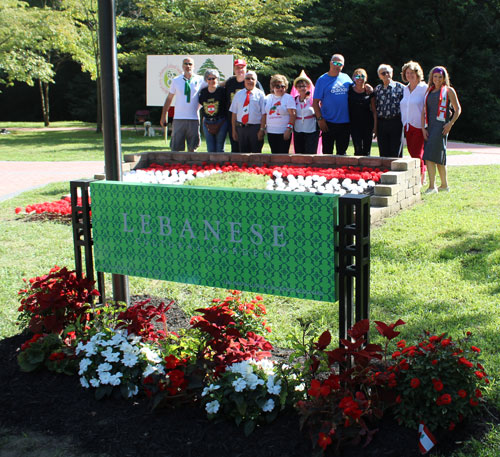
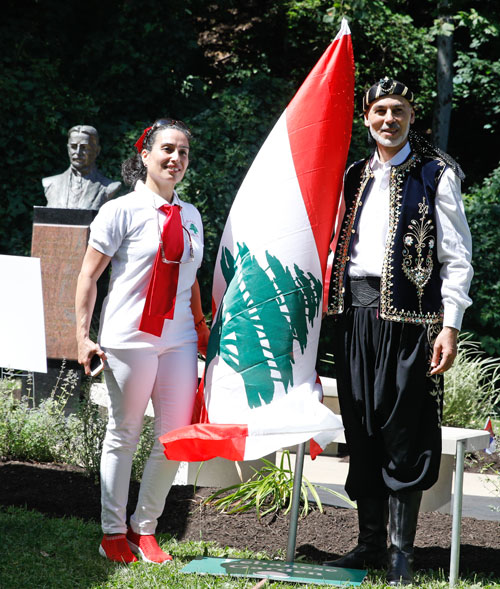
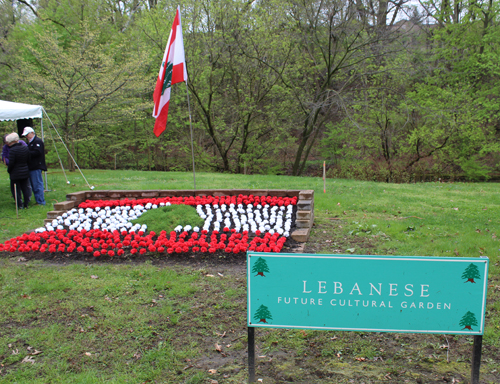
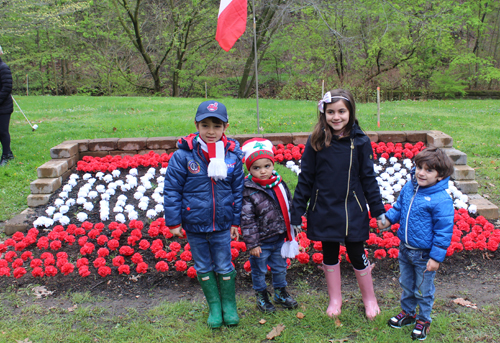
Lebanese Cultural Garden
Dignitaries including Omar Maalouf, Vice President of World Lebanese Cultural Union North America, and Consul General of Lebanon Suzan Mouzi Yassine came to Cleveland for the event and were joined by local civic and community leaders - and the next generation.
Cleveland American Middle East Organization 49th anniversary
The Cleveland American Middle East Organization (CAMEO) is a nonpartisan, nonsectarian political action organization established in 1970. They celebrated their 49th anniversary at a dinner event at St. Elias Cultural Center.
CAMEO honored Dr. Nizar Zein, Mr. Husein Rabah and Mediterranean Market at the event.
Pierre Bejjani and Consul General of Lebanon Suzan Mouzi Yassine and her husband
2018
Abdullah (Abby) Mina inducted into the 2018 Cleveland International Hall of Fame
Mr. Abdullah Mina is of great service to the Arab American Community in Cleveland in many ways. He was the longest serving president of the 45 year old Cleveland American Middle East organization (CAMEO). After retiring from the presidency several years ago, he continues to serve as a member of its board of trustees. He was inducted on April 17, 2018 in front of 500 guests at the Cleveland Marriott Hotel Ballroom.
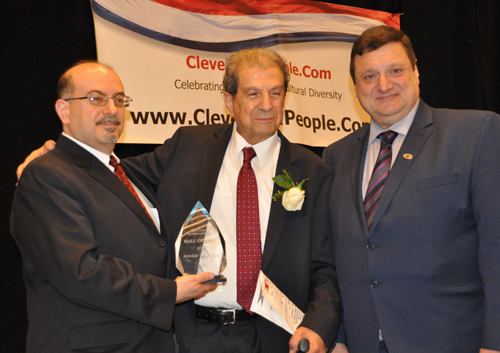
Abdullah (Abby) Mina was inducted by his son Michael Mina and Pierre Bejjani.
The American Lebanese Community Council presented the 8th annual celebration of Lebanon Day in the City of Cleveland celebrating the 75th independence of Lebanon. The ceremony was in the Rotunda of Cleveland City Hall.
Three outstanding individuals were honored by the ALCC for their contributions: Natalie Ronayne, James Kassouf and the late Dr. Mahmoud Orra.
There was also an update on the Lebanese Cultural Garden.
Jad Bedran, Vera Hatem, Faris Alameh, Brunswick Mayor Ron Falconi, Pierre Bejjani, Cleveland Mayor Frank Jackson and Tony Abdulkarim
International Cleveland Community Day at the Cleveland Museum of Art is a celebration of the rich diversity of our region’s multiethnic communities, featuring traditional music and dance performances, cultural displays, and ingallery experiences. During this vibrant afternoon, visitors enjoyed presentations from more than 50 community groups expressing the continued vitality of the global cultures and arts that enliven our city.
The Lebanese community was well represented with a banner, information table and dance performance.
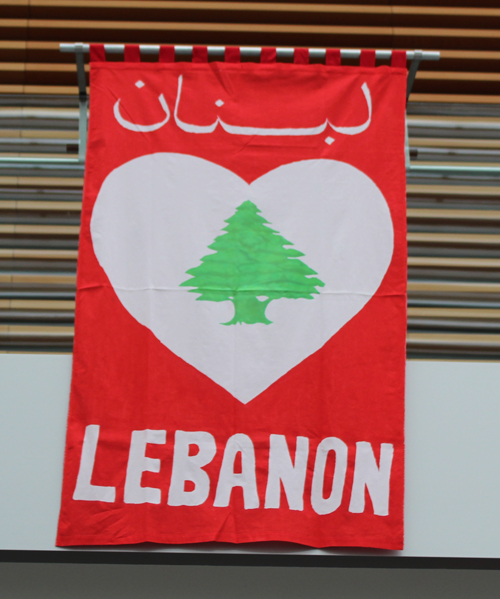
Lebanon banner at Cleveland Museum of Art
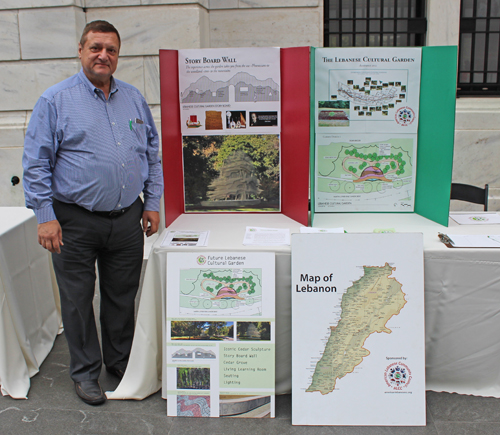
Pierre Bejjani at Lebanon table at Cleveland Museum of Art
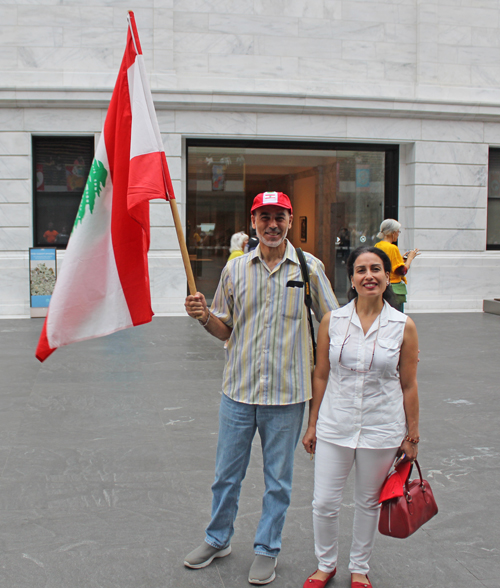
Issam & Ebaa Boudiab
There was also a performance by Cassandra Al Warda.
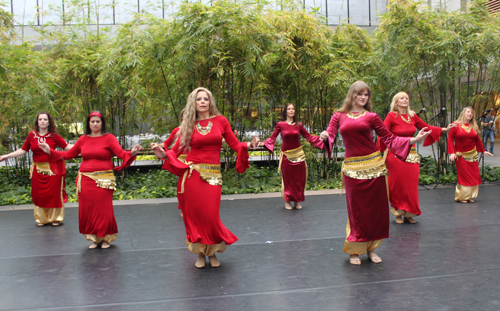
Cassandra Al Warda dancers at Art Museum
Lebanese Cultural Garden on One World Day 2018
The Cleveland Lebanese community was out in full force at the 73rd annual One World Day on the site of the upcoming Lebanese Cultural Garden. Members of the community marched in the annual Parade of Flags and later there was music, dancing, entertainment, food and fun as members of the Lebanese community shared their culture with thousands of visitors on One World Day.
Ajyal Lebanese Dancers open One World Day 2018 in Cleveland
The Cleveland Cultural Gardens chain of ethnic gardens hosted the 73rd annual One World Day on September 16, 2018. After the Parade of Flags, people gathered in the Syrian Garden for the welcome ceremony. Ajyal Dabke Lebanese Dancers performed in the Syrian Garden in front of the replica of the Palmyra Arch in Syria.
Ajyal Dabke Dancers performed in front of the replica of the Palmyra Arch in Syria
Middle Eastern Belly Dance in Lebanese Garden on One World Day
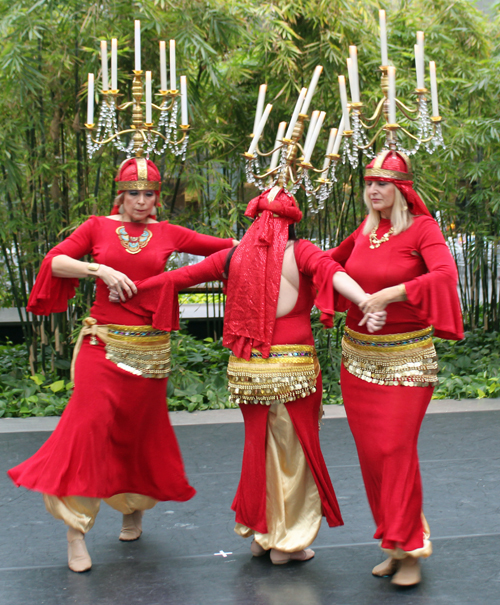
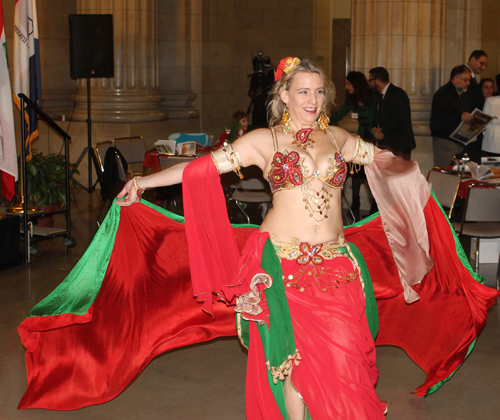
The Lebanese Cultural Garden, part of the Cleveland Cultural Gardens chain of ethnic gardens, was very active on the 73rd One World Day in the Gardens. Many performances, music, dancing, food and fun including a traditional belly dance performance by Cassandra Al Warda who found a love for Middle Eastern music when she was just a teenager. This love continued through college, where she took her first belly dance class.
Traditional belly dance performance by Cassandra Al Warda in Lebanese Garden
Cleveland American Middle East Organization 48th anniversary
The Cleveland American Middle East Organization (CAMEO) is a nonpartisan, nonsectarian political action organization established in 1970. They celebrated their 48th anniversary at a dinner event at St. Elias Cultural Center.
CAMEO honored Dr. Mansoor Ahmed, Mr. Ali Faraj and Kan Zaman Middle Eastern Restaurant at the event.
Cleveland American Middle East Organization (CAMEO)
board members Faris Alameh, Pierre Bejjani, Sam Tanious, Tony Abdulkarim and Abby Mina with honorees Dr. Mansoor Ahmed and Mr. Ali Faraj
Fashions from Lebanon at Cleveland multicultural party
A highlight of the 8th Annual ICC-WIN Cleveland Multicultural Holiday Celebration on Wednesday, December 6, 2017 at the Global Center for Health Innovation in Cleveland was the International Fashion Show featuring almost 100 models from about 30 countries.
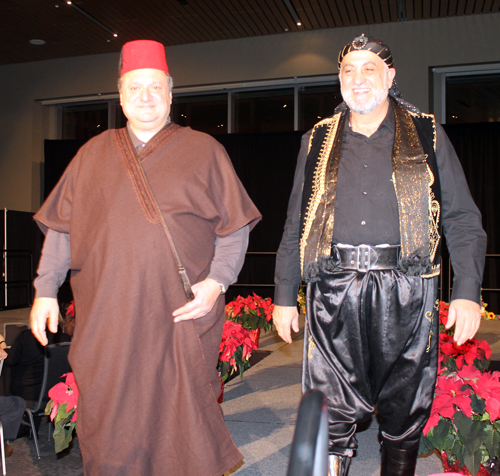
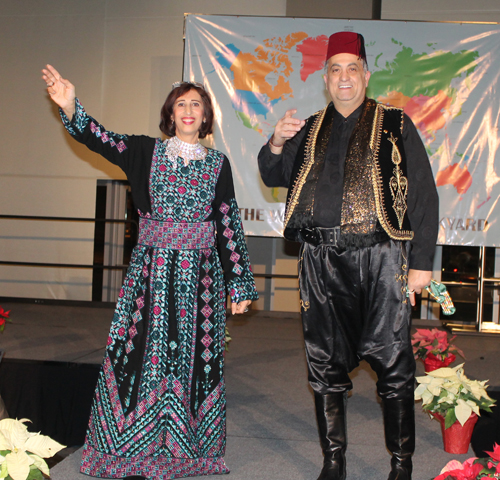
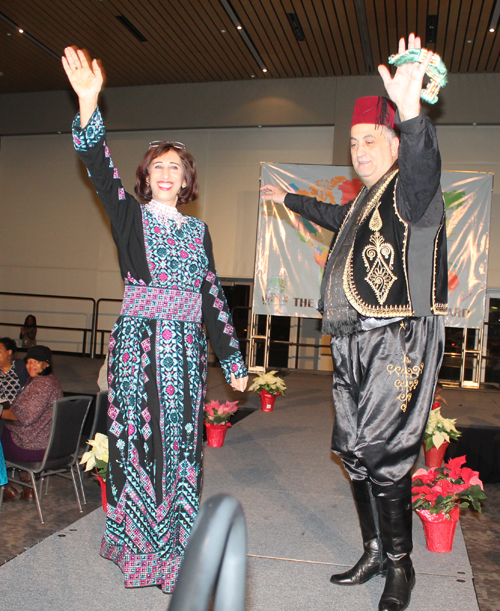
Nemer Saueidi and Pierre Bejjani represented Lebanon.
(Click on the white arrow to watch the video)
Pierre Bejjani and Nemer Saueidi representing Lebanon
The American Lebanese Community Council presented the 7th annual celebration of Lebanon Day in the City of Cleveland celebrating the 74th independence of Lebanon. The ceremony was in the Rotunda of Cleveland City Hall.
Newlyweds celebrate in Lebanese Cultural Garden on One World Day
Pierre Bejjani welcomed people to the Lebanese Cultural Garden at the 72nd annual One World Day in the Cleveland Cultural Gardens. He said they had a special treat as a newlywed couple came by to celebrate and dance with the help of Ajyal Dabke dancers.
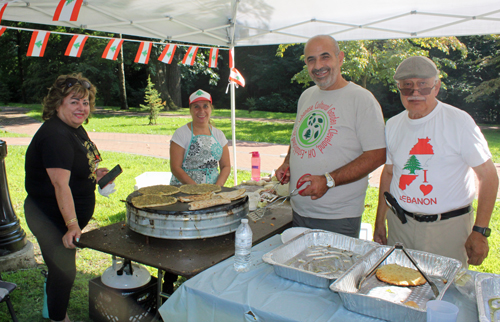
Lebanese Saj Bread with Zaatar made at One World Day
At One World Day in the Lebanese Cultural Garden in Cleveland the chefs were making Saj Bread with Cheese, Zaatar (seasoning of Thyme, Sumac, Sesame and Salt) or Nutella.
Cleveland American Middle East Organization annual picnic
The Cleveland American Middle East Organization (CAMEO) is a nonpartisan, nonsectarian political action organization established in 1970. They hosted their annual picnic on July 16, 2017.
Cleveland American Middle East Organization 47th anniversary
The Cleveland American Middle East Organization (CAMEO) is a nonpartisan, nonsectarian political action organization established in 1970. They celebrated their 47th anniversary and induction of new officers at a dinner event at St. Elias Cultural Center.
Cuyahoga County Executive Armond Budish and CAMEO Board
The Cleveland Lebanese Community was represented at the 7th annual International Community Council - Worldwide Intercultural Network (ICC-WIN) holiday party on December 14, 2016.
120 people participated in the fashion show and each walked the runway to music from their country. Click on the white arrow to watch the short video of the Lebanese models, Jamila Alhaib and Nemer Saueidi.
Jamila Alhaib and Nemer Saueidi model Lebanese clothes
Pierre Bejjani, Jamila Alhaib and Nemer Saueidi model Lebanese clothes
The American Lebanese Community Council presented the 6th annual celebration of Lebanon Day in the City of Cleveland celebrating the 73rd independence of Lebanon. The ceremony was in the Rotunda of Cleveland City Hall.
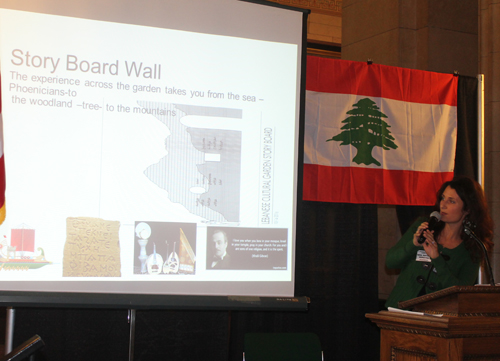
A presentation was made on the current status an future plans for the Lebanese Cultural Garden by Natalie Ronayne, Chairperson of the Lebanese Cultural Garden Committee, and committee member Amy McDonald.
Former President of Lebanon Amine Gemayel in Cleveland
Amine Gemayel, President of Lebanon from 1982-1988, was the guest speaker at Case Western Reserve University on Friday October 7, 2016. The event was sponsored by the CWRU Center for International Affairs, The Office of Diversity, Inclusion and Equal Opportunity, Cleveland Council for World Affairs and the Kataeb Chapter of Cleveland.
The Lebanese Cultural Garden and Cleveland Lebanese community participated in the 71st One World Day on August 28, 2016. They began with the Parade of Flags.
Throughout the day members of the Lebanese community of Cleveland hosted hundreds of visitors in the Lebanese Cultural Garden and shared Lebanese food, music, dance and culture.
The Lebanese Garden was one of 4 Gardens featured on the first annual Kid's Day in the Cleveland Cultural Gardens. Kids (of all ages) learned about Lebanon and Lebanese language, culture, history, geography and more. They even learned the basic steps to Lebanese dance.
Cleveland American Middle East Organization 46th Anniversary
Cleveland American Middle East Organization (CAMEO) is a Bi-partisan Political Action Organization that was established in 1970. It is designed to articulate the political interest of more than 100,000 Northeastern Ohio residents of Middle Eastern heritage, Arab Americans.
The 46th anniversary of the group was celebrated at a dinner event at St. Elias Cultural Center on May 20, 2016.
The two honorees that evening were Fred Bourjaily and Dr. James Zogby.
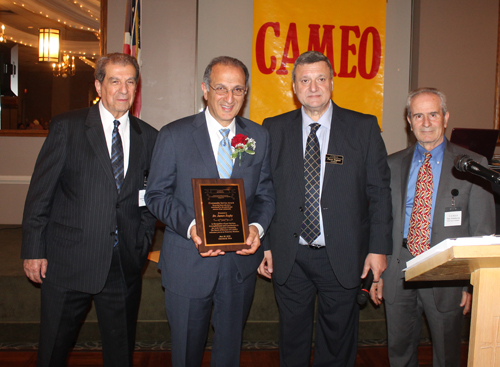
Abby Mina, Dr. James Zogby, Pierre Bejjani and Tony Abdulkarim
Cleveland Cultural Gardens Federation Christmas party at Kan Zaman Middle Eastern restaurant
The Lebanese Cultural Garden was the host for the annual Cleveland Cultural Gardens Federation Christmas party. It took place at Kan Zaman Middle Eastern restaurant in Cleveland and featured the Ajyal Lebanese dance group performing traditional Lebanese dabke (stomping) dances.
The American Lebanese Community Council, along with Major Frank Jackson and the City of Cleveland hosted Lebanon Day at the City of Cleveland. This event for all Lebanese and friends of Lebanon celebrated the 72nd Independence of Lebanon.
Along with the speeches, entertainment and food there was a presentation on the Lebanese Cultural Garden.
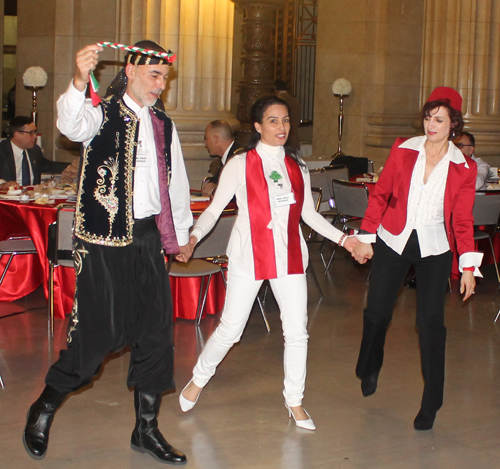
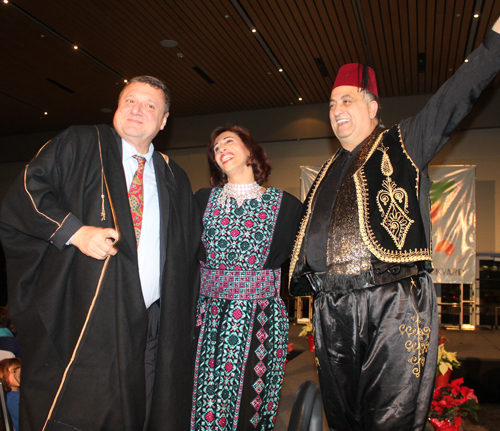
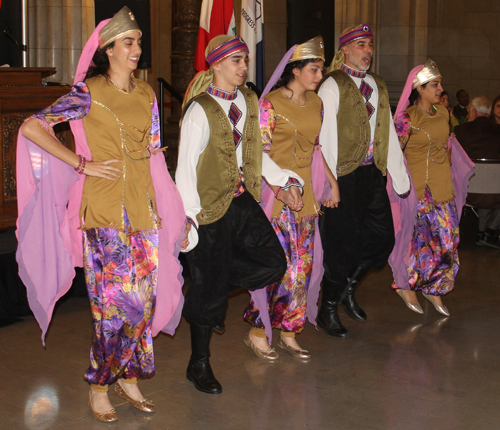
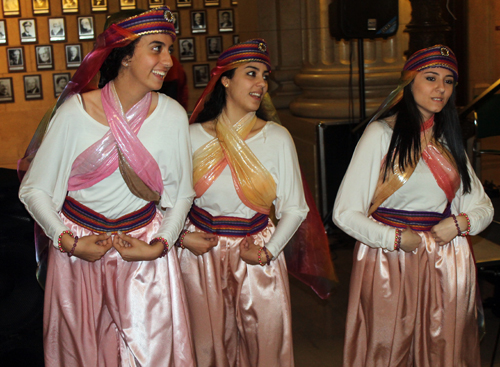
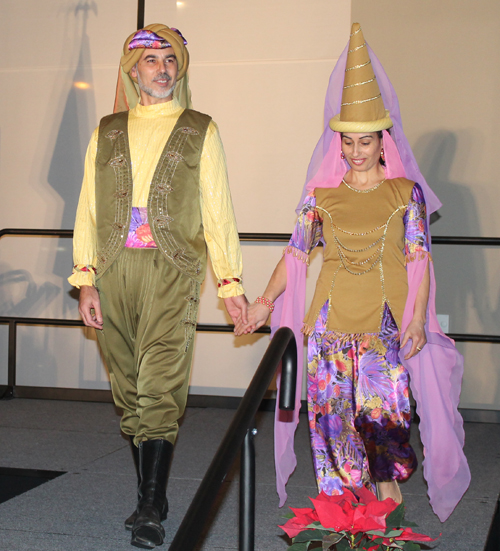
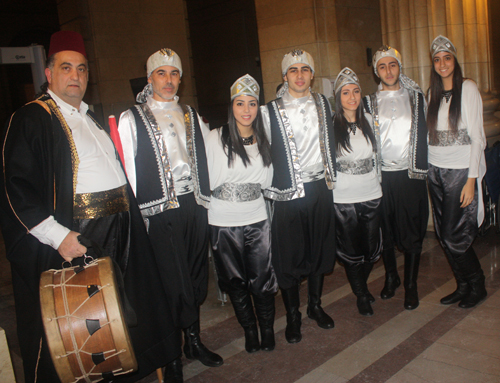
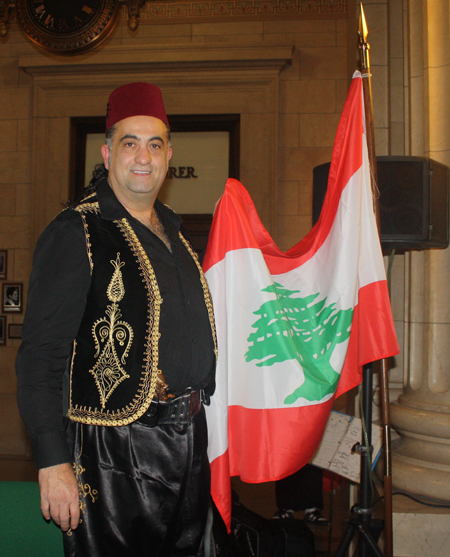
Members of the Ajyal Lebanese Dance Group explained the historic Lebanese clothing they were wearing at the Cleveland Museum of Art's International Cleveland Community Day in the Atrium of the museum. The costumes were worn by Lebanese royalty in the 1600's and 1700's. The pointy hat is called a tarboush.
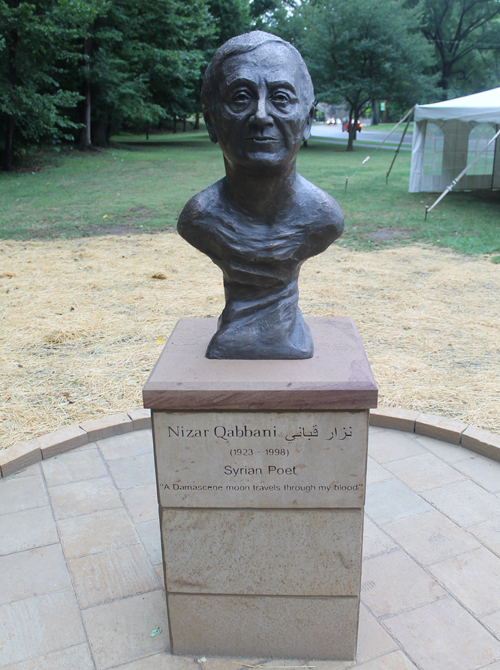
Arab poet Nizar Qabbani honored with bust in Cleveland
Several hundred members of Cleveland's Middle East community along with friends and supporters gathered at the Syrian Cultural Garden for a ceremony dedicating the new bust of Syrian poet Nizar Qabbani on September 12, 2015.
Bust of Nizar Qabbani in Syrian Cultural Garden
For those who could not attend the dedication ceremony for the bust of Syrian poet Nizar Qabbani in the Syrian Cultural Garden we have posted 4 pages of text, photos and videos.
Page 2 includes poetry recitations in both English and Arabic.
Page 3 features people posing with the bust of Qabbani.
Page 4 shows the bust up close and the Syrian Garden.
It was a great event and this is a great addition to the Cultural Gardens.
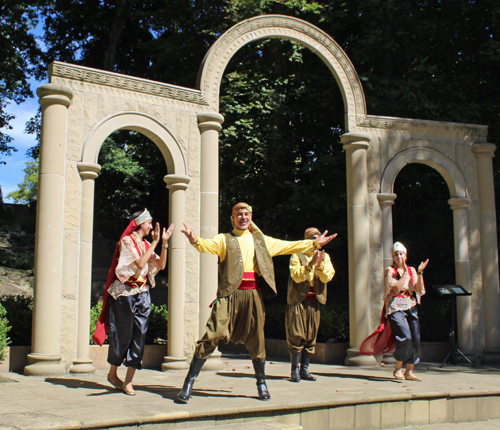
Ajyal Lebanese Dabke Dancers in Lebanese Cultural Garden on One World Day 2015
The Ajyal Dabke Lebanese Dance Ensemble under the direction of Issam Aboudabe performed a traditional Lebanese Dance at the 70th annual One World Day in the Cleveland Cultural Gardens. This performance was part of the annual Cleveland International Folk Festival.
The Lebanese Community will soon join with other nations in the Cleveland Cultural Gardens. The future site of the Lebanese Cultural Garden is on MLK Blvd. just south of the India Garden.
Abdullah (Abby) Mina receives Freedom Award
Judge Ralph Perk Jr., Irene Morrow and Senator George Voinovich presented the American Nationalities Movement of Ohio Freedom Award to Lebanese born Abdullah (Abby) Mina at the 54th annual Captive Nations Dinner in Cleveland. Abby Mina is the longest serving president of the Cleveland American Middle East Organization (CAMEO).
Cleveland American Middle East Organization 45th Anniversary
Cleveland American Middle East Organization (CAMEO) is a Bi-partisan Political Action Organization that was established in 1970. It is designed to articulate the political interest of more than 100,000 Northeastern Ohio residents of Middle Eastern heritage, Arab Americans.
The 45th anniversary of the group was celebrated at a dinner event at St. Elias Cultural Center on May 2, 2015.
County Executive Armond Budish and the new CAMEO Board
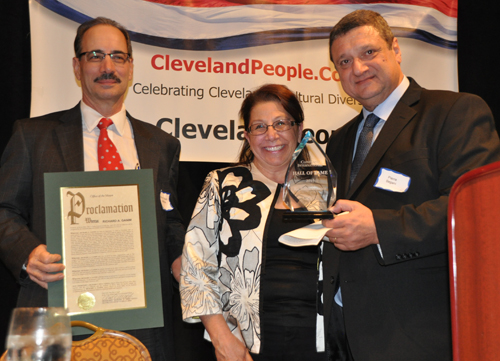
Richard A. Ganim inducted into Cleveland International Hall of Fame
Richard Gamim's parents immigrated to the US from Lebanon in the early 1900's. He proudly served our country during World War II in the Army Airborne Division.
He was one of the first local politicians of Middle Eastern descent including two terms as the Mayor of Seven Hills. Richard was an original founder of CAMEO, the Cleveland American Middle East Organization.
Richard Ganim was inducted into the 2015 Class of the Cleveland International Hall of Fame on the evening of April 19, 2015. Over 500 people attended the induction ceremony at the Marriott at Key Center. Mayor Ganim was inducted by Pierre Bejjani. Unfortunately Mayor Ganim was ill and so his daughter Betsy gave the acceptance speech for her father.
Representatives from the Cleveland Lebanese community participated in the International Community Council - Worldwide Intercultural Network's (ICC-WIN) 5th annual multicultural holiday celebration at the Global Center for Health Innovation in the Cleveland Convention Center in Cleveland Ohio. They modeled Lebanese costumes at the International Fashion Show which featured traditional costumes of dozens of countries.
The American Lebanese Community Council presented Lebanon Day in the City of Cleveland to celebrate 71 years of independence for Lebanon. The Rotunda of Cleveland City Hall was full of Lebanese Americans and friends of the Lebanese community.
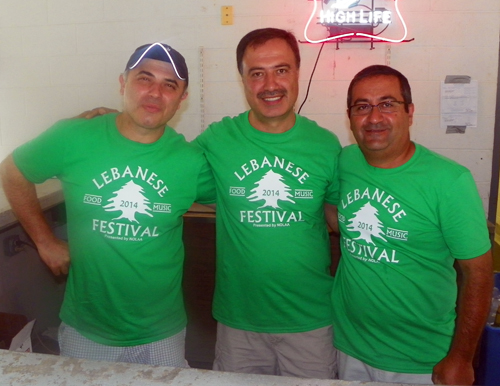
Northern Ohio Lebanese American Association (NOLAA) Picnic
The Northern Ohio Lebanese American Association (NOLAA) held their annual picnic on the grounds of St Sava's on July 13, 2014. Music, dancing, food, drinks and fun for the whole family.
Cleveland City Hall Rotunda
May 28, 2014 The City of Cleveland Community Relations Board, led by Asian Liaison Chia-Min Chen, hosted an Asian Heritage Day Celebration on May 28, 2014 in the Cleveland City Hall Rotunda.
Over 60 Asian community groups and organizations participated. Chia-Min Chen called them up to the stage one at a time and each gave an elevator speech explaining their organization.
This included the Cleveland American Middle East Organization
Faris Alameh and Pierre Bejjani of Cleveland American Middle East Organization
Learn more about each organization including photos and videos of the group leaders at the Asian Organizations in Cleveland pages.
Cleveland American Middle East Organization 44th anniversary
Cleveland American Middle East Organization (CAMEO) is a Bi-partisan Political Action Organization that was established in 1970. It is designed to articulate the political interest of more than 100,000 Northeastern Ohio residents of Middle Eastern heritage, Arab Americans. The 44th anniversary of the group was celebrated at a dinner event at St. Elias Cultural Center on May 2, 2014.
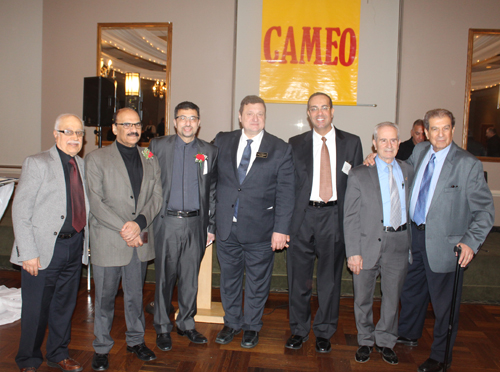
Abby Mina, Pierre Bejjani, Judge Joseph J. Nahra and Paul Marnecheck
Lebanon Day 2013 in Cleveland -- Mayor Frank Jackson
Cleveland Mayor Frank Jackson read a proclamation announcing November 21, 2013 as Lebanon Independence Day in the city of Cleveland. Mayor Jackson presented the proclamation to Abby Mina. The video was shot by Anjan Ghose.
Ajyal Lebanese Dancers - Lebanon Day 2013 in Cleveland
Lebanese Dance Group Ajyal performed at the Lebanon Independence Day celebration in the Rotunda of Cleveland City Hall. The video was shot by Anjan Ghose.
Lebanese Dance by Ajyal at Lebanon Day 2013 in Cleveland
Lebanese Dance Group Ajyal performed another dance at the Lebanon Independence Day celebration in the Rotunda of Cleveland City Hall. The video was shot by Anjan Ghose.
Ajyal Lebanese Folk Dance Group at Cleveland Art Museum
Ajyal Lebanese Folk Dance Group danced at International Cleveland Community Day in the Atrium of the Cleveland Museum of Art. The performance was dedicated to Wadih al-saffi, the Voice of Lebanon, who passed away earlier in the week.
The Cleveland Lebanese community will soon have a Garden in the Cleveland Cultural Gardens. A group or representatives marched in the Parade of Flags in the annual One World Day on August 25, 2013.
Pierre and Mary Bejjani march with Tony Abdulkarim
Cleveland is known as the 216 so when the 216th birthday of July 22, 2012 approached, Ohio Homecoming planned a huge party for the city and its people. There were performances, activities, food, music and camaraderie. The Lebanese community was well represented with a booth, musical performance and some traditional costumes.
The Lebanese Folk line dance Dabke was performed by the group Ajyal.
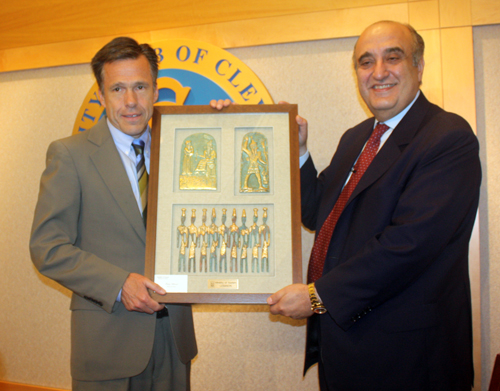
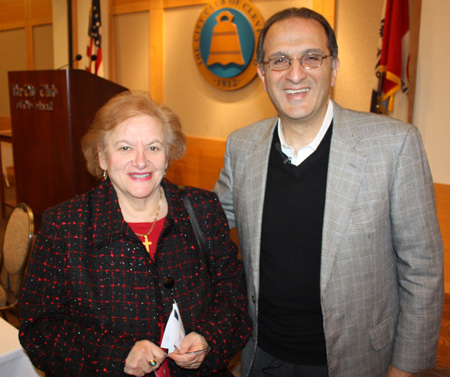
Minister Fady Abboud, the Lebanese Minister of Tourism, spoke at the City Club of Cleveland on Friday May 25, 2012. He answered question about Hezbollah, Syria, safety concerns, music and more.
A gift to the City Club of Cleveland from Minister Abboud and Lebanon
Mary Rose Oakar in Cleveland International Hall of Fame
Hon. Mary Rose Oakar
was inducted into the Cleveland International Hall of Fame on Wednesday May 9, 2012. Rep. Oakar was introduced by Dr. Wael Khoury.
Pierre Bejjani was the special honoree at the annual American Nationalities Movement event on December 17, 2011. Pierre was called "the exceptional and dedicated businessman, family man, active in our community, and President of Northeast Ohio Lebanese American Association (NOLAA) Pierre Bejjani." Congratulations Pierre.
Taras Szmalaga, Pierre Bejjani and Judge Rocky Perk
November 22, 2011 was declared Lebanon Day in the City of Cleveland by Mayor Frank Jackson. The Lebanese flag flew over City Hall all day and a reception was held in the City Hall Rotunda.
An explanation of Middle Eastern (Lebanese) pastries at a Middle East Festival in Cleveland Ohio. Pastries include Namoura, Ballourieh, Baklava, Bird's Nest, Burma and more.
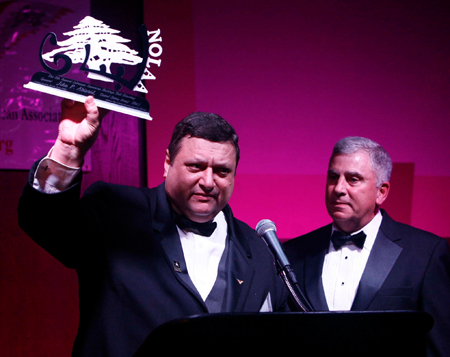
The Northern Ohio Lebanese American Association (NOLAA) hosted the 6th annual Lebanese American Heritage Ball at the Embassy Suites on Saturday October 22, 2011. The keynote address was given by Lebanese American General John P. Abizaid (Ret.)
NOLAA President Pierre Bejjani displays the special award before presenting it to General Abizaid
Organizations and Resources for Lebanese in Cleveland
Northern Ohio Lebanese American Association (NOLAA) In an effort to strengthen the partnership among the Lebanese American community in Greater Cleveland, The Lebanese American Christian Society (LACS) was founded in 2005, under the banner of the Northern Ohio Lebanese American Association (NOLAA). Its members are working diligently to uphold many of the same values stated by The Lebanese American Society of Cleveland, founded in 1931 as a social and charitable organization.
Consulate General of Lebanon in Detroit Our Consulate General has the primary role of representing our country Lebanon. It is our privilege to provide you with various consular services that are listed on our website. Whether you are a citizen of Lebanon residing in the United States or an American of Lebanese descent, your interests and concerns are of great importance to us.
Lebanese Syrian American Junior League The mission of the Lebanese Syrian American Junior League is to encourage its members to participate in educational and charitable activities and to establish funds for the furtherance of charity and education.
St. Elias Melkite Catholic Church 8023 Memphis Ave. For over 100 years, St. Elias Melkite Catholic church has served as the home of Eastern "Melkite" Catholics in and around Cleveland, Ohio.
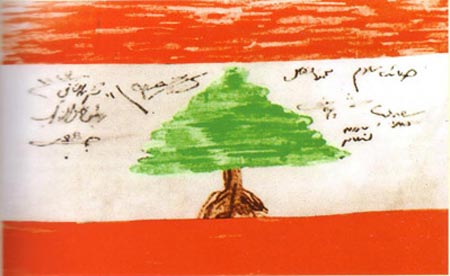
The First Lebanese flag hand drawn and signed by the deputies of the Lebanese parliament
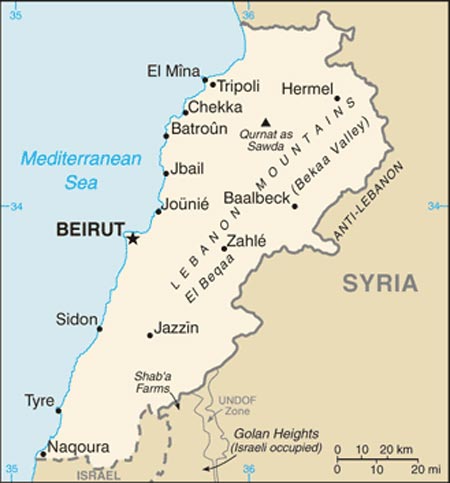
Lebanon
Following the capture of Syria from the Ottoman Empire by Anglo-French forces in 1918, France received a mandate over this territory and separated out the region of Lebanon in 1920. France granted this area independence in 1943.
A lengthy civil war (1975-1990) devastated the country, but Lebanon has since made progress toward rebuilding its political institutions. Under the Ta'if Accord - the blueprint for national reconciliation - the Lebanese established a more equitable political system, particularly by giving Muslims a greater voice in the political process while institutionalizing sectarian divisions in the government.
Since the end of the war, Lebanon has conducted several successful elections. Most militias have been disbanded, with the exception of Hizballah, designated by the US State Department as a Foreign Terrorist Organization, and Palestinian militant groups. During Lebanon's civil war, the Arab League legitimized in the Ta'if Accord Syria's troop deployment, numbering about 16,000 based mainly east of Beirut and in the Bekaa Valley.
Israel's withdrawal from southern Lebanon in May 2000 and the passage in September 2004 of UNSCR 1559 - a resolution calling for Syria to withdraw from Lebanon and end its interference in Lebanese affairs - encouraged some Lebanese groups to demand that Syria withdraw its forces as well.
The assassination of former Prime Minister Rafiq Hariri and 22 others in February 2005 led to massive demonstrations in Beirut against the Syrian presence ("the Cedar Revolution"), and Syria withdrew the remainder of its military forces in April 2005. In May-June 2005, Lebanon held its first legislative elections since the end of the civil war free of foreign interference, handing a majority to the bloc led by Saad Hariri, the slain prime minister's son.
In July 2006, Hizballah kidnapped two Israeli soldiers leading to a 34-day conflict with Israel in which approximately 1,200 Lebanese civilians were killed. UNSCR 1701 ended the war in August 2006, and Lebanese Armed Forces (LAF) deployed throughout the country for the first time in decades, charged with securing Lebanon's borders against weapons smuggling and maintaining a weapons-free zone in south Lebanon with the help of the UN Interim Force in Lebanon (UNIFIL).
The LAF in May-September 2007 battled Sunni extremist group Fatah al-Islam in the Nahr al-Barid Palestinian refugee camp, winning a decisive victory, but destroying the camp and displacing 30,000 Palestinian residents. Lebanese politicians in November 2007 were unable to agree on a successor to Emile LAHUD when he stepped down as president, creating a political vacuum until the election of Army Commander Michel Sulayman in May 2008 and the formation of a new unity government in July 2008.
Read more about the Lebanese and other Ambassadors. If you are interested in being considered to be an official ClevelandPeople.com Ambassador to the Cleveland Lebanese community, please contact us.
Please support the Lebanese pages of ClevelandPeople.Com